2026 Budget: Federal Government Proposes ₦102.3 Billion Counterpart Funding for Lagos Green Line Rail Project
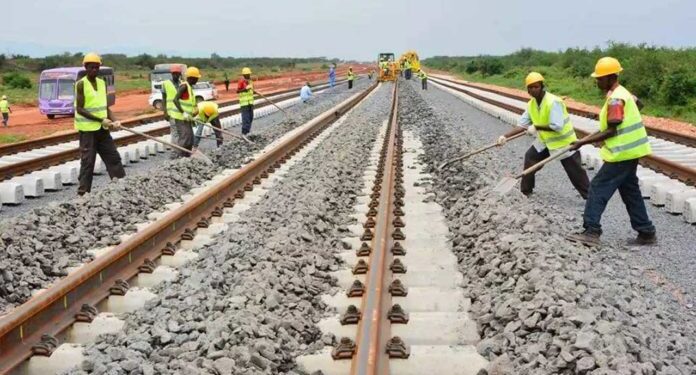

The Federal Government has proposed to allocate ₦102.3 billion as counterpart funding for the Lagos Green Line rail project in the 2026 national budget, according to details contained in the 2026 Appropriation Bill submitted to the National Assembly. The allocation falls under the Ministry of Transportation and is designated specifically for Phase One of the project.
The Lagos Green Line rail is a planned urban mass transit system designed to span approximately 68 kilometres, running from the Lekki Free Trade Zone to Marina. The line is expected to link major commercial and residential areas of Lagos, including Victoria Island, Lekki, Ajah, Sangotedo, and the Lekki Free Zone, thereby easing traffic congestion and improving commuter mobility in Nigeria’s most populous city.
Budget documents indicate that the ₦102.3 billion allocation will be transferred to the Ministry of Finance Incorporated (MOFI), the agency responsible for managing the Federal Government’s equity participation, counterpart funding obligations, and structured financing arrangements for large-scale infrastructure projects. This funding approach suggests that the Green Line will continue to rely on a mix of federal participation, Lagos State Government involvement, and other financing partners.
The proposed allocation for 2026 follows a larger ₦146.14 billion counterpart funding provision made for the same project in the 2025 budget proposal, reflecting sustained federal commitment to the rail development even as implementation timelines continue to evolve.
Related News
Aerial Footage Shows Progress on Sokoto–Badagry Super Highway Construction
New aerial footage circulating online has revealed ongoing construction work on the proposed Sokoto–Badagry Super Highway, a major infrastructure project…
Kaduna State Government Takes Over Ahmadu Bello Stadium, Begins Major Reconstruction
The Kaduna State Government has officially taken over ownership of the iconic Ahmadu Bello Stadium from the Federal Government, following…
Umahi Inspects Ongoing Rehabilitation of Lagos–Ota–Abeokuta Expressway
Minister of Works David Umahi has inspected the rehabilitation of the Lagos–Ota–Abeokuta Expressway, describing the project as a priority infrastructure…
In addition to the Green Line funding, the 2026 Appropriation Bill outlines further investments in rail infrastructure nationwide. The Federal Government plans to spend ₦68.5 billion on consultancy services for the Lekki–Ijebu Ode–Ore–Kajola railway as well as the coastal railway corridor connecting Badagry, Apapa, and Tin Can ports. These consultancy services are expected to cover technical design, project structuring, and advisory functions ahead of potential construction phases.
The budget also provides ₦29.04 billion for ongoing and planned railway modernisation projects across the country. These include completion works on the Abuja–Kaduna rail line, additional construction on the Lagos–Ibadan railway, and rehabilitation of the Itakpe–Ajaokuta rail corridor. The allocation further covers the construction of 12 railway station buildings, track-laying at ancillary rail facilities in Agbor, and the supply of rolling stock, spare parts, and maintenance equipment.
Funding has also been earmarked for signalling and telecommunications systems on the Itakpe–Ajaokuta–Warri rail line, as well as the deployment of acoustic sensing security surveillance systems along the Abuja–Kaduna corridor. The budget makes additional provision for feasibility studies for new standard-gauge rail lines and the engagement of transaction advisers for the planned concession of rail corridors including Abuja–Baro–Itakpe, Aladja–Warri Port, and Kano–Maradi.
The Lagos Green Line itself is estimated to cost about $3 billion and is planned to feature 17 stations along a mix of elevated and at-grade tracks. Trains are expected to operate in eight-car B-type sets, reaching speeds of up to 100 kilometres per hour, with a projected capacity of approximately 35,000 passengers per hour per direction. The first phase is expected to cover the Lekki First Tollgate to Epe axis, while a later phase extending from Marina is planned to include an on-water segment.
Although construction was initially projected to commence in December 2025 following feasibility studies and stakeholder engagements along the Lekki–Epe corridor, work had not yet begun as of January 11, 2026. Authorities maintain that planning and financing arrangements are still ongoing.
Urban transport experts have raised concerns about station spacing and ridership potential, particularly in Victoria Island and parts of Lekki, recommending additional stations and better integration with existing rail lines to maximise efficiency and accessibility.
The proposed ₦102.3 billion allocation in the 2026 budget underscores the Federal Government’s continued involvement in the Lagos Green Line project as broader discussions around implementation, financing, and regional equity in infrastructure development continue.