European Leaders Push Back Against Trump’s Tariff Threats Amid Escalating Greenland Dispute
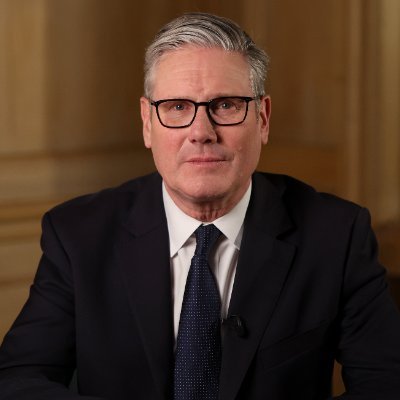

Senior European leaders have issued coordinated responses condemning tariff threats reportedly linked to tensions over Greenland, as concerns mount over the potential fallout for transatlantic relations and NATO cohesion. The reactions followed public statements attributed to former U.S. President Donald Trump, which suggested imposing trade measures on allied countries in connection with disagreements surrounding Greenland’s status and Arctic security.
UK Prime Minister Keir Starmer stated that Britain’s position on Greenland remains unequivocal, emphasizing that the territory is part of the Kingdom of Denmark and that its future must be determined by Greenlanders and the Danish government. Starmer underlined that Arctic security is a shared responsibility within NATO, particularly given rising concerns over Russian activity in the region. He described the use of tariffs against allies engaged in collective security efforts as “completely wrong,” adding that the UK would raise the issue directly with U.S. authorities.
Related News

Rights Group Accuses Police of Judicial Persecution Over Remand of Blogger Maureen Badejo
The Committee for the Defence of Human Rights (CDHR) has accused the Nigeria Police Force of engaging in judicial persecution…

Enugu Government Declares 90-Day Amnesty for Buildings Without Approved Plans
The Enugu State Government has introduced a 90-day amnesty period for property owners whose buildings lack approved plans, offering them…
Trump’s 2013 Tweet on Obama and Iran Resurfaces Amid Fresh US–Israel Strikes
A 2013 social media post by former US President Donald Trump predicting that then-President Barack Obama would attack Iran has…
French President Emmanuel Macron adopted a similarly firm tone, framing the dispute within the broader context of international law and sovereignty. Macron reiterated France’s commitment to the principles of territorial integrity and national independence, noting that these values underpin Europe’s approach to security challenges, including support for Ukraine and participation in multinational defense initiatives. He confirmed France’s involvement in a Denmark-led military exercise in Greenland, arguing that Arctic security is integral to Europe’s strategic interests. Macron rejected what he characterized as intimidation through tariff threats, stating that Europe would respond in a united and coordinated manner if such measures were implemented.
European Commission President Ursula von der Leyen also expressed strong opposition to the proposed tariffs, warning that they could trigger a dangerous escalation in transatlantic trade relations. She reaffirmed the EU’s full solidarity with Denmark and the people of Greenland, stressing that the Danish-led military exercise was pre-coordinated with allies and posed no threat to any country. Von der Leyen emphasized that dialogue remains the preferred path forward and confirmed that discussions between Denmark and the United States had already begun. She cautioned that tariffs would undermine decades of cooperation and weaken shared security objectives in the Arctic.
Adding to the chorus of criticism, UK Conservative figure Kemi Badenoch described the proposed tariffs as a “terrible idea,” arguing that they would raise costs for consumers and businesses on both sides of the Atlantic. She agreed with Prime Minister Starmer that Greenland’s sovereignty should rest solely with its inhabitants, warning that trade penalties would only exacerbate economic pressures in the UK and the United States.
Beyond official statements, the dispute has triggered broader political debate across Europe and beyond. Analysts and commentators have raised concerns that escalating economic threats could accelerate a breakdown in long-standing alliances, particularly at a time when global power dynamics are shifting. Reports citing European lawmakers suggest that retaliatory measures, including a potential pause in EU–U.S. trade negotiations, are being considered if tariff threats materialize.
The Greenland issue has also refocused attention on Arctic geopolitics, where competition among major powers has intensified due to strategic shipping routes, natural resources, and security considerations. European leaders have consistently framed their involvement in Greenland-related activities as defensive and cooperative, aligned with NATO’s collective security framework rather than unilateral territorial ambitions.
While the immediate outcome of the dispute remains uncertain, European officials have emphasized unity and restraint, warning that economic coercion among allies risks weakening shared institutions and emboldening external adversaries. As diplomatic engagements continue, the episode underscores growing tensions within the transatlantic alliance and the challenges of balancing national interests with collective security in an increasingly multipolar world.