Why Tinubu and Atiku Should Not Contest the 2027 Presidency – Hakeem Baba-Ahmed
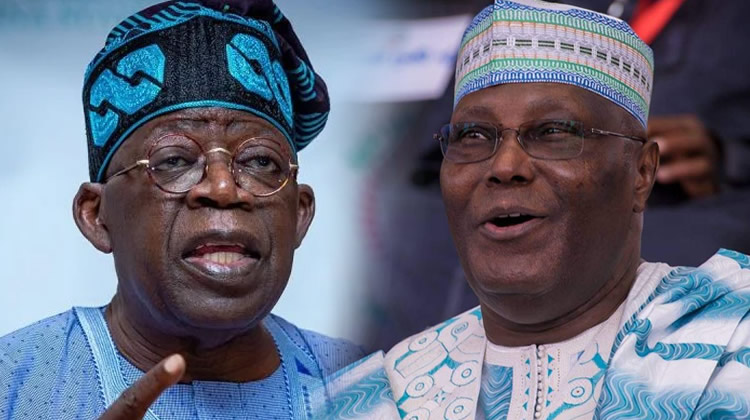

A former Special Adviser to President Bola Tinubu, Hakeem Baba-Ahmed, has stirred political debate after stating that both President Tinubu and former Vice President Atiku Abubakar should not contest the 2027 presidential election. According to Baba-Ahmed, Nigeria stands at a critical crossroads and requires fresh leadership rather than a continued reliance on long-standing political figures.
Baba-Ahmed made the remarks on Tuesday during an appearance on Politics Today, a current affairs programme aired on Channels Television. During the interview, he expressed the view that Nigeria would benefit more if its two most prominent political figures of the last two decades stepped aside to allow a younger generation of leaders to emerge.
According to him, both President Tinubu and Atiku Abubakar have a responsibility to the country to create space for new options. He argued that their decision not to run would broaden the political field and offer Nigerians a wider and potentially more effective range of candidates ahead of the 2027 polls.
Baba-Ahmed specifically questioned President Tinubu’s capacity to continue governing beyond 2027, noting that the president would have completed a full four-year term by then. He stated that, in his opinion, Tinubu may no longer possess the energy required to handle the growing demands of the office, especially given Nigeria’s complex economic, security, and governance challenges.
He stressed that his position was not driven by personal animosity or prejudice against the president, but rather by what he described as a realistic assessment of leadership demands. Baba-Ahmed suggested that 2027 would be an appropriate time for Tinubu to bow out gracefully, having achieved his long-standing ambition of becoming president.
Related News

Henry Seriake Dickson Defects from PDP to Newly Formed Nigeria Democratic Congress
Senator Henry Seriake Dickson has formally defected from the Peoples Democratic Party (PDP) to the newly registered Nigeria Democratic Congress…

Hon. Sarah Ivie Adidi Receives “Her Excellence Award” During International Women’s Day Event in Abuja
Reps aspirant Sarah Ivie Adidi has been honoured with the 2026 “Her Excellence Award” during an event marking International Women’s…
Governor Peter Mbah Urges Ndigbo to Return to Strategic Politics
Peter Mbah, Governor of Enugu State, has urged the Igbo political class to return to what he described as “strategic…
According to him, Nigeria needs leadership that is younger, healthier, and more intensely focused on governance rather than political survival. He added that such a transition would send a strong signal about statesmanship and national responsibility.
Baba-Ahmed extended the same argument to Atiku Abubakar, who has contested the presidency multiple times since 1993. He said the former vice president also owes Nigeria the responsibility of stepping aside in the interest of generational renewal. In his view, Atiku’s continued pursuit of the presidency limits the political space for emerging leaders and reinforces a cycle of recycled leadership.
He maintained that Nigeria’s problems require fresh thinking and renewed energy, something he believes can only come from leaders who are not burdened by decades of political contests and entrenched interests.
“If I had my way,” Baba-Ahmed said during the programme, “neither President Tinubu nor former Vice President Atiku Abubakar would run in 2027. The country needs fresh blood and a new lease of life.”
His comments have since generated mixed reactions across the political spectrum and on social media. While some Nigerians agree with the call for generational change and argue that leadership renewal is overdue, others have pushed back, insisting that democracy allows any eligible citizen to contest and that voters, not commentators, should ultimately decide.
Supporters of Tinubu and Atiku have also questioned Baba-Ahmed’s credibility, pointing out that he previously served in government and asking why he did not make similar arguments earlier. Others argue that the real problem lies not just in the age or longevity of political actors, but in the absence of strong, credible alternatives within Nigeria’s opposition landscape.
Despite the backlash, Baba-Ahmed’s remarks have reignited a broader national conversation about leadership succession, internal party democracy, and the future of Nigerian politics ahead of the 2027 elections.
As political alignments gradually begin to form, the debate over whether Nigeria should continue with familiar political figures or embrace an entirely new generation of leaders is expected to intensify in the months and years ahead.