Enugu Begins Construction of Second Abakpa Bridge to Ease Traffic and Boost Connectivity
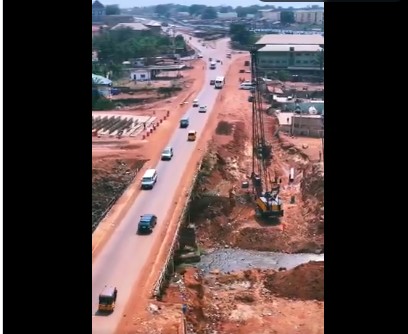

The Enugu State Government has announced the commencement of construction work on a second bridge in Abakpa, one of the most densely populated and commercially active areas of the state capital. The project, unveiled with an accompanying video, forms part of Governor Peter Mbah’s broader plan to expand and dualise a strategic transport corridor running through Abakpa, Ugwugo Nike, and extending toward Opi in Nsukka axis.
According to information released by the state, the new bridge is designed to complement the existing structure, which has long served as a bottleneck for traffic moving in and out of Abakpa. Officials say the expanded corridor is being developed as a modern arterial highway, featuring reinforced drainage systems, solar-powered street lighting, pedestrian sidewalks, closed-circuit television (CCTV) surveillance cameras, and a smart traffic management system.
The state government said the design prioritises durability, safety, efficiency, and commuter comfort. By improving road width and adding a second bridge, the project is expected to significantly reduce traffic congestion, improve travel time, and enhance connectivity between the Enugu metropolis and the larger Nsukka axis. Authorities also believe the infrastructure upgrade will stimulate economic activities by improving access for businesses, residents, and transport operators who rely on the route daily.
Related News
Aerial Footage Shows Progress on Sokoto–Badagry Super Highway Construction
New aerial footage circulating online has revealed ongoing construction work on the proposed Sokoto–Badagry Super Highway, a major infrastructure project…
Kaduna State Government Takes Over Ahmadu Bello Stadium, Begins Major Reconstruction
The Kaduna State Government has officially taken over ownership of the iconic Ahmadu Bello Stadium from the Federal Government, following…
Umahi Inspects Ongoing Rehabilitation of Lagos–Ota–Abeokuta Expressway
Minister of Works David Umahi has inspected the rehabilitation of the Lagos–Ota–Abeokuta Expressway, describing the project as a priority infrastructure…
Supporters of the project have described it as another “bold imprint” of Governor Mbah’s administration, arguing that Abakpa has long needed additional infrastructure to cope with rising population growth and vehicular traffic. Some residents living in the area confirmed that construction work is actively ongoing and noted visible changes in road expansion, drainage works, and traffic flow management.
However, the project has also generated significant public debate, particularly on social media platforms and online forums. Critics have questioned the quality and execution of several infrastructure projects undertaken by the current administration, alleging that some roads and public facilities are substandard, poorly executed, or abandoned midway. A number of commentators claimed that while projects appear impressive in online videos and official announcements, the reality on the ground does not always match the publicity.
Concerns have also been raised about the pace of construction. Some residents argue that major projects such as the Abakpa bridge are progressing too slowly and may not be completed within reasonable timelines. Others expressed worry about the demolition of shops and buildings along the corridor to make way for road expansion, saying affected business owners may not have been adequately compensated.
In response to these criticisms, defenders of the administration insist that the projects are genuine and ongoing, pointing to improved traffic flow in parts of Abakpa and the visible transformation of certain roads and drainage systems. They argue that large-scale infrastructure projects require time and that quality improvements have been observed compared to earlier phases of construction.
Clarifying the project’s location, residents familiar with the area explained that the second Abakpa bridge is a state government initiative situated within Abakpa proper and is distinct from the federal bridge project around the Abakpa junction near the 82 Division. The existing bridge at the site was previously repaired over a decade ago, and the addition of a second bridge is seen as necessary to meet current and future traffic demands.
As construction continues, expectations remain high that the project will deliver lasting benefits to commuters and residents. At the same time, public scrutiny over construction standards, transparency, and timely delivery remains intense, reflecting broader concerns about infrastructure development and governance in Enugu State.
For many residents, the success of the second Abakpa bridge will ultimately be judged not by announcements or videos, but by the durability of the structure, the quality of the roads, and the tangible improvement it brings to daily movement and economic life in the area.