Abuja–Kaduna Train Services Under Scrutiny as Senate Flags Severe Decline in Performance
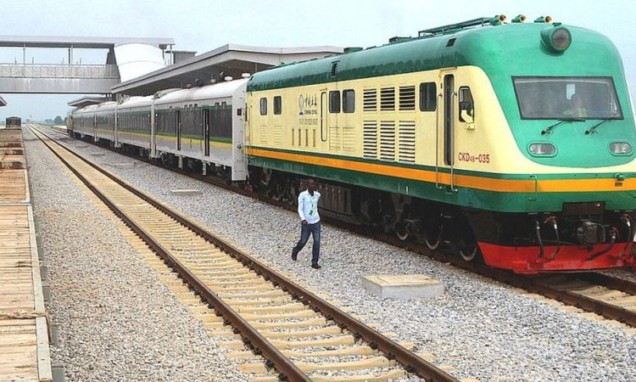

The Nigerian Senate has expressed alarm over the worsening condition of rail services along the Abuja–Kaduna corridor, once regarded as one of the country’s flagship transportation projects. The concerns were formally raised during plenary as Senate President Godswill Akpabio inaugurated an ad hoc committee to probe the challenges facing Nigeria’s railway system.
Speaking on the floor of the Senate, Akpabio painted a grim picture of the current state of operations, remarking that the speed of trains on the Abuja–Kaduna route has declined so drastically that alternative means of transport could be faster. According to him, the situation has reached a point where the efficiency and purpose of the rail service must be questioned.
The ad hoc committee has been given a six-week mandate to conduct a comprehensive review of rail operations across the country, with particular focus on the Abuja–Kaduna–Kano corridor. It is chaired by former Edo State Governor and current Senator, Adams Oshiomhole. The panel is expected to examine the quality of equipment in use, evaluate operational standards, and assess the effectiveness of management overseeing the rail sector.
Related News
Aerial Footage Shows Progress on Sokoto–Badagry Super Highway Construction
New aerial footage circulating online has revealed ongoing construction work on the proposed Sokoto–Badagry Super Highway, a major infrastructure project…
Kaduna State Government Takes Over Ahmadu Bello Stadium, Begins Major Reconstruction
The Kaduna State Government has officially taken over ownership of the iconic Ahmadu Bello Stadium from the Federal Government, following…
Umahi Inspects Ongoing Rehabilitation of Lagos–Ota–Abeokuta Expressway
Minister of Works David Umahi has inspected the rehabilitation of the Lagos–Ota–Abeokuta Expressway, describing the project as a priority infrastructure…
The Senate’s intervention follows mounting complaints from lawmakers and members of the public over what has been described as a sharp decline in service delivery on the route. The Abuja–Kaduna railway, which was initially celebrated for providing a safer and faster alternative to road travel, has in recent months been plagued by delays, reduced frequency, and declining patronage.
Contributing to the debate, Senator Abdul Ningi shared his personal experience travelling on the route, noting that journeys which previously took about 90 minutes now extend well beyond three hours. He described the development as deeply troubling, especially for commuters who depend on the rail service due to insecurity on the highways and the lack of viable alternatives.
Senator Ningi further disclosed that passenger traffic on the corridor has dropped significantly. According to him, daily passenger numbers have reportedly fallen from around 10,000 at peak periods to fewer than 1,000 in recent times. In addition, the number of train trips has allegedly been reduced to just two shuttles per day, a move that has further limited access and convenience for travelers.
The decline in patronage, lawmakers warned, has not only affected revenue generation but has also eroded public confidence in the rail system. There were also allegations that some of the equipment deployed for the railway project may have been second-hand, raising questions about procurement processes and whether Nigeria received value for money in the execution of the contract.
Lawmakers stressed that the investigation would seek to establish the root causes of the operational failures, including issues related to maintenance, security, funding, and management practices. The Senate emphasized that the findings of the committee would guide future legislative actions and policy decisions aimed at revitalizing the nation’s rail transport infrastructure.
The Abuja–Kaduna railway remains a critical component of Nigeria’s transportation network, particularly given ongoing security challenges on major highways. As such, senators agreed that restoring efficiency, safety, and public trust in the service is essential for economic activity and commuter welfare.
The Senate assured Nigerians that the outcome of the probe would not be ignored and that appropriate steps would be taken to ensure accountability and sustainable improvements in the rail sector.