How Kwankwaso’s Demands Scuttled Political Negotiations With Tinubu and the APC
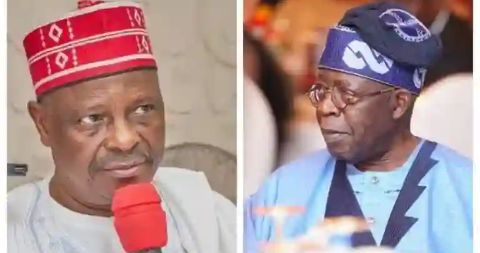

New details have surfaced regarding the failed political negotiations between President Bola Tinubu, the All Progressives Congress (APC), and Senator Rabiu Musa Kwankwaso, leader of the New Nigeria Peoples Party (NNPP). The talks, which spanned several months and involved multiple meetings, reportedly collapsed due to what ruling party insiders described as excessive and unrealistic demands made by the former Kano State governor.
Kwankwaso, long regarded as a major political force in Kano State and parts of the North-West due to his Kwankwasiyya movement, was seen by the APC as a potentially valuable ally ahead of the 2027 general election. Following the NNPP’s performance in the 2023 elections, presidency strategists initially believed that engaging Kwankwaso could help the ruling party consolidate its influence in Kano and expand its electoral reach across the region.
According to sources familiar with the discussions, meetings between Kwankwaso and President Tinubu were held mainly in Abuja, with both sides exploring the possibility of a political realignment. At the early stages of the engagement, the APC reportedly viewed Kwankwaso as a strategic bridge into Kano politics, assuming he retained firm control of the state’s political machinery.
However, senior APC officials told THISDAY that negotiations soon ran into trouble when Kwankwaso presented a list of demands that party leaders considered untenable. Among these was a request for control of up to 20 per cent of the APC’s national structure, a vice-presidential slot ahead of the 2027 election, and guarantees extending to the 2031 political cycle.
Party sources said the demands immediately raised red flags. One senior APC figure noted that even President Tinubu, a founding member and key stakeholder of the party, had never sought a fixed percentage share of the party’s national structure. The request for a vice-presidential position was also dismissed, as the slot was already occupied and not subject to renegotiation.
Related News
Henry Seriake Dickson Defects from PDP to Newly Formed Nigeria Democratic Congress
Senator Henry Seriake Dickson has formally defected from the Peoples Democratic Party (PDP) to the newly registered Nigeria Democratic Congress…

Hon. Sarah Ivie Adidi Receives “Her Excellence Award” During International Women’s Day Event in Abuja
Reps aspirant Sarah Ivie Adidi has been honoured with the 2026 “Her Excellence Award” during an event marking International Women’s…
Governor Peter Mbah Urges Ndigbo to Return to Strategic Politics
Peter Mbah, Governor of Enugu State, has urged the Igbo political class to return to what he described as “strategic…
“It was made clear that the vice-presidential position was not vacant, and there was no basis for discussions around 2031 at this stage,” a source familiar with the negotiations said. According to the source, Kwankwaso’s posture suggested he was negotiating not as a prospective ally, but as a near-equal stakeholder in a party he did not help to build.
Kwankwaso has since publicly acknowledged that he would only consider joining another political party if offered either the presidential or vice-presidential ticket ahead of the 2027 elections. This stance, APC leaders say, reinforced the perception that he was overreaching and misjudging his bargaining power.
As talks dragged on, presidency strategists reportedly began to question Kwankwaso’s claim to total control of Kano politics. Internal tensions within the NNPP, particularly the growing rift between Kwankwaso and Kano State Governor Abba Yusuf, further weakened his position. Signs of uncertainty over Yusuf’s long-term political loyalty and divisions within the party raised doubts about Kwankwaso’s ability to deliver a unified Kano political bloc.
With negotiations stalled, President Tinubu and APC leaders were said to have recalibrated their strategy. Rather than continue courting Kwankwaso, they shifted focus toward strengthening direct ties with Governor Yusuf, betting that incumbency, federal influence, and a more predictable partnership would yield better political returns.
“That was the turning point,” another source explained. “Once it became clear that Kwankwaso no longer controlled the entire Kano political space the way he claimed, the presidency decided it made more sense to deal directly with the governor.”
The strategic shift effectively diminished Kwankwaso’s leverage. APC insiders say his inability to guarantee political cohesion in Kano, combined with what they described as an inflated sense of indispensability, eroded his appeal as a negotiating partner.
Meanwhile, the Dr. Boniface Aniebonam-led faction of the NNPP has attributed Governor Yusuf’s eventual defection to the APC to Kwankwaso’s alleged domineering leadership style. In a statement, the party’s National Vice Chairman for the North-West, Alhaji Sani Danmasani, claimed Yusuf left the NNPP to escape what he described as suffocating control and “slavish” expectations imposed by Kwankwaso.
The statement accused Kwankwaso and his allies of betraying the party’s founder and attempting to hijack its structure, while portraying Yusuf’s move as a search for political survival rather than an act of disloyalty. The NNPP faction further dismissed criticisms from Kwankwaso’s camp, arguing that internal contradictions and leadership disputes had made the party increasingly unstable.
As political realignments continue ahead of 2027, the collapse of talks between Kwankwaso and the APC highlights the shifting balance of power in Kano politics and underscores how ambition, internal divisions, and strategic recalculations can quickly reshape political fortunes.