Fani-Kayode Responds to Sowore, Denies Past Allegations Against President Tinubu
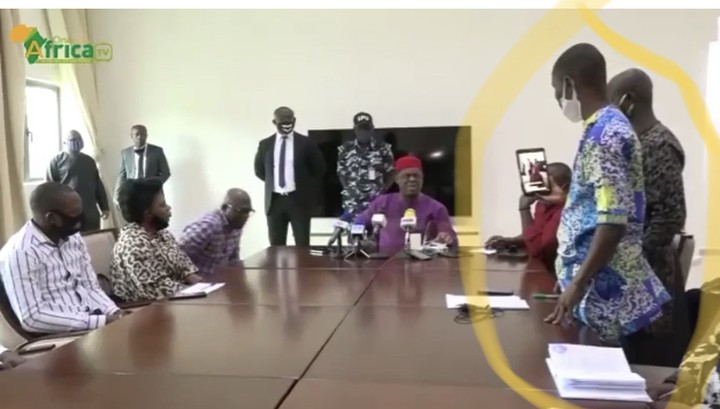

Former Minister of Aviation, Femi Fani-Kayode, has publicly responded to activist and former presidential candidate Omoyele Sowore over remarks allegedly linked to an ongoing defamation case involving President Bola Tinubu. In a strongly worded statement, Fani-Kayode denied ever accusing President Tinubu of involvement in the death of Chief Funso Williams, insisting that any attempt to associate him with such a claim is inaccurate.
Fani-Kayode stated that he was informed Sowore referenced statements he allegedly made over a decade ago in an attempt to support his legal defense in a defamation matter. According to Fani-Kayode, Sowore claimed that he had accused President Tinubu of being responsible for the killing of Funso Williams in 2003. He rejected the claim, describing it as false and misleading.
Clarifying his earlier remarks, Fani-Kayode explained that the only statement he made at the time was: “I am not Funso Williams: I cannot be killed like a chicken.” He noted that those words were spoken approximately 11 years ago during a politically tense period and were later retracted. He added that he acknowledged the statement could have been misconstrued and accepted that it was inappropriate.
Related News

Henry Seriake Dickson Defects from PDP to Newly Formed Nigeria Democratic Congress
Senator Henry Seriake Dickson has formally defected from the Peoples Democratic Party (PDP) to the newly registered Nigeria Democratic Congress…

Hon. Sarah Ivie Adidi Receives “Her Excellence Award” During International Women’s Day Event in Abuja
Reps aspirant Sarah Ivie Adidi has been honoured with the 2026 “Her Excellence Award” during an event marking International Women’s…
Governor Peter Mbah Urges Ndigbo to Return to Strategic Politics
Peter Mbah, Governor of Enugu State, has urged the Igbo political class to return to what he described as “strategic…
The former minister placed the context of the remarks within the heated political climate of the 2015 presidential election campaign, during which he served as Director of Media and Publicity for the Peoples Democratic Party (PDP) Presidential Campaign Organisation under then-President Goodluck Jonathan. He said political campaigns often involve strong exchanges and rhetoric between opposing parties.
Fani-Kayode further explained that he left the PDP several years ago and joined the All Progressives Congress (APC) in 2021. Since then, he said he has consistently supported President Tinubu and played a significant role in the APC’s 2023 presidential campaign. According to him, he served as Director of New Media and Special Operations during the campaign and contributed to the party’s electoral victory.
He also referenced former presidential aide Reno Omokri, noting that although Omokri previously opposed Tinubu’s election, he later retracted his criticisms after the president’s victory and has since publicly supported the administration. Fani-Kayode argued that revisiting old political statements for legal defense in the present case is unnecessary and unhelpful.
In his statement, Fani-Kayode advised Sowore to focus on addressing the legal issues before him rather than involving others who have no connection to the case. He stressed that individuals must take responsibility for their public statements and be prepared to defend them in court if necessary.
The former minister concluded by commending President Tinubu for what he described as a willingness to reconcile with former critics and political opponents. He characterized this approach as a sign of political maturity and leadership.
The exchange highlights ongoing tensions among political figures and activists in Nigeria, particularly in relation to public commentary, defamation claims, and the evolving dynamics of political alliances. Observers note that the matter remains within the legal domain, with outcomes likely to depend on judicial proceedings and evidence presented in court.
As of the time of reporting, no official court ruling has been issued regarding the defamation case referenced in the statements. Public reactions continue across social and political spaces as discussions around accountability, free speech, and political rivalry persist.