Umahi Vows to Resign if Abuja–Kaduna–Kano Highway Fails Quality Standards
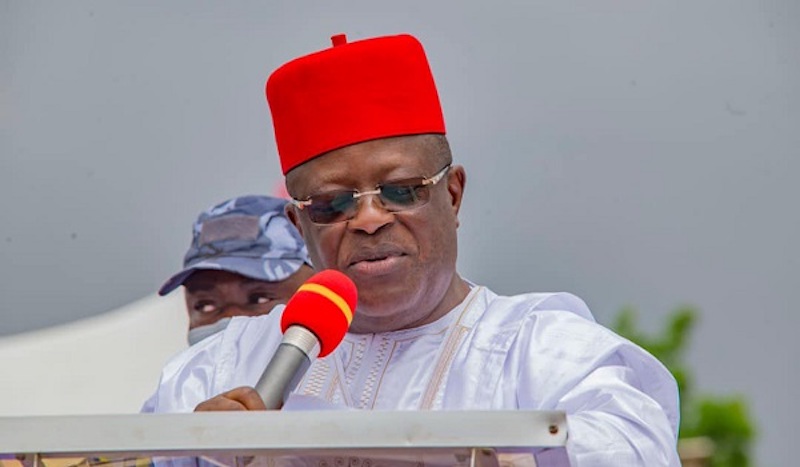

Nigeria’s Minister of Works, David Umahi, has publicly pledged to step down from his position if the ongoing Abuja–Kaduna–Kano highway project fails to meet required quality standards or is found to be substandard after independent testing.
Umahi made the declaration on Wednesday during a budget defence session before a joint committee of the National Assembly. His statement followed a series of questions raised by lawmakers regarding the award of a section of the high-profile road project to a contractor some legislators described as relatively unknown in the road construction sector.
The Abuja–Kaduna–Kano road is considered one of the most strategic highway corridors in northern Nigeria, linking the Federal Capital Territory to major commercial and population centres in Kaduna and Kano states. The project has been under construction for several years and has undergone multiple contract reviews and restructuring.
During the session, Edo North Senator Adams Oshiomhole expressed concern about the reassignment of part of the project from a well-known construction firm to another company reportedly associated in the past with generator sales. Oshiomhole questioned the rationale behind the change and called for clarity on the contractor’s competence and track record in large-scale infrastructure development.
In response, Umahi dismissed concerns about the contractor’s previous business activities, insisting that performance and quality of delivery should remain the primary criteria for evaluation. He maintained that the company currently handling the project had demonstrated competence on site and that the work met acceptable standards.
Related News
Henry Seriake Dickson Defects from PDP to Newly Formed Nigeria Democratic Congress
Senator Henry Seriake Dickson has formally defected from the Peoples Democratic Party (PDP) to the newly registered Nigeria Democratic Congress…

Hon. Sarah Ivie Adidi Receives “Her Excellence Award” During International Women’s Day Event in Abuja
Reps aspirant Sarah Ivie Adidi has been honoured with the 2026 “Her Excellence Award” during an event marking International Women’s…
Governor Peter Mbah Urges Ndigbo to Return to Strategic Politics
Peter Mbah, Governor of Enugu State, has urged the Igbo political class to return to what he described as “strategic…
“I am satisfied with the quality of work on the Abuja–Kaduna stretch, and I challenge you to an inspection,” Umahi told lawmakers during the hearing. “Bring the best of your concrete testers. If you test it and it fails, I will throw in the towel.”
The minister added that he was willing to subject the project to independent quality assessments to address doubts raised by legislators and members of the public. According to him, the integrity of the project and public confidence in government infrastructure delivery were paramount.
Umahi emphasized that construction quality would ultimately determine the success of the project, rather than the reputation or background of the contractor involved. He noted that infrastructure projects should be judged on measurable engineering outcomes, including durability, structural integrity, and compliance with specifications.
The Abuja–Kaduna–Kano highway is widely regarded as a key transportation route for economic activities in northern Nigeria. It facilitates movement of goods and passengers between the capital and major northern cities and is considered critical for trade, security logistics, and regional integration.
Concerns about the project have grown in recent months following reports of contract adjustments and changes in contractors. Lawmakers at the budget session stressed the importance of transparency and accountability in the award and execution of public infrastructure projects, especially those of national significance.
Umahi’s pledge to resign if the project fails quality tests represents one of the strongest public assurances yet from a senior government official overseeing the road’s reconstruction. Analysts note that such commitments may increase pressure on contractors and supervising agencies to ensure strict compliance with engineering standards and timelines.
The minister reiterated that the federal government remains committed to completing the road to durable standards that will serve motorists for many years. He encouraged lawmakers and independent professionals to conduct inspections and testing where necessary to verify the quality of ongoing construction.
As work continues on various sections of the highway, attention is expected to remain on the project’s execution, cost management, and final quality outcomes. Observers say the success or failure of the Abuja–Kaduna–Kano road will likely serve as a key benchmark for evaluating broader infrastructure delivery under the current administration.