U.S. Lawmakers Introduce Bill Targeting Alleged Illegal Chinese Mining Activities in Nigeria
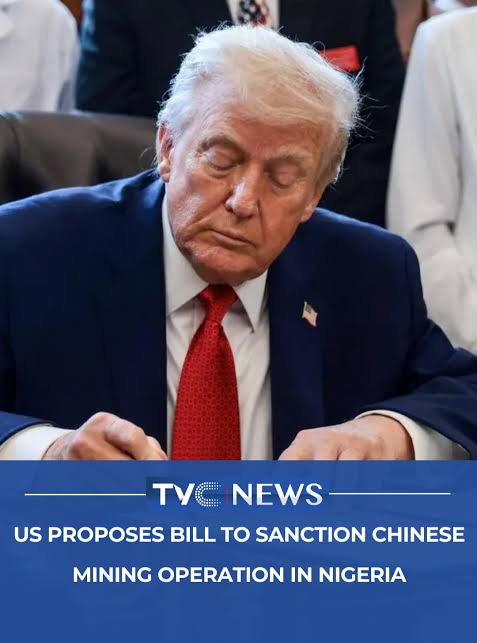

A new legislative proposal in the United States Congress has placed Nigeria’s mining sector under international scrutiny, as American lawmakers move to address what they describe as the destabilising impact of alleged illegal Chinese mining activities in the country.
The proposed legislation, titled the “Nigeria Religious Freedom and Accountability Act of 2026,” was introduced in the U.S. House of Representatives by a group of Republican lawmakers led by Chris Smith, alongside Riley Moore, Brian Mast, Mario Diaz-Balart, and Bill Huizenga. The bill seeks to mandate closer cooperation between the United States and Nigeria to counter illegal mining operations allegedly linked to insecurity and militia activity.
According to the sponsors, some Chinese mining entities operating within Nigeria have been accused of paying protection fees to armed groups, particularly Fulani militias, in order to secure access to mineral-rich territories. Lawmakers argue that such practices may be contributing to violence and instability in parts of the country, particularly in mining-heavy regions of northern Nigeria.
Related News

Six US Troops Killed in Iranian Strike on Kuwait Port, Says CENTCOM
The United States Central Command has confirmed that six American service members were killed following an Iranian strike on a…

Trump-Linked Financier Signs Preliminary Gas Deal With Russia’s Novatek for Alaska Project
An American financier with ties to former U.S. President Donald Trump has reportedly signed an early-stage agreement with Russian energy…

US Commends NAF Ahead of AH-1Z Helicopter Delivery
The United States Government has praised the Nigerian Air Force for its preparedness ahead of the delivery of AH-1Z attack…
If enacted, the bill would direct the U.S. Secretary of State to collaborate with Nigerian authorities to reduce and eventually eliminate militia-related violence connected to illegal mining operations. The legislation also proposes providing technical support to Nigeria in areas such as disarmament programmes, intelligence sharing, and counter-terrorism cooperation.
Key provisions in the bill call for coordinated action with international partners including France, Hungary, and the United Kingdom to promote peace and religious freedom while addressing the security risks associated with illicit mining operations. It also tasks the U.S. State Department with evaluating whether certain Fulani-ethnic militias meet the criteria for designation as Foreign Terrorist Organizations under U.S. law.
Clauses within the proposed legislation specifically urge U.S. authorities to work closely with the Nigeria government to counter what is described as hostile foreign exploitation tied to illegal mining and its alleged financing of armed groups. Lawmakers behind the proposal argue that addressing such activities is critical to improving regional stability and protecting vulnerable communities.
The bill references findings from previous investigative reports, including a 2023 publication by The Times, which alleged that some foreign nationals involved in Nigeria’s mining sector may have indirectly supported militant groups in parts of northwestern Nigeria. These reports suggested that certain operators acted as intermediaries or “runners” for armed groups in order to maintain access to mineral resources.
While the proposed legislation has not yet been passed into law, its introduction signals growing concern among U.S. policymakers about the intersection of foreign mining operations, security challenges, and governance issues in Africa’s largest economy. Analysts note that if approved, the bill could significantly expand U.S. involvement in Nigeria’s mineral sector and internal security framework.
The proposal has also sparked broader debate about sovereignty and foreign influence in domestic affairs, with some observers viewing the initiative as a potential step toward stronger international cooperation on security issues, while others see it as an example of expanding geopolitical competition involving major global powers.
Should the legislation progress through Congress and receive presidential approval, it could shape future U.S.–Nigeria relations, particularly in areas of security collaboration, resource governance, and foreign investment oversight. For now, the bill remains under consideration as stakeholders monitor its implications for Nigeria’s mining industry and broader security landscape.