Wiretap Allegations Trigger Political and Security Concerns as El-Rufai, Ribadu Clash
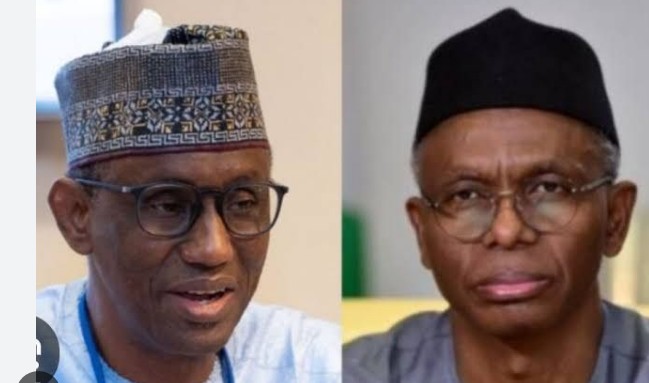

Nigeria’s political environment has been stirred by a growing controversy following claims by former Kaduna State governor Nasir El-Rufai that he and associates had access to intercepted phone conversations involving the country’s National Security Adviser, Nuhu Ribadu.
The allegation, made during a televised interview, has triggered strong reactions from the presidency and sparked wider debate about surveillance practices, national security oversight, and political tensions within the country’s leadership circles. The issue quickly drew the attention of presidential spokesperson Bayo Onanuga, who called for a comprehensive investigation into the claims and emphasised that no individual is above the law.
According to the remarks attributed to El-Rufai, he became aware of alleged directives against him after an associate reportedly intercepted communications linked to the office of the National Security Adviser. While acknowledging that unauthorised phone tapping is illegal under Nigerian law, he suggested that security agencies sometimes engage in such practices without judicial approval.
The statement has generated a complex legal and political dilemma. Under Nigerian telecommunications and national security regulations, the interception of private communications requires strict authorisation and must follow due legal process. Any unauthorised surveillance activity constitutes a criminal offence. Observers note that if the claim is accurate, it could point to the existence of unofficial interception capabilities operating outside established legal frameworks. Conversely, if the claim is exaggerated or unfounded, it raises concerns about the impact of public statements that may undermine confidence in national institutions.
Related News
Henry Seriake Dickson Defects from PDP to Newly Formed Nigeria Democratic Congress
Senator Henry Seriake Dickson has formally defected from the Peoples Democratic Party (PDP) to the newly registered Nigeria Democratic Congress…

Hon. Sarah Ivie Adidi Receives “Her Excellence Award” During International Women’s Day Event in Abuja
Reps aspirant Sarah Ivie Adidi has been honoured with the 2026 “Her Excellence Award” during an event marking International Women’s…
Governor Peter Mbah Urges Ndigbo to Return to Strategic Politics
Peter Mbah, Governor of Enugu State, has urged the Igbo political class to return to what he described as “strategic…
In response, Onanuga characterised the claim as serious and urged security agencies to determine whether any unlawful surveillance infrastructure exists. He stated that the presidency considers the matter not merely political rhetoric but a potential national security issue requiring careful examination.
Analysts suggest that the dispute reflects deeper tensions within Nigeria’s political structure, where public disagreements between senior figures sometimes signal broader power struggles. Allegations involving intelligence operations are particularly sensitive, as they touch on the integrity and credibility of the country’s security architecture.
The controversy has also extended to other institutions. El-Rufai alleged that the Independent Corrupt Practices and Other Related Offences Commission and the Department of State Services had been involved in actions targeting him, while describing the Economic and Financial Crimes Commission as maintaining professionalism in its dealings. These assertions broaden the scope of the dispute beyond the initial wiretap claim and introduce further questions about institutional independence and accountability.
Security experts note that the implications of the allegations are significant. If senior political actors can access or claim access to sensitive communications of top security officials, it may suggest vulnerabilities in the country’s intelligence and surveillance systems. Alternatively, such claims could be part of strategic political positioning amid shifting alliances and emerging rivalries ahead of future elections.
The controversy has also revived discussion around unresolved national issues, including the disappearance of social commentator Abubakar Idris, popularly known as Dadiyata, who went missing in 2019. During the interview, El-Rufai denied any involvement in the case, but its re-emergence in public discourse has highlighted ongoing concerns about transparency and accountability in high-profile investigations.
Governance analysts argue that the unfolding situation underscores the importance of clear legal frameworks governing surveillance activities. Questions surrounding who authorises interception, what oversight mechanisms exist, and how abuses are prevented have become central to the current debate. They stress that surveillance powers are among the most sensitive tools available to any government and must be exercised strictly within the law.
The presidency’s call for an investigation is widely viewed as a necessary step, though observers emphasise that the credibility of any probe will depend on transparency, independence, and adherence to constitutional procedures. As the situation develops, the outcome may influence public trust in both political leadership and security institutions.
For now, the wiretap allegation remains a significant political and legal issue, highlighting broader concerns about institutional discipline, the rule of law, and the delicate balance between national security and democratic accountability in Nigeria.