Wike Says FCT Election Curfew Was Approved by President Tinubu
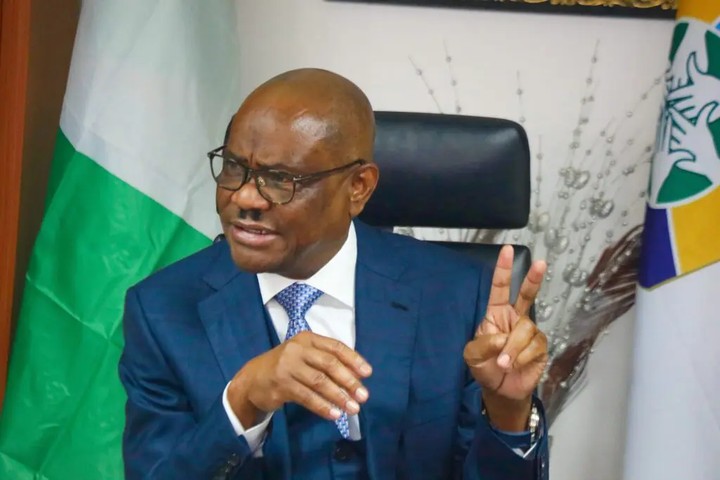

The Minister of the Federal Capital Territory (FCT), Nyesom Wike, has defended the decision to impose movement restrictions ahead of the FCT area council elections, clarifying that the measure was implemented with the approval of Bola Tinubu.
Speaking after touring several polling units across the territory, Wike addressed concerns raised by critics who questioned the legality and necessity of the curfew. According to the minister, the decision was not taken independently but followed presidential authorization.
“I never imposed a curfew on my own. I said with the approval of Mr. President,” Wike stated, responding to allegations that the restriction was arbitrary.
Ahead of the elections, the FCT administration had declared Friday a work-free day to allow residents to prepare for the polls. Additionally, movement of persons and vehicles was restricted from 8 p.m. on Friday until 6 p.m. on Saturday, covering the duration of voting activities across the six area councils.
The minister made the remarks after visiting polling locations in Garki, Karu, Karshi, Wasa, Apo, and Ketti, where he monitored the conduct of the elections. He described the process as largely peaceful, noting that voter turnout appeared lower in parts of the city centre compared to suburban and rural communities.
Related News
Henry Seriake Dickson Defects from PDP to Newly Formed Nigeria Democratic Congress
Senator Henry Seriake Dickson has formally defected from the Peoples Democratic Party (PDP) to the newly registered Nigeria Democratic Congress…

Hon. Sarah Ivie Adidi Receives “Her Excellence Award” During International Women’s Day Event in Abuja
Reps aspirant Sarah Ivie Adidi has been honoured with the 2026 “Her Excellence Award” during an event marking International Women’s…
Governor Peter Mbah Urges Ndigbo to Return to Strategic Politics
Peter Mbah, Governor of Enugu State, has urged the Igbo political class to return to what he described as “strategic…
Wike also addressed criticism from Senator Ireti Kingibe, who represents the FCT at the National Assembly. The senator had described the curfew as “unacceptable in a democratic society,” arguing that it restricted residents’ freedoms and was implemented without sufficient stakeholder consultation.
In response, Wike said he did not wish to “join issues” with the senator but maintained that her comments misrepresented his earlier announcement. He urged critics to carefully review his broadcast before drawing conclusions.
The FCT minister further commended the Independent National Electoral Commission (INEC) for its management of the polls, particularly the deployment of the Bimodal Voter Accreditation System (BVAS) for voter verification. He praised electoral officials and security personnel for maintaining order at polling stations.
According to Wike, reports available to him indicated that no incidents of violence had been recorded during the voting process as of the time of his assessment. He described the elections as orderly and urged residents to remain calm while awaiting official results.
The imposition of movement restrictions during elections is not unprecedented in Nigeria, as similar measures have been adopted in previous national and state elections to curb vote-buying, ballot snatching, and other forms of electoral malpractice. However, the scale and duration of restrictions often generate debate about balancing security concerns with civil liberties.
Public reactions to the FCT curfew have been divided. Supporters argue that the restrictions contributed to a calm environment and minimized irregularities, while critics contend that the approach may have inconvenienced residents and raised questions about proportionality.
Some observers point out that turnout levels, especially in central districts of Abuja, may have been influenced by multiple factors, including voter apathy, logistical considerations, and the movement controls. Others note that definitive assessments of the election’s credibility will depend on official results and any post-election petitions.
As the FCT awaits the final collation and announcement of results by INEC, the debate over the curfew underscores broader conversations about electoral security and democratic practice in Nigeria. Whether the restrictions will serve as a model for future elections remains to be seen, particularly as attention gradually shifts toward the 2027 general elections.
For now, FCT authorities maintain that the temporary measures were intended solely to ensure a peaceful and credible voting process.