PDP’s Mohammed Kasim Wins Gwagwalada Area Council Chairmanship Election
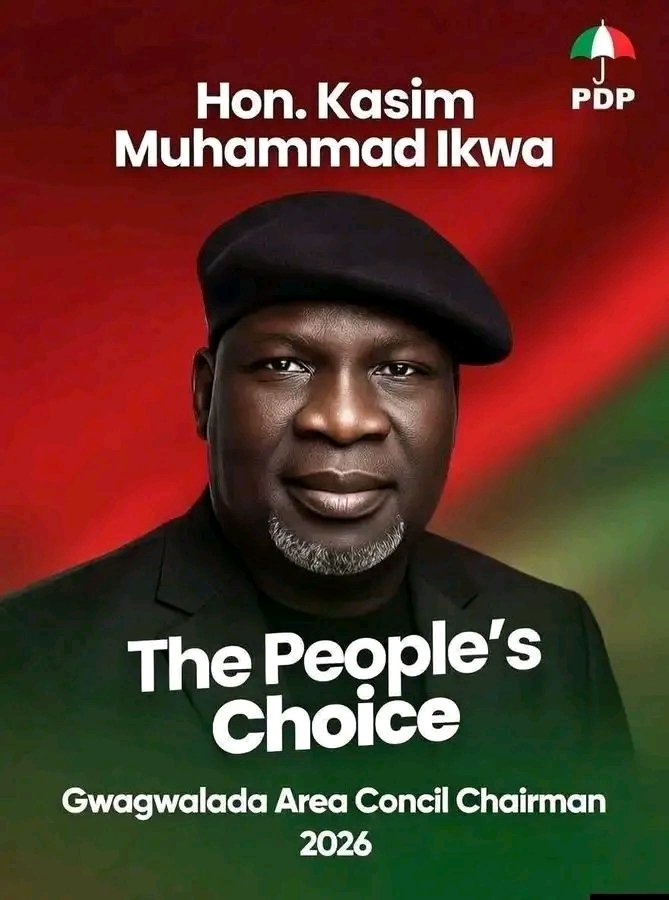

The Independent National Electoral Commission (INEC) has officially announced Mohammed Kasim of the Peoples Democratic Party (PDP) as the winner of the Gwagwalada Area Council chairmanship election in the Federal Capital Territory (FCT).
According to the results released by the electoral body, Kasim polled 22,165 votes to secure victory in the closely watched local government contest. The candidate of the All Progressives Congress (APC) came second with 17,788 votes. The All Progressives Grand Alliance (APGA) garnered 1,687 votes, while the African Democratic Congress (ADC) received 1,336 votes.
The outcome places the PDP ahead in one of the six area councils that make up the FCT, reinforcing the party’s foothold in the territory. Gwagwalada, one of the largest and politically significant area councils in Abuja, has often been seen as a battleground between major political parties.
Mixed Reactions Trail Announcement
The declaration of results generated swift reactions across political circles and online platforms. Supporters of the PDP described the victory as a win for democratic participation and the rule of law, congratulating the party and its candidate for what they characterized as a hard-fought contest.
Conversely, supporters of opposition parties questioned the implications of the vote distribution, particularly the relatively low figures recorded by smaller parties. Some commentators argued that the results may not necessarily reflect broader national political trends, cautioning against drawing conclusions about the 2027 general elections from a local government poll.
Related News

Henry Seriake Dickson Defects from PDP to Newly Formed Nigeria Democratic Congress
Senator Henry Seriake Dickson has formally defected from the Peoples Democratic Party (PDP) to the newly registered Nigeria Democratic Congress…

Hon. Sarah Ivie Adidi Receives “Her Excellence Award” During International Women’s Day Event in Abuja
Reps aspirant Sarah Ivie Adidi has been honoured with the 2026 “Her Excellence Award” during an event marking International Women’s…
Governor Peter Mbah Urges Ndigbo to Return to Strategic Politics
Peter Mbah, Governor of Enugu State, has urged the Igbo political class to return to what he described as “strategic…
Members and sympathizers of the ADC, in particular, faced scrutiny from political observers who noted the party’s comparatively modest showing despite heightened online visibility in recent months. The discrepancy between social media momentum and electoral performance became a recurring theme in post-election discussions.
Debate Over 2027 Begins
Although the election was limited to a local government council, discussions quickly expanded to national politics and future electoral contests. Some political voices maintained that local elections should not be used as a barometer for the 2027 presidential race, emphasizing differences in voter turnout, campaign intensity, and candidate appeal between council polls and general elections.
Others referenced recent gubernatorial contests, including developments in Anambra State, to argue that electoral outcomes can vary significantly depending on regional dynamics and the specific candidates on the ballot.
The conversation also reignited debates over electoral reforms, including calls for improved transparency measures such as real-time transmission of results. Advocates contend that strengthening confidence in the electoral process will be critical ahead of larger national contests.
Broader Political Context
The FCT remains a politically symbolic region, given its status as Nigeria’s capital territory. Victories in the area councils are often interpreted as signals of grassroots organizational strength and party structure within Abuja.
However, political analysts caution that local government elections frequently reflect localized concerns, candidate-specific factors, and turnout variations that may not translate directly into statewide or nationwide outcomes.
As INEC continues to finalize and announce results across other area councils in the FCT, attention is expected to remain focused on emerging patterns and what they might suggest about shifting political alignments.
For now, Mohammed Kasim’s victory in Gwagwalada stands as a significant milestone for the PDP within the Federal Capital Territory, while broader political actors assess the implications for future contests.