Wike Says FCT Poll Shows Voters Rejected ‘Groundnut Politics,’ Takes Swipe at Obi, Amaechi
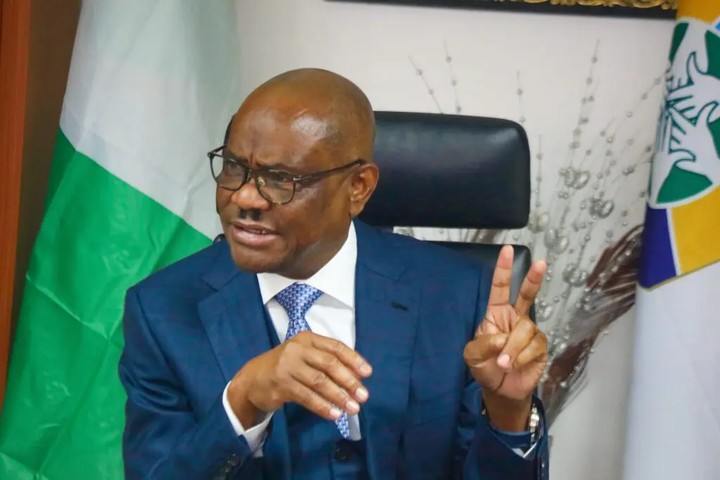

The Minister of the Federal Capital Territory (FCT), Nyesom Wike, has declared that the outcome of the recent area council elections in Abuja demonstrates that residents rejected what he termed “groundnut politics,” in an apparent swipe at former Anambra State governor Peter Obi and former Transportation Minister Rotimi Amaechi.
Speaking in the aftermath of the polls, Wike criticized politicians who, according to him, engage in symbolic market visits and roadside interactions primarily for campaign optics. Without mentioning Obi directly in his quoted remarks, he referred to “people who go about buying corn and groundnut from roadside sellers for the purpose of campaign just to deceive Nigerians.”
The comments are widely interpreted as referencing a recent viral video showing Obi purchasing groundnuts from a roadside trader in Abuja — a gesture his supporters described as reflective of his grassroots engagement style, but which critics dismissed as political theater.
“Emergency Democrats”
Wike further stated that the election results in the FCT exposed what he called the “hypocrisy” of certain political actors who portray themselves as reformers while consistently criticizing the government.
“Residents of the FCT demonstrated that they cannot be deceived by emergency democrats,” the minister said, arguing that voters made their choice based on performance and credibility rather than campaign imagery.
Although Wike did not cite specific vote figures in his remarks, his statement comes amid a broader political contest in the FCT that has seen heightened rivalry between established parties and emerging coalitions.
Related News
Henry Seriake Dickson Defects from PDP to Newly Formed Nigeria Democratic Congress
Senator Henry Seriake Dickson has formally defected from the Peoples Democratic Party (PDP) to the newly registered Nigeria Democratic Congress…

Hon. Sarah Ivie Adidi Receives “Her Excellence Award” During International Women’s Day Event in Abuja
Reps aspirant Sarah Ivie Adidi has been honoured with the 2026 “Her Excellence Award” during an event marking International Women’s…
Governor Peter Mbah Urges Ndigbo to Return to Strategic Politics
Peter Mbah, Governor of Enugu State, has urged the Igbo political class to return to what he described as “strategic…
Mixed Reactions Trail Remarks
The minister’s comments quickly generated debate across political platforms. Supporters of Wike and the ruling All Progressives Congress (APC) described the statement as a strong rebuttal to opposition narratives, arguing that the election outcome reflected voter confidence in the current political direction of the territory.
Some commentators suggested that the results signaled limits to the appeal of what they characterized as highly media-driven campaigns, especially when not backed by longstanding grassroots structures.
However, critics rejected Wike’s interpretation of the election, insisting that voter behavior in local council polls cannot be simplistically framed as an endorsement or rejection of any single national figure.
Others pointed to allegations of voter inducement and low turnout reported in parts of the FCT, arguing that broader structural and logistical issues must be addressed before drawing sweeping conclusions.
Debate Over Political Strategy
The controversy also reignited discussion about campaign styles in Nigerian politics. Obi’s approach — often featuring direct engagement with traders and small-scale business owners — has been described by supporters as symbolic of frugality and relatability. Detractors, however, argue that such gestures amount to optics rather than policy-driven engagement.
Wike’s remarks appear to reflect a larger ideological divide between political actors who emphasize institutional power structures and those who foreground symbolic grassroots interactions.
Meanwhile, references to Amaechi in the minister’s criticism suggest that the rivalry extends beyond one individual, highlighting ongoing tensions among prominent southern political figures.
Broader Political Implications
While the FCT area council elections are local in scope, their political significance has been amplified by their timing, as parties reposition ahead of future national contests.
Analysts caution that council election outcomes often reflect hyper-local dynamics, including candidate familiarity, turnout levels, and party organization at the ward level. Nonetheless, statements from influential officeholders such as Wike indicate that narratives around the polls are already being woven into broader political messaging.
As the dust settles on the elections, attention is expected to remain on how political leaders frame the results — and how those narratives may shape alliances and strategies in the months ahead.