‘There’s No Opposition in Nigeria’ – Odinkalu Criticises Atiku, Peter Obi Over FCT Polls
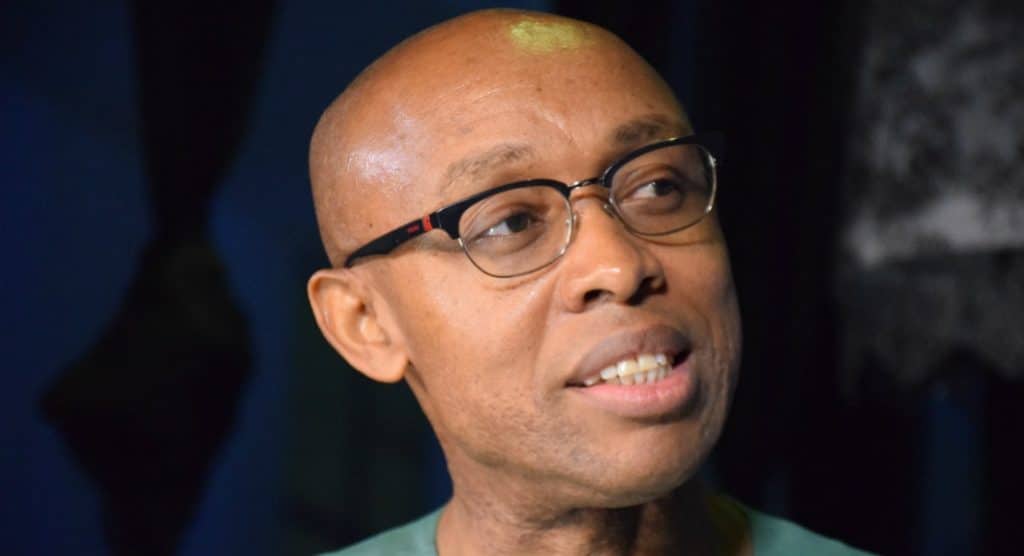

Former Chairman of the National Human Rights Commission, Chidi Odinkalu, has sharply criticised opposition political parties in Nigeria, describing them as weak and incapable of providing meaningful alternatives to the ruling government.
Speaking during an appearance on Politics Today on Channels Television, Odinkalu said the outcome and conduct surrounding the recent Federal Capital Territory (FCT) elections exposed what he considers a glaring absence of credible opposition leadership in the country.
According to him, opposition figures failed to demonstrate strategic thinking and mobilising capacity at a critical political moment.
Criticism of Opposition Strategy
Odinkalu particularly referenced the public holiday declared on the eve of the FCT election by the Minister of the FCT, Nyesom Wike. He argued that the move presented an opportunity for opposition leaders to galvanise their supporters and assert political presence.
“If I were a member of a political party and a leader of that party, I would have called a rally the next day,” he said. “That was a fantastic opportunity for opposition leadership to prove itself.”
Instead, he alleged, opposition leaders remained passive.
In his view, the inability to respond decisively illustrates a deeper structural problem within opposition politics in Nigeria. He described the situation as “an utter disgrace,” maintaining that, at present, there is effectively no opposition capable of holding the ruling party accountable.
References to Key Political Figures
Although Odinkalu did not focus on one individual alone, his comments were widely interpreted as targeting prominent opposition figures such as Atiku Abubakar and Peter Obi, both of whom played major roles in the 2023 presidential election cycle.
Related News
Henry Seriake Dickson Defects from PDP to Newly Formed Nigeria Democratic Congress
Senator Henry Seriake Dickson has formally defected from the Peoples Democratic Party (PDP) to the newly registered Nigeria Democratic Congress…

Hon. Sarah Ivie Adidi Receives “Her Excellence Award” During International Women’s Day Event in Abuja
Reps aspirant Sarah Ivie Adidi has been honoured with the 2026 “Her Excellence Award” during an event marking International Women’s…
Governor Peter Mbah Urges Ndigbo to Return to Strategic Politics
Peter Mbah, Governor of Enugu State, has urged the Igbo political class to return to what he described as “strategic…
He also expressed confusion over the current alignment within the Peoples Democratic Party (PDP), suggesting that internal divisions and shifting loyalties have weakened its standing as a formidable counterweight to the ruling All Progressives Congress (APC).
Observers note that since the 2023 general elections, opposition parties have grappled with internal disputes, defections, and leadership struggles, factors that have complicated efforts to present a united front.
Debate Over Campaign Restrictions
Odinkalu’s comments have generated mixed reactions.
Some political commentators argue that holding a rally 24 hours before an election would have violated established electoral guidelines that prohibit campaign activities within that timeframe. Others contend that symbolic mobilisation or strategic public engagement could still have been possible without breaching electoral laws.
Critics of Odinkalu’s remarks maintain that logistical and legal constraints must be considered, especially in a highly regulated electoral environment.
Supporters of his position, however, believe his broader argument speaks to a lack of energy, coordination, and grassroots mobilisation among opposition forces.
Broader Political Context
Odinkalu further questioned why the ruling party would feel compelled to engage in alleged electoral irregularities, such as result manipulation or voter suppression, if, as he claims, the opposition is already too weak to mount a serious challenge.
His remarks come amid ongoing national conversations about electoral integrity, democratic accountability, and the future of multiparty politics in Nigeria.
Political analysts note that effective opposition plays a crucial role in strengthening democratic systems by providing alternative policy ideas, scrutinising government actions, and mobilising citizens around governance issues.
Continuing Public Reaction
Public discourse following the interview has been intense, particularly on social media platforms where supporters of different political camps exchanged sharp criticisms.
While some Nigerians agree with Odinkalu’s assessment that opposition parties must reorganise and rebuild credibility, others argue that systemic challenges — including funding disparities, media influence, and institutional control — limit their capacity to compete effectively.
As Nigeria’s political landscape continues to evolve ahead of future elections, the debate over the strength, structure, and seriousness of opposition forces remains central to discussions about the country’s democratic trajectory.