Edo ADC Crisis Escalates as Gunshots Rock Oyegun’s Residence in Benin
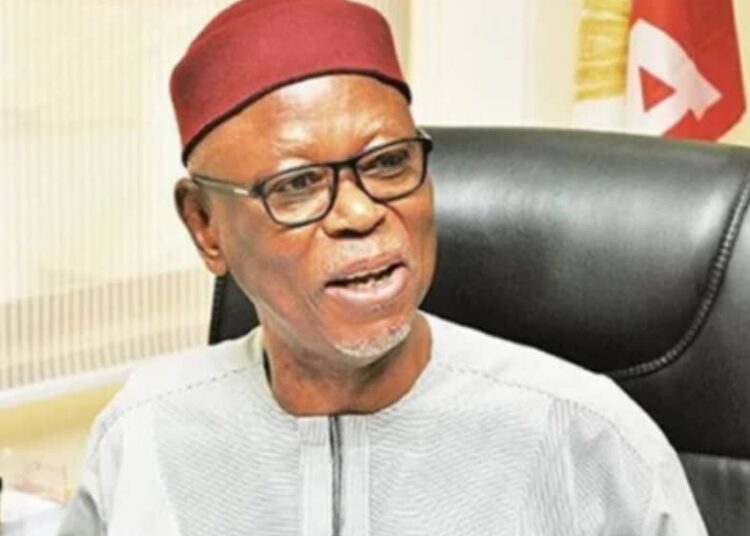

The internal crisis rocking the Edo State chapter of the African Democratic Congress has taken a dramatic turn, with gunshots reported at the Benin City residence of party chieftain and former governor, John Odigie-Oyegun.
The incident occurred after a controversial party meeting scheduled to hold at Oyegun’s residence, where several prominent members claimed they were denied entry. The development has further exposed deepening divisions within the party’s state structure.
Among those reportedly shut out of the meeting were former Chief Whip of the Senate, Rowland Owie; Sunny Aguebor, a national leader of the Independent Petroleum Marketers Association of Nigeria (IPMAN); and Douglas Iyike, alongside other stakeholders said to be founding members and financiers of the party in Edo State.
Sources indicated that upon arrival at the venue, some party members were presented with a list of invited participants, and several names were allegedly excluded. The move reportedly angered those affected, who questioned the basis for the selective invitation and accused the leadership of sidelining statutory members.
Eyewitnesses said tensions rose at the entrance of the property, with aggrieved members gathering at the gate in protest. Shortly afterward, chaos erupted as gunshots were heard in the vicinity, with reports that unidentified hoodlums attacked the property. The gate of the residence was said to have been hit by bullets during the incident, although no casualties were officially confirmed.
Speaking to journalists at the scene, Owie criticized what he described as attempts to marginalize founding members of the party. He called on the national leadership of the ADC to intervene and “call Oyegun to order.”
Related News

Henry Seriake Dickson Defects from PDP to Newly Formed Nigeria Democratic Congress
Senator Henry Seriake Dickson has formally defected from the Peoples Democratic Party (PDP) to the newly registered Nigeria Democratic Congress…

Hon. Sarah Ivie Adidi Receives “Her Excellence Award” During International Women’s Day Event in Abuja
Reps aspirant Sarah Ivie Adidi has been honoured with the 2026 “Her Excellence Award” during an event marking International Women’s…
Governor Peter Mbah Urges Ndigbo to Return to Strategic Politics
Peter Mbah, Governor of Enugu State, has urged the Igbo political class to return to what he described as “strategic…
“We that are here are founding members of the ADC. We are supposed to have a meeting today. Chief John Oyegun, who has not done anything to support the party in this state, is calling non-members to a meeting and excluding those who are statutory members,” Owie said.
He further alleged that several previously scheduled senatorial meetings had been postponed multiple times, accusing Oyegun of frustrating party-building efforts in the state. According to him, party leaders had been mobilizing and expanding the party’s base across Edo South and other areas, and deserved inclusion in major decision-making processes.
The confrontation has fueled speculation over the existence of factional divisions within the Edo ADC. While some members insist there is no formal faction, others argue that internal disagreements over structure, leadership control, and membership recognition have been simmering for months.
The violent turn of events has also sparked political debate beyond the party, with supporters and critics offering conflicting interpretations of what transpired. Some allege the attack reflects a broader political struggle in the state, while others maintain it is strictly an internal dispute among party stakeholders.
Political observers say the incident highlights the fragile nature of party cohesion in the lead-up to major electoral cycles, particularly as new alignments and high-profile defections reshape the opposition landscape nationwide.
Security agencies have yet to issue a detailed statement identifying those responsible for the shooting. Calls have mounted for a thorough investigation to determine whether the attack was linked directly to the internal dispute or carried out by external actors exploiting the tension.
As of press time, no arrests had been announced.
The unfolding crisis raises fresh concerns about internal party democracy, conflict resolution mechanisms, and the broader implications of political rivalry escalating into violence.
With national attention increasingly focused on Edo State’s political climate, stakeholders are urging restraint, dialogue, and institutional intervention to prevent further deterioration of the situation.