Kaduna State Government Takes Over Ahmadu Bello Stadium, Begins Major Reconstruction
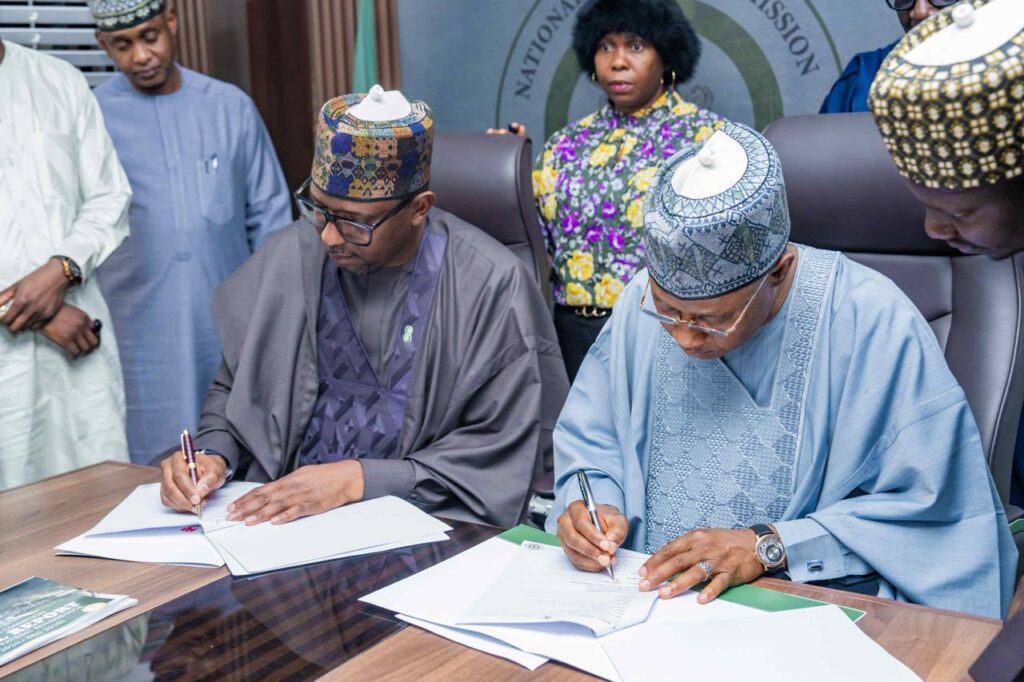

The Kaduna State Government has formally assumed ownership of the historic Ahmadu Bello Stadium from the Federal Government of Nigeria, marking a significant shift in the management and future of one of the country’s most prominent sporting arenas.
Governor Uba Sani announced the development following the signing of a Memorandum of Understanding between the Kaduna State Government and the National Sports Commission. The agreement transfers ownership and operational control of the stadium to the state government, subject to agreed safeguards approved by President Bola Ahmed Tinubu in what officials described as the national interest.
The transfer represents a major milestone in Nigeria’s evolving sports infrastructure policy. Built in 1964, the Ahmadu Bello Stadium has long been one of the country’s designated national stadiums, alongside the National Stadium in Lagos, the Nnamdi Azikiwe Stadium in Enugu, and the Liberty Stadium in Ibadan. For decades, these facilities hosted Nigeria’s national teams and major international sporting events.
However, like many legacy infrastructures constructed in the 1950s, 1960s, and 1970s, the Ahmadu Bello Stadium suffered from years of underinvestment and deferred maintenance. After 1999, the Federal Government faced mounting financial pressures across critical sectors such as healthcare, education, and security, limiting its capacity to modernise aging sports facilities.
Related News
Aerial Footage Shows Progress on Sokoto–Badagry Super Highway Construction
New aerial footage circulating online has revealed ongoing construction work on the proposed Sokoto–Badagry Super Highway, a major infrastructure project…
Umahi Inspects Ongoing Rehabilitation of Lagos–Ota–Abeokuta Expressway
Minister of Works David Umahi has inspected the rehabilitation of the Lagos–Ota–Abeokuta Expressway, describing the project as a priority infrastructure…
Lagos Completes 9km Rehabilitation on Lekki–Ajah Corridor, Finishes Ahead of Schedule
The Lagos State Government has announced the completion of a 9-kilometre stretch of road rehabilitation from Chevron to Admiralty along…
Recognising these challenges, the Federal Government initiated a policy to transfer certain national stadiums to state governments or concessionaires better positioned to manage and upgrade them. The Nnamdi Azikiwe Stadium was previously handed over to the Enugu State Government, while discussions regarding the Kaduna facility had been ongoing for some time.
With the agreement now formalised, Kaduna State has embarked on a comprehensive reconstruction project aimed at transforming the stadium into a modern, world-class sporting complex. According to Governor Sani, the renovation will expand seating capacity from 16,000 to 32,000, making it the second-largest stadium in Nigeria after the Moshood Abiola National Stadium in Abuja.
The upgrade is also expected to bring the facility in line with international football standards, including compliance with FIFA requirements. Officials have indicated that the revamped stadium could potentially serve as a northern hub for major football matches and may host games involving Nigeria’s senior national team, the Super Eagles.
Beyond sports, the Kaduna State Government has framed the project as part of a broader economic development strategy. Governor Sani described sports as a “disciplined instrument of economic growth and social renewal,” highlighting anticipated benefits such as job creation, sports tourism, increased local commerce, and investor attraction.
The National Sports Commission, led by Shehu Dikko, reportedly commended Kaduna State for aligning with the Federal Government’s broader transformation agenda, which seeks to position sports as a viable economic driver nationwide. The Commission described the move as setting a pace for other states to follow.
Despite widespread support from many residents who view the redevelopment as a positive step, some critics have questioned the projected cost, quality of materials, and long-term sustainability of the project. Concerns have also been raised about transparency and the need for careful oversight to ensure value for money.
Nevertheless, the Kaduna State Government has assured stakeholders that the reconstructed stadium will remain a shared national asset. While ownership has been transferred, the facility will continue to host national teams, federal sporting programmes, and events of national significance.
As reconstruction progresses, the Ahmadu Bello Stadium appears poised to reclaim its status as a central pillar of northern Nigeria’s sporting life. If completed as planned, the project could signal a new chapter in collaborative federal-state partnerships aimed at revitalising critical public infrastructure across the country.