2027 Elections Won’t Be 100% Perfect, INEC Chairman Cautions Nigerians
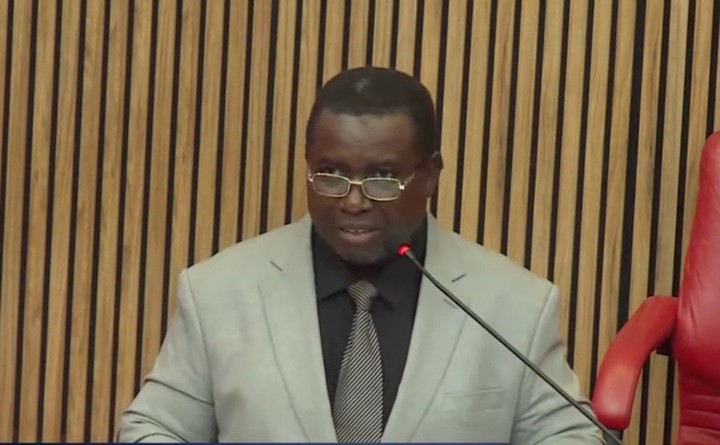

The Chairman of the Independent National Electoral Commission (INEC), Prof. Joash Amupitan, has stated that while the commission has the technical capacity to electronically transmit election results in 2027, Nigerians should not expect a flawless electoral process.
Amupitan made this known on Sunday during a live Citizens’ Town Hall programme titled “Electoral Act 2026: What it means for your votes and the 2027 elections.” The televised debate, anchored by Seun Okinbaloye and Yiaga Africa’s Executive Director, Samson Itodo, featured political party leaders, civil society representatives, and public officials.
Among those present were the National Chairman of the All Progressives Congress (APC), Nentawe Yilwatda; the Interim National Chairman of the Labour Party, Nenadi Usman; former Minister of Education Oby Ezekwesili; and Senator Ireti Kingibe.
Addressing widespread concerns about the credibility of future elections, Amupitan appealed for realistic expectations.
“INEC will strive as much as possible to give this country the best election,” he said. “However, we may not be able to achieve a 100 per cent perfect election for now.”
He clarified that the commission is fully prepared to transmit results electronically, noting that the main challenge lies not in the concept of transmission itself but in defining and achieving real-time transmission, especially in remote or hard-to-reach areas.
To illustrate the point, Amupitan cited the recent Federal Capital Territory Area Council elections. While results from five of the six area councils were transmitted without major delay, one ward in Kuje Area Council—Kabi ward—experienced setbacks due to poor terrain and communication barriers. Officials reportedly had difficulty reaching the location, and contact was temporarily lost until personnel physically retrieved the results the following day.
Related News

Henry Seriake Dickson Defects from PDP to Newly Formed Nigeria Democratic Congress
Senator Henry Seriake Dickson has formally defected from the Peoples Democratic Party (PDP) to the newly registered Nigeria Democratic Congress…

Hon. Sarah Ivie Adidi Receives “Her Excellence Award” During International Women’s Day Event in Abuja
Reps aspirant Sarah Ivie Adidi has been honoured with the 2026 “Her Excellence Award” during an event marking International Women’s…

Governor Peter Mbah Urges Ndigbo to Return to Strategic Politics
Peter Mbah, Governor of Enugu State, has urged the Igbo political class to return to what he described as “strategic…
According to the INEC chairman, the incident underscored how logistical constraints, rather than unwillingness, can affect real-time data transfer.
“Your election can only be as good as your logistics,” Amupitan stated, acknowledging that human errors and operational gaps must also be addressed.
The INEC boss further revealed that the commission actively contributed to the drafting of the Electoral Act 2026, pushing for mandatory electronic transmission provisions during legislative deliberations. He noted that although the Act now mandates electronic transmission of polling unit results to the IReV portal, it also provides a fallback mechanism—where hand-signed Form EC8A becomes the primary legal document if electronic transmission fails.
Beyond election-day processes, INEC has also commenced a comprehensive review of its regulations and guidelines governing political parties. The reform effort aims to align party operations with the Electoral Act 2026 and reduce recurring pre-election disputes.
According to a statement by INEC’s Chief Press Secretary, the review workshop involves national commissioners, legal experts, and institutional stakeholders. It will examine issues such as party primaries, financial disclosure standards, dispute resolution frameworks, and digital membership documentation.
The commission disclosed that technical support is being provided by the Westminster Foundation for Democracy, alongside Nigerian legal and electoral experts.
Amupitan emphasised that transparent political party administration is critical to credible elections. “For elections to inspire public confidence, the institutions that produce candidates must themselves operate transparently and within the law,” he said.
Meanwhile, political parties have begun adjusting to new legal requirements. The Peoples Democratic Party (PDP) and the African Democratic Congress (ADC) have launched nationwide digital membership registration drives in compliance with the Act, which requires submission of digital membership registers to INEC by April 2, 2026. The APC is also reportedly considering reopening its e-registration portal.
INEC recently revised the 2027 election timetable after legislative amendments reduced the statutory notice period from 360 days to 300 days. Under the updated schedule, Presidential and National Assembly elections are now slated for January 16, 2027, while Governorship and State Assembly polls will follow on February 6, 2027.
Despite acknowledging imperfections, Amupitan expressed optimism that the 2027 general elections would mark significant progress.
“Nigerians of 2027 are more aware,” he said. “When people trust the process and their leaders, the country will move forward.”