Lagos Ready for State Police, Says LNSA Chief Ifalade
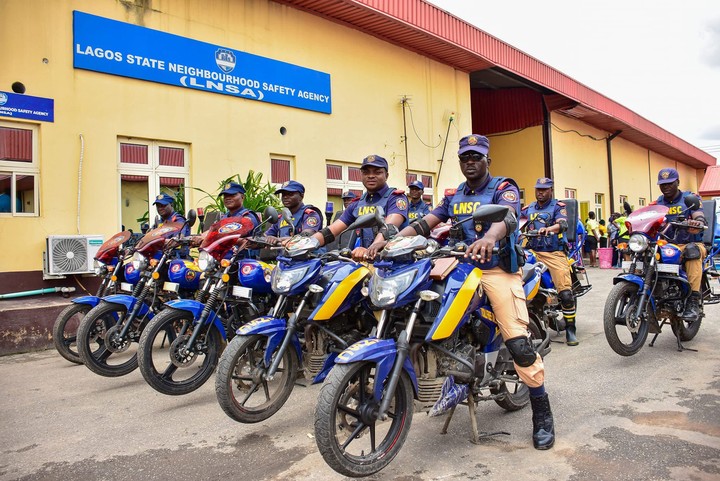

The Lagos State Government has expressed strong confidence in its readiness to operate a state-controlled police force if Nigeria eventually amends its constitution to allow states establish their own policing systems.
The assurance came from the General Manager of the Lagos State Neighborhood Safety Agency (LNSA), Prince Ifalade Oyekan, who stated that Lagos already has a robust security framework that could seamlessly evolve into a full state police structure once legal backing is provided.
Speaking on the ongoing national debate surrounding the creation of state police, Ifalade said Lagos has spent years building security institutions and community-based initiatives designed to improve local safety and intelligence gathering.
According to him, the existing security infrastructure within the state, particularly the Neighborhood Safety Corps, already performs many of the functions that a state police system would carry out.
“If the constitutional amendment happens today, Lagos is ready,” Ifalade said, noting that the transition would not require building security institutions from scratch.
Nigeria currently operates a centralized policing system under the Nigeria Police Force (NPF), which is controlled by the federal government. However, growing concerns over insecurity across different regions of the country have intensified calls for a decentralized policing structure that would allow states to manage their own security operations.
Advocates of state police argue that localized security forces would be better positioned to understand community dynamics, local languages, and regional security threats.
In Lagos, the Neighborhood Safety Corps was established as a community-based security outfit designed to complement the work of the federal police. Officers within the corps focus primarily on intelligence gathering, neighborhood patrols, and early detection of security threats.
While they do not currently possess full policing powers such as making arrests or conducting prosecutions, supporters of state police believe these limitations could be addressed through constitutional reform.
Security analysts say Lagos has one of the most developed sub-national security frameworks in Nigeria, with several initiatives created to support law enforcement agencies operating within the state.
These include collaborations between the state government and specialized police units such as the Rapid Response Squad (RRS), which operates as a tactical division of the Nigeria Police Force in Lagos.
Related News
Lagos Government Asked Landlord to Pay ₦400,000 to Unseal Her House Despite Having Complete Documents
A Lagos landlord shared a shocking experience after returning home to find her newly built house sealed by officials despite…
Lagos State Holds Nigeria’s Largest Subnational Domestic Debt at ₦1.05 Trillion, Data Shows
New data from Nigeria’s Debt Management Office indicates that Lagos State holds the largest domestic debt among all states, standing…
Lagos to Expand Red Line Capacity With Three New Eight-Coach Trains by Q3 2026
The Lagos State Government has announced plans to add three new eight-coach trains to the Red Line rail system by…
The RRS has gained national recognition for its rapid intervention capabilities in handling armed robbery, kidnapping, and violent crime within the state.
However, despite the existence of these structures, policing authority ultimately remains under federal control, meaning the Lagos government cannot independently command police operations.
The push for state police has been part of a broader conversation about restructuring Nigeria’s federal system.
Many political leaders and security experts believe decentralizing policing would allow states to respond faster to emerging threats and improve coordination with local communities.
Supporters also argue that security challenges vary significantly across Nigeria’s regions, making a centralized policing model less effective.
However, the proposal has also faced criticism and caution from some stakeholders who fear that state police could be abused by political leaders to suppress opposition or intimidate critics.
Concerns have also been raised about whether poorer states would have the financial capacity to maintain independent police forces.
Despite these debates, momentum behind the state police proposal appears to be growing.
In recent years, several states have created local security outfits to support federal policing efforts. These include initiatives like regional security networks in different parts of the country designed to tackle banditry, kidnapping, and communal violence.
Proponents believe these structures could serve as foundations for future state police systems if the constitution is amended to formally allow them.
For Lagos, officials say the groundwork has already been laid.
According to Ifalade, the state’s investment in community policing, intelligence networks, and security coordination positions it well to adopt a state-controlled police structure whenever the legal framework is established.
“As a state, we have built institutions that understand the communities they serve,” he said. “What remains now is the constitutional authority to expand those capabilities.”
The debate over state police continues to generate nationwide discussion as policymakers, security experts, and citizens weigh the potential benefits and risks of decentralizing Nigeria’s policing system.