ADC Labels Tinubu Administration “Most Incompetent in Nigeria’s History” Over Budget Implementation
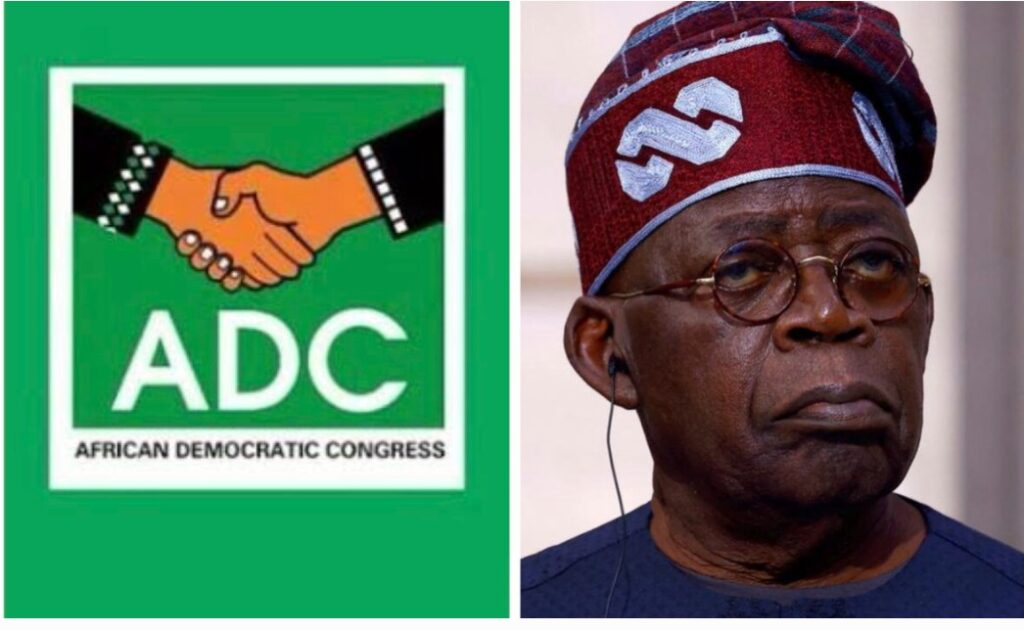

The African Democratic Congress (ADC) has launched a strong attack on the administration of Bola Ahmed Tinubu, accusing the federal government of unprecedented incompetence in the implementation of national budgets.
In a statement issued on Thursday, the party’s National Publicity Secretary, Bolaji Abdullahi, said the current administration’s approach to budgeting reflects what he described as “utter confusion” in fiscal management.
According to Abdullahi, recent reports indicate that approximately 30 percent of the 2025 national budget will only be implemented between February 2026 and November 30, 2026. The remaining 70 percent, he claimed, has been rolled over into the 2026 budget, which is still under consideration at the National Assembly of Nigeria despite the year already being underway.
Abdullahi argued that the development has created a situation where the government is effectively handling multiple budgets simultaneously without fully executing any of them.
“The ADC has noted recent reports that signify utter confusion and a historic level of incompetence in the Tinubu administration’s implementation of national budgets since 2024,” Abdullahi said in the statement.
“This is the first time in Nigerian history that any government would be running three budgets at the same time while implementing none.”
The ADC spokesperson further pointed to figures reportedly showing that only 17.7 percent of the capital component of the 2025 budget had been released as of the third quarter of the year. Overall budget implementation, he said, remained below 30 percent.
Abdullahi also criticized earlier assurances from the presidency that capital components of both the 2024 and 2025 budgets would be completed by March 31, 2026, arguing that such a target was unrealistic given the current pace of spending.
“This situation becomes even more alarming when we recall that President Tinubu promised last year that all capital components of the 2024 and 2025 budgets would be concluded by March 31, 2026, less than a month away, knowing quite well that this is not possible,” he said.
The statement cited low implementation levels across several key ministries that are considered critical to national development. According to the ADC, the capital budget implementation rate for the Ministry of Power currently stands at 3.6 percent, while the communications technology sector has recorded 8.9 percent implementation.
Related News

Henry Seriake Dickson Defects from PDP to Newly Formed Nigeria Democratic Congress
Senator Henry Seriake Dickson has formally defected from the Peoples Democratic Party (PDP) to the newly registered Nigeria Democratic Congress…

Hon. Sarah Ivie Adidi Receives “Her Excellence Award” During International Women’s Day Event in Abuja
Reps aspirant Sarah Ivie Adidi has been honoured with the 2026 “Her Excellence Award” during an event marking International Women’s…
Governor Peter Mbah Urges Ndigbo to Return to Strategic Politics
Peter Mbah, Governor of Enugu State, has urged the Igbo political class to return to what he described as “strategic…
Similarly, the party said the education sector has reached about 23.5 percent implementation, while the health sector stands at 32.5 percent.
Abdullahi argued that it is unacceptable for sectors responsible for human capital development to remain underfunded while public officials continue to enjoy what he described as extravagant lifestyles.
“No serious government would leave these sectors unfunded while officials continue to live in obscene opulence in the midst of unprecedented poverty,” he said.
The ADC also pointed to the Ministry of Defence as the only ministry that reportedly exceeded its budget allocation, reaching about 113.45 percent of its budget due largely to emergency funding through the Service-Wide Vote.
Despite the increased spending on defence, Abdullahi claimed that insecurity has continued to spread across several parts of the country. He referenced reports suggesting that up to 500 Nigerians may have been killed by armed groups in states including Borno, Yobe, Adamawa, and Kebbi during the month of Ramadan alone.
The opposition party further questioned the government’s claims of improved revenue performance and stronger foreign reserves.
According to Abdullahi, the administration has continued to borrow aggressively while simultaneously increasing taxes, yet many government projects remain stalled and contractors unpaid.
“This is the reason Nigerians are suffering like never before and asking the most important questions,” he said.
“What is this government doing with all the money that accrues from loans, revenues, and increased taxes? Why are Nigerians worse off today than they were three years ago?”
The ADC also accused the government of policy inconsistency, claiming that analysts have identified at least seven major appointments and policy decisions announced by the administration that were later reversed.
Abdullahi concluded by saying that despite the government’s claims of achieving significant economic progress, many Nigerians continue to struggle with rising poverty and living costs.
“At least six out of every ten Nigerians are unable to feed themselves,” he said, adding that the realities on the ground contradict the government’s narrative of economic success.
The criticism comes amid growing public debate about Nigeria’s economic direction, government spending priorities, and the effectiveness of fiscal management under the current administration.