Debate Erupts Over Alleged Benefits of Enugu’s Alignment With Federal Power
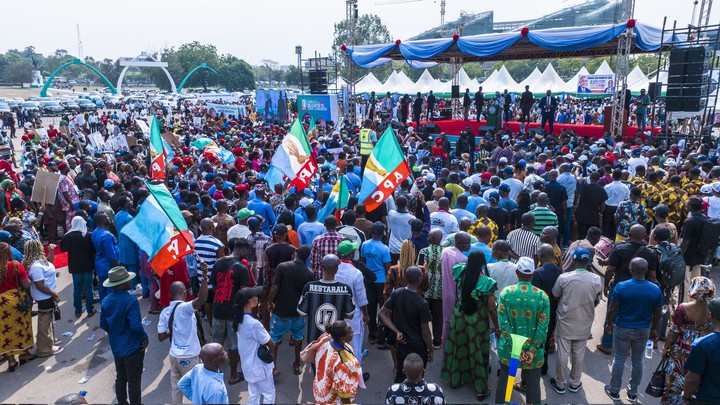

A fresh political debate has emerged over claims that Enugu State is reaping tangible benefits from aligning more closely with the federal government under the administration of Bola Ahmed Tinubu.
The discussion was triggered by comments attributed to political commentator Dan Nwomeh, who argued that Enugu residents are increasingly recognizing the advantages of being connected to the “centre of national politics and power.” According to him, this alignment has led to a series of federal approvals and infrastructure projects that could significantly impact development in the state.
Nwomeh’s remarks referenced several initiatives reportedly approved by the federal government, including the establishment of the South East Development Commission, which is expected to have its headquarters in Enugu. The commission was created to address infrastructure gaps and promote economic development across the South-East region.
He also pointed to federal approvals related to the concession of the Akanu Ibiam International Airport in Enugu. According to the claims, the concession arrangement includes plans to complete an abandoned international terminal and construct a cargo terminal aimed at expanding the airport’s international capacity.
In addition, several road and bridge projects were cited as evidence of federal attention to Enugu’s infrastructure needs. Among them is the approval of ₦24 billion for the construction of the 82 Division–Abakpa Junction Flyover, a project expected to improve traffic flow in one of the city’s busiest corridors.
Other projects listed include the reconstruction of the New Artisan Bridge, continued work on the Enugu–Onitsha Expressway, and funding approvals for the ongoing reconstruction of the Enugu–Port Harcourt Expressway. The federal government was also said to have approved the dualisation of the 9th Mile–Obollo Afor–Oturkpo highway, a project that has reportedly faced decades of delays.
Related News

Henry Seriake Dickson Defects from PDP to Newly Formed Nigeria Democratic Congress
Senator Henry Seriake Dickson has formally defected from the Peoples Democratic Party (PDP) to the newly registered Nigeria Democratic Congress…

Hon. Sarah Ivie Adidi Receives “Her Excellence Award” During International Women’s Day Event in Abuja
Reps aspirant Sarah Ivie Adidi has been honoured with the 2026 “Her Excellence Award” during an event marking International Women’s…
Governor Peter Mbah Urges Ndigbo to Return to Strategic Politics
Peter Mbah, Governor of Enugu State, has urged the Igbo political class to return to what he described as “strategic…
Supporters of the argument say these developments highlight the strategic importance of political cooperation between state governments and the federal administration. They claim such alignment can help accelerate project approvals, funding releases, and federal attention to local infrastructure challenges.
However, the claims have sparked significant pushback from critics, many of whom argue that the projects mentioned are federal responsibilities that should benefit states regardless of political alignment.
Several commentators questioned the notion that development should depend on a state’s relationship with the ruling party at the national level. They argued that infrastructure projects funded by the federal government are financed with national resources and therefore belong to all Nigerians.
Others suggested that some of the projects cited were already ongoing before any political realignment took place, challenging the narrative that they are new benefits resulting from recent political developments.
Critics also raised broader concerns about Nigeria’s democratic culture, warning that linking development projects to political loyalty could weaken opposition politics and undermine democratic accountability.
Some commentators referenced examples from past administrations where states governed by opposition parties still received federal projects and funding. They pointed to historical cases in which political leaders maintained opposition positions while still pursuing development within their states.
The debate also reflects wider political tensions ahead of the 2027 general elections, as politicians and commentators increasingly frame infrastructure and development issues within the context of national political competition.
While supporters of closer federal-state cooperation emphasize the practical benefits of political alignment, opponents insist that governance and public service delivery should remain separate from partisan calculations.
As discussions continue, the controversy highlights a recurring issue in Nigerian politics: whether federal development projects are distributed strictly according to national planning priorities or influenced by political relationships between state governments and the presidency.
With major infrastructure projects underway across several regions, the debate over political alignment and equitable development is likely to remain a prominent topic in Nigeria’s evolving political landscape.