Iran Warns US Tech Giants Like Google, Amazon Could Become “Legitimate Targets” in Expanding Regional War

Authorities in Iran have issued a strong warning to several major American technology companies, stating that their offices and infrastructure in the region could become potential targets as the ongoing conflict in the Middle East continues to escalate.
According to reports cited by international media, including coverage referenced by Al Jazeera, an Iranian media outlet affiliated with the country’s powerful military establishment published a list of facilities linked to leading U.S. tech companies that it claims support Israeli or American military operations.
The list was reportedly published by Tasnim News Agency, which is widely associated with Iran’s elite military force, the Islamic Revolutionary Guard Corps (IRGC). The report described a number of offices, cloud computing infrastructure and technology facilities operated by American firms as “Iran’s new targets.”
Among the companies mentioned were major global technology providers such as Google, Microsoft, Amazon, IBM, Oracle Corporation, Nvidia and Palantir Technologies. According to the report, certain facilities linked to these firms are located in several cities within Israel as well as in some Gulf states.
Iranian authorities claim that these companies’ technologies are being used in ways that support military or intelligence operations. In particular, they pointed to cloud computing services and advanced data-processing systems that could potentially support surveillance, artificial intelligence-based analysis and military logistics.
“As the scope of the regional war expands to infrastructure war, the scope of Iran’s legitimate targets expands,” the report stated, according to quotes carried by international media.
The warning suggests that the conflict may move beyond traditional military engagements into what analysts describe as an “infrastructure war,” where economic assets, technological systems and digital networks become part of the battlefield.
Related News

DSS Tells Court Kaduna Man’s Tweets Could Drag Nigeria into Israel–Iran Conflict
Nigeria’s domestic intelligence agency, the Department of State Services (DSS), has told a court that social media posts allegedly made…

Nigeria Begins Evacuation of Citizens from Iran Amid Escalating Middle East Conflict
The Nigerian government has started evacuating its citizens from Iran as tensions in the Middle East intensify.

US Senators Criticise Iran War After Classified Briefing
Several United States senators have sharply criticised the ongoing war with Iran after attending a closed-door classified briefing, saying the…
Separately, Iranian officials warned that economic institutions linked to American and Israeli interests could also be targeted. This includes banks and financial centres operating in the region.
A spokesperson for Khatam al-Anbiya Headquarters — a major engineering and economic arm reportedly linked to the IRGC — said the warning came after Iran accused its adversaries of attacking one of its banking institutions.
“The enemy left our hands open to targeting economic centres and banks belonging to the United States and the Zionist regime in the region,” the spokesperson said.
The official also issued a warning to civilians across the region to avoid locations connected to those institutions. According to the statement, people should stay at least one kilometre away from certain banking facilities that could become potential targets.
Meanwhile, the broader conflict between Iran, Israel and the United States has continued to intensify. Reports indicated that the war had entered its 12th day at the time of the announcement, with military activity expanding across several parts of the Middle East.
In neighbouring Lebanon, authorities reported casualties following overnight strikes in southern regions. According to the Lebanese health ministry, at least seven people were killed during Israeli strikes, including five individuals in the town of Qana.
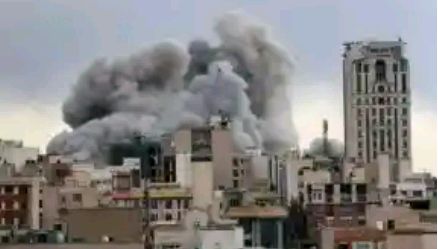
At the same time, residents in Tehran reported some of the heaviest bombardment since the conflict began. Witnesses described powerful explosions shaking several neighbourhoods and causing electricity outages across parts of the Iranian capital.
Military analysts say the latest threats reflect a growing shift in modern warfare, where technological infrastructure and corporate networks may become strategic targets. As global technology firms increasingly operate critical digital infrastructure — including cloud computing, communications systems and artificial intelligence tools — they may also become entangled in geopolitical conflicts.
The situation has raised concerns among international observers about the potential risks to global technology supply chains and digital infrastructure if hostilities continue to expand beyond conventional military targets.
For now, governments and companies across the region are closely monitoring developments as the conflict shows signs of widening into new domains, including cyber operations, economic warfare and attacks on strategic infrastructure.