2027 Presidency: Segun Showunmi Labels Peter Obi “Lazy” Over Political Strategy and Party Structure
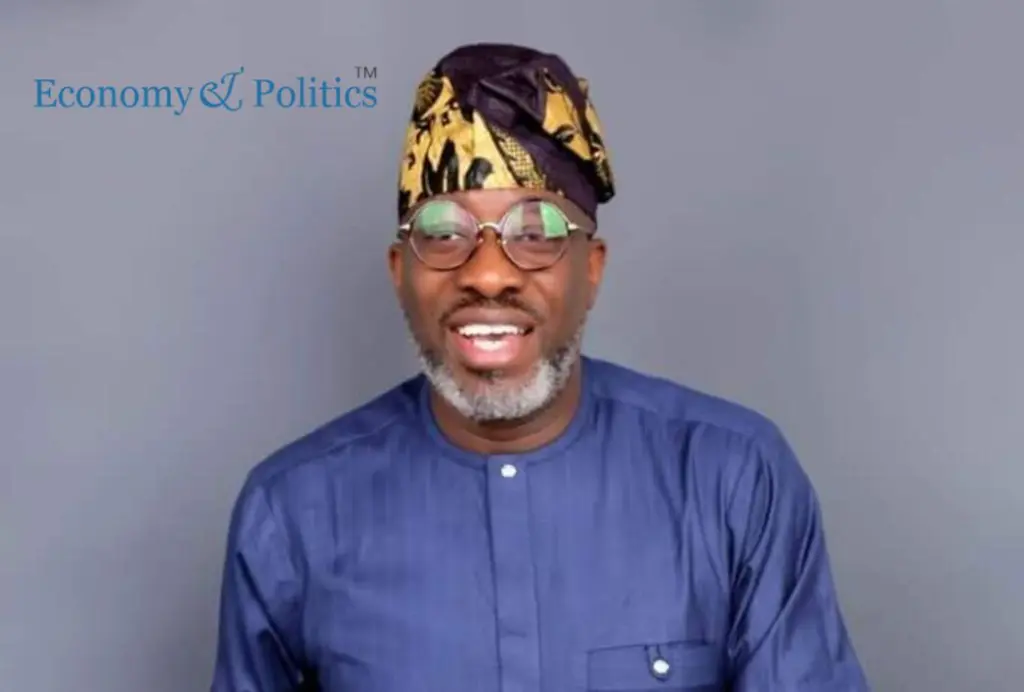

A senior member of the Peoples Democratic Party (PDP), Segun Showunmi, has ignited fresh controversy in Nigeria’s political space after openly criticising former presidential candidate Peter Obi, describing him as “lazy” when it comes to long-term political structure and strategy ahead of the 2027 general elections.
Showunmi made the remarks during an appearance on Hard Copy, a political programme aired on Channels Television, where he questioned Obi’s political choices, party movements, and approach to building enduring political machinery. According to him, Obi’s frequent movement between political parties reflects a lack of seriousness and poor structural planning.
“Peter Obi is not serious. He doesn’t know where his victory card is,” Showunmi said. He argued that Obi missed an opportunity to consolidate power by failing to remain in a single party long enough to build deep institutional strength. In his view, Obi could have charted a clearer path to electoral victory if he had stayed put and invested time in building party structures rather than relying on popular momentum.
Showunmi further criticised Obi’s past transitions from the All Progressives Grand Alliance (APGA) to the Peoples Democratic Party (PDP), then to the Labour Party (LP), and more recently into a broader opposition coalition. He described this pattern as political impatience, claiming it undermines Obi’s chances in delegate-driven primary elections, where internal party structures often matter more than public popularity.
Related News

Henry Seriake Dickson Defects from PDP to Newly Formed Nigeria Democratic Congress
Senator Henry Seriake Dickson has formally defected from the Peoples Democratic Party (PDP) to the newly registered Nigeria Democratic Congress…

Hon. Sarah Ivie Adidi Receives “Her Excellence Award” During International Women’s Day Event in Abuja
Reps aspirant Sarah Ivie Adidi has been honoured with the 2026 “Her Excellence Award” during an event marking International Women’s…
Governor Peter Mbah Urges Ndigbo to Return to Strategic Politics
Peter Mbah, Governor of Enugu State, has urged the Igbo political class to return to what he described as “strategic…
“When it comes to structural thinking, Peter Obi is very lazy,” Showunmi stated. He added that Obi underestimated the importance of internal party politics, especially when contesting within parties that already have entrenched political heavyweights.
A key part of Showunmi’s argument centred on former Vice President Atiku Abubakar, whom he described as a master of party primaries with decades of institutional experience. According to Showunmi, any politician entering a party where Atiku is active should not assume an easy path to securing the presidential ticket.
“I know Atiku very well, and nobody takes him for granted when it comes to primaries because he has institutional experience of how these things work out since 1992,” he said. He questioned the logic of demanding a presidential ticket in a party dominated by seasoned political actors without first controlling the internal structures.
The comments immediately triggered strong reactions across political circles and online platforms. Supporters of Peter Obi rejected the characterisation, arguing that Obi’s political journey reflects adaptability rather than laziness. Many pointed to his performance in the 2023 presidential election, where he mobilised massive youth support and disrupted Nigeria’s traditional two-party dominance despite limited party structures.
Critics of Showunmi also accused him of downplaying the changing dynamics of Nigerian politics, where voter sentiment, social media mobilisation, and grassroots enthusiasm increasingly challenge old-style political machinery. Some argued that Obi’s popularity exposed weaknesses in established parties and forced new conversations about accountability and governance.
Others, however, agreed with parts of Showunmi’s assessment, noting that Nigeria’s primary elections are heavily influenced by delegates, internal negotiations, and political alliances. They argued that without firm control of party structures, even the most popular candidates can struggle to secure nominations.
The debate reflects broader tensions within Nigeria’s opposition politics as politicians reposition themselves ahead of 2027. Questions around coalition building, zoning, delegate strength, and political loyalty continue to dominate discussions, with figures like Obi and Atiku remaining central to the evolving landscape.
As preparations for the next election cycle gather momentum, Showunmi’s remarks underscore a familiar reality in Nigerian politics: popularity alone may not guarantee electoral success, but neither can established structures fully ignore shifting public sentiment. Whether Peter Obi’s strategy will prove effective or flawed remains a subject of intense political scrutiny as 2027 approaches.