ADC Slams Akpabio Over Remarks on Opposition Concerns About 2026 Electoral Act
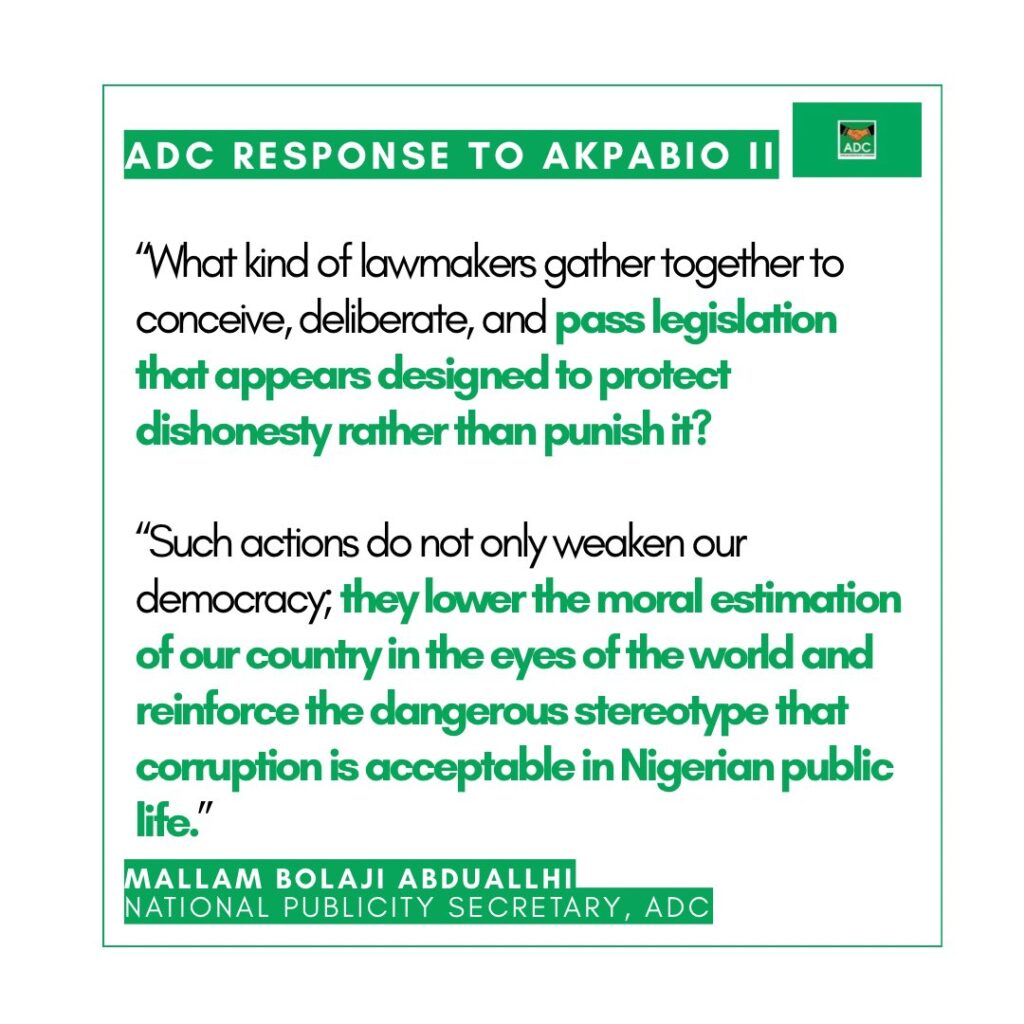

The African Democratic Congress (ADC) has criticized the Senate President, Godswill Akpabio, over comments he allegedly made dismissing the opposition’s concerns regarding provisions in the proposed 2026 Electoral Act.
The opposition party expressed strong dissatisfaction with the Senate President’s stance, arguing that certain provisions in the proposed electoral law could weaken accountability in Nigeria’s democratic process. According to the party, it is troubling that concerns raised by opposition parties about the integrity of the electoral framework are being treated lightly.
In a statement reacting to Akpabio’s remarks, the ADC questioned how any responsible leader could support a legal framework that, according to critics, might prevent election victories from being challenged on the basis of certificate forgery. The party argued that such a provision could undermine ethical standards in public office and weaken the legal safeguards meant to ensure credible leadership.
Certificate forgery has long been regarded as a serious offense in Nigeria’s political and legal systems. Under existing legal principles, presenting forged academic or professional credentials to secure public office can constitute both a criminal offense and grounds for disqualification. Because of this, critics say any attempt to remove or weaken the ability to challenge candidates on such grounds could create dangerous precedents.
The ADC warned that laws regulating elections should strengthen transparency and accountability, not reduce them. The party described the situation as deeply concerning, suggesting that the proposed provision reflects a troubling direction for Nigeria’s political institutions.
Related News

Henry Seriake Dickson Defects from PDP to Newly Formed Nigeria Democratic Congress
Senator Henry Seriake Dickson has formally defected from the Peoples Democratic Party (PDP) to the newly registered Nigeria Democratic Congress…

Hon. Sarah Ivie Adidi Receives “Her Excellence Award” During International Women’s Day Event in Abuja
Reps aspirant Sarah Ivie Adidi has been honoured with the 2026 “Her Excellence Award” during an event marking International Women’s…

Governor Peter Mbah Urges Ndigbo to Return to Strategic Politics
Peter Mbah, Governor of Enugu State, has urged the Igbo political class to return to what he described as “strategic…
In its statement, the party went further to describe the situation as an example of governance under a “kakistocracy,” a term used to describe a system in which the least qualified or most unethical individuals hold positions of power. The party accused the ruling administration led by the All Progressives Congress (APC) of overseeing policies that could lower ethical standards in governance.
Political debates around electoral laws are not new in Nigeria. Since the country returned to democratic rule in 1999, changes to electoral legislation have often generated intense disagreements between ruling parties and opposition groups. Each amendment typically raises questions about whether reforms are designed to improve the electoral process or give political advantage to those already in power.
Critics of the current proposal argue that weakening legal avenues for challenging candidates could reduce public confidence in elections. If voters believe that individuals with questionable credentials cannot be legally challenged, they may begin to doubt the fairness of the political system.
Supporters of the Senate leadership, however, have suggested that some opposition criticisms may be politically motivated. They argue that electoral reforms often involve complex legal interpretations and should not be reduced to partisan accusations. In their view, the National Assembly has the constitutional authority to review and amend electoral laws when necessary.
Still, the ADC insists that the issue is too important to ignore. The party emphasized that electoral laws must always protect the integrity of leadership selection and ensure that candidates meet all legal and ethical requirements.
Political analysts note that debates over the Electoral Act are likely to intensify as Nigeria gradually approaches the next general election cycle. Electoral reforms typically become more contentious during periods leading up to elections, as political parties seek rules they believe will guarantee fairness and transparency.
For many Nigerians, the central issue remains trust in democratic institutions. When laws governing elections are perceived as weakening accountability, it can deepen public skepticism about politics and governance.
As discussions continue within the National Assembly and among political stakeholders, observers say the ultimate goal should be a legal framework that strengthens democracy rather than undermines it. Ensuring that electoral laws promote transparency, fairness, and accountability will remain critical to maintaining confidence in Nigeria’s political system.
With opposition parties raising alarms and government officials defending their positions, the debate over the 2026 Electoral Act appears far from settled. The coming months are expected to bring further discussions, public reactions, and possible legislative reviews that could shape the future of Nigeria’s electoral process.