Akwa Ibom LGA Chairman Faces Backlash After Showcasing Basic Equipment for Local Security Outfit
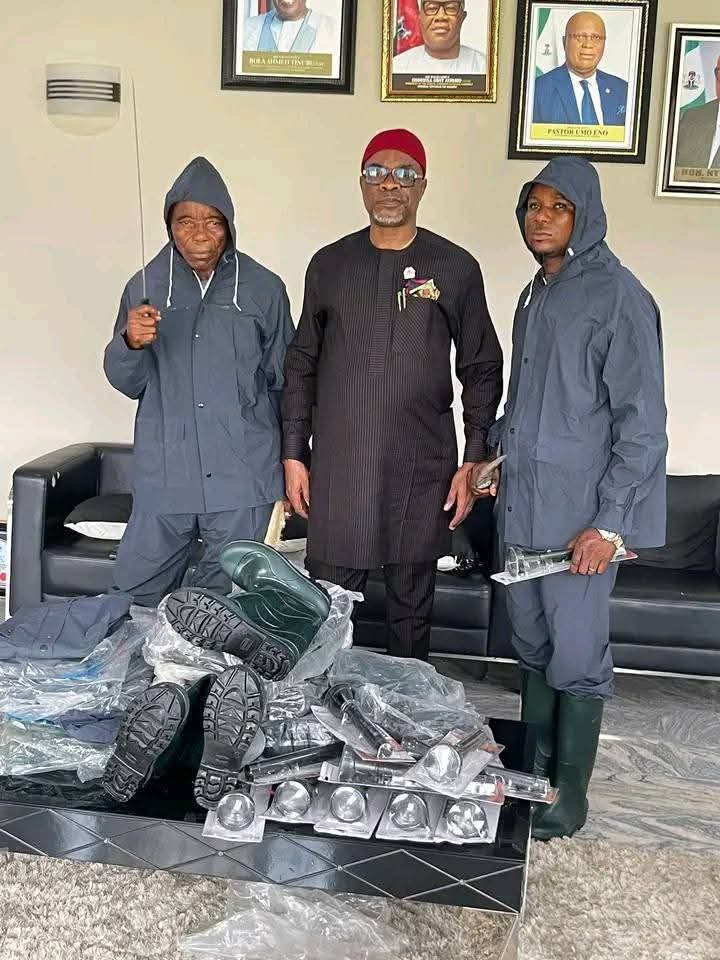

A recent social media post has placed the Chairman of Essien Udim Local Government Area in Akwa Ibom State, Ntiedo Effiong Usoro, at the center of public scrutiny after he showcased what he described as “necessary equipment” procured for a local security unit to help combat insecurity in the area. The items displayed included machetes, raincoats, gumboots, and torchlights—tools that quickly became the subject of intense online debate and mockery.
The post, shared on X (formerly Twitter) by user @obaofph01, was framed in a satirical tone but drew serious reactions from Nigerians across different platforms. Many users expressed disbelief that such rudimentary items were being presented as sufficient equipment for tackling security threats in a country grappling with armed robbery, kidnapping, banditry, and militancy. Critics argued that the tools appeared grossly inadequate when compared to the sophisticated weapons often wielded by criminal groups.
Within hours, the post went viral, generating hundreds of comments that reflected public frustration with governance and security at the grassroots level. Some commenters openly ridiculed the initiative, questioning how machetes and torchlights could realistically deter criminals armed with assault rifles. Others described the display as embarrassing and symbolic of what they see as a lack of seriousness among some public office holders when addressing issues of public safety.
Related News

300-Bed Enugu International Hospital Approaches Completion Amid Public Reactions
Construction of the 300-bed Enugu International Hospital is nearing completion, with officials and residents expressing optimism that the facility will…

Anambra Government Seals Shops in Onitsha Markets Over Monday Closure, Commends Compliant Traders
The Anambra State Government has sealed several shops across markets in Onitsha and nearby communities after traders failed to open…

Governor Otti Commissions Key Infrastructure Projects in Abia, Announces New SSG Appointment
Abia State Governor Alex Otti has commissioned major road and bridge projects in Arochukwu Local Government Area, announcing new leadership…
Several reactions went beyond mockery to highlight deeper structural problems. Commenters pointed out that local governments in Nigeria are often constrained by law from arming security outfits with sophisticated weapons, as policing and arms control remain largely centralized under the federal government. From this perspective, a few voices argued that the chairman may be operating within legal limitations, suggesting that true reform would require constitutional changes such as the establishment of state police or enhanced autonomy for local security structures.
However, even among those offering this context, many still questioned the decision to publicly showcase the items in a manner that suggested they were a major intervention. For these critics, the issue was not only about legal constraints but also about optics, priorities, and accountability. Some argued that it would have been better to quietly support community vigilance efforts rather than stage a public display that invited ridicule.
The controversy also reopened broader conversations about insecurity in the Niger Delta region. While Akwa Ibom is not typically classified among Nigeria’s most volatile states, residents and observers note that issues such as cult violence, armed robbery, and rural crime persist. This has fueled expectations that local leaders should adopt more strategic, well-funded, and coordinated approaches to security, even within existing limitations.
In addition, the online reactions reflected a growing sense of cynicism among Nigerians toward political leadership at all levels. Many commenters contrasted the modest security tools with the perceived luxury enjoyed by politicians, arguing that there is often a mismatch between public officials’ personal comfort and the resources allocated to public safety. Others lamented what they described as a culture of low standards and reduced expectations in governance.
While the chairman himself has not publicly responded to the backlash at the time of this report, the episode underscores the power of social media in shaping public discourse and holding leaders accountable, fairly or otherwise. It also highlights the delicate balance local officials must strike between demonstrating action and ensuring that such actions meet public expectations in both substance and symbolism.
Ultimately, the incident has become more than a viral joke. It has evolved into a snapshot of Nigeria’s ongoing struggle with insecurity, governance limitations, and public trust. Whether it leads to meaningful reflection or policy discussion remains to be seen, but for many Nigerians, it has reinforced a familiar question: who is truly equipped to protect the people?