Atiku, Obi, Kwankwaso, Sowore React to Trump’s Threat of Military Action on Nigeria
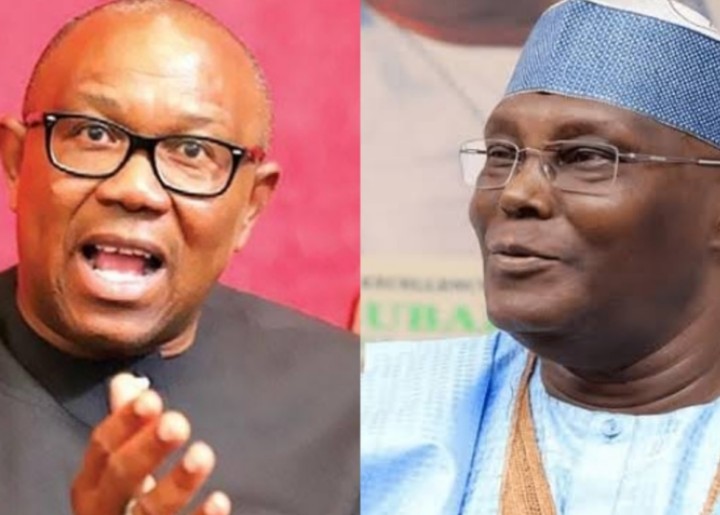

Reactions have continued to trail United States President Donald Trump’s recent threat of military intervention in Nigeria following the country’s re-designation as a “Country of Particular Concern (CPC)” over alleged persecution of Christians. While the Federal Government has condemned Trump’s comments as an unwarranted intrusion, leading opposition figures have expressed varying degrees of caution, skepticism, and reflection.
Despite the global uproar, some prominent politicians, including former Vice President Atiku Abubakar and Peter Obi, have notably refrained from issuing official statements. Their silence has drawn public attention, given their reputations for engaging in national debates.
Atiku, Obi Stay Silent but Remain Active Elsewhere
The Labour Party presidential candidate in the 2023 general election, Peter Obi, has not publicly addressed Trump’s remarks or Nigeria’s CPC reclassification. Instead, his recent social media activities have focused on community and cultural events. Over the weekend, Obi attended the funeral of highlife legend Dr. Mike Ejeagha, visited the College of Nursing, Amichi, and celebrated Cardinal Arinze’s 93rd birthday.
Similarly, Atiku Abubakar, the 2023 presidential candidate of the People’s Democratic Party (PDP), has stayed silent on the U.S. president’s threat but has remained active on other political issues. In recent days, Atiku has spoken out against the detention of a student in Niger State, commented on the upcoming Anambra governorship election, and paid a condolence visit to the family of former Bauchi governor Ahmadu Adamu Mu’azu.
Their silence has fueled speculation about whether opposition leaders are avoiding controversy or simply choosing diplomacy amid Nigeria’s sensitive international standing.
Related News
Henry Seriake Dickson Defects from PDP to Newly Formed Nigeria Democratic Congress
Senator Henry Seriake Dickson has formally defected from the Peoples Democratic Party (PDP) to the newly registered Nigeria Democratic Congress…

Hon. Sarah Ivie Adidi Receives “Her Excellence Award” During International Women’s Day Event in Abuja
Reps aspirant Sarah Ivie Adidi has been honoured with the 2026 “Her Excellence Award” during an event marking International Women’s…
Governor Peter Mbah Urges Ndigbo to Return to Strategic Politics
Peter Mbah, Governor of Enugu State, has urged the Igbo political class to return to what he described as “strategic…
Kwankwaso Urges Caution and Unity
The New Nigeria People’s Party (NNPP) leader, Senator Rabi’u Musa Kwankwaso, struck a measured tone, urging Nigerians not to welcome Trump’s threat. In a statement on his verified Facebook page, he cautioned that the U.S. president’s remarks could deepen divisions in an already polarized society.
“Insecurity in Nigeria affects all tribes and religious groups,” Kwankwaso said. “These challenges cut across ethnic, religious, and political lines. Nigeria is capable of solving its internal problems and should seek international support through partnership, not threats.”
He further called on Washington to offer technological and intelligence assistance instead of inflammatory rhetoric that could worsen tensions.
Sowore Warns Against Celebrating Trump’s Comments
Human rights activist and former presidential candidate Omoyele Sowore described Trump’s threat as “perilous,” cautioning Nigerians not to celebrate the idea of foreign military intervention.
“The latest threat by President Trump to launch military action in Nigeria may sound appealing to some,” Sowore wrote. “But history has shown that such interventions often bring chaos, not peace.”
Sowore referenced U.S. military actions in Iraq, Afghanistan, and Libya, noting that “no one—Christian, Muslim, or non-religious—should celebrate such rhetoric.”
Federal Government Reiterates Sovereignty
Meanwhile, the Federal Government reiterated its commitment to addressing terrorism and protecting citizens regardless of faith or ethnicity. A spokesperson for the presidency stated that Nigeria remains a sovereign nation and that its security challenges will be resolved through national and regional cooperation, not external threats.
Analysts say Trump’s declaration may strain U.S.-Nigeria relations if not managed carefully, as the rhetoric could embolden extremist narratives or fuel diplomatic backlash. For now, Nigeria’s political elite appear divided—between those urging restraint, those condemning U.S. interference, and those who remain strategically silent.