Cooking Gas Crisis Deepens Across Nigeria as Price of 12.5kg Cylinder Soars to ₦25,000
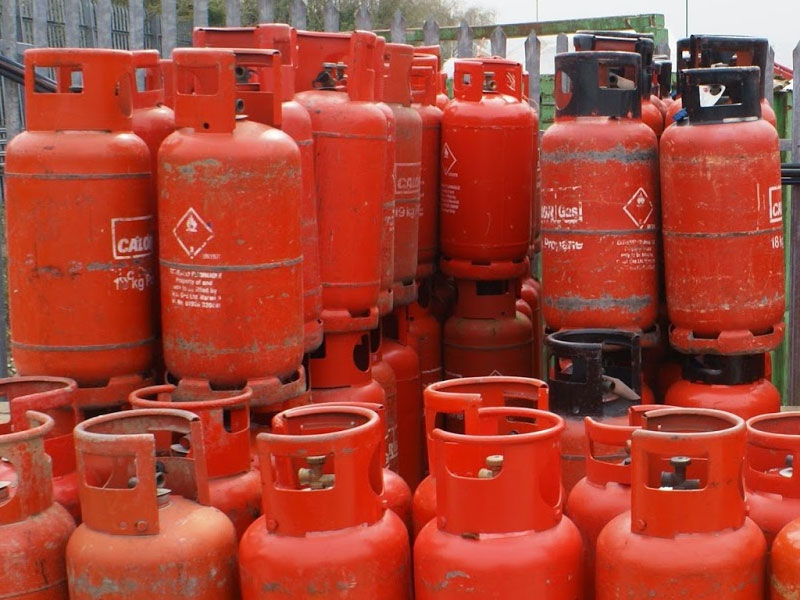

The price of Liquefied Petroleum Gas (LPG), popularly known as cooking gas, has surged dramatically across Nigeria, leaving millions of households struggling to afford one of the country’s most essential domestic commodities. As of this week, the average cost of refilling a 12.5kg cylinder has risen to ₦25,000, up from ₦17,500 just a week ago — an increase of over 40%.
Market surveys conducted by Vanguard revealed that 1kg of cooking gas now sells between ₦1,500 and ₦2,000, depending on the location. In several parts of Lagos, Ogun, and Abuja, long queues have formed at gas plants, while some outlets have been forced to shut down entirely due to lack of supply.
The Executive Secretary of the Nigerian Association of Liquefied Petroleum Gas Marketers (NALPGAM), Mr. Bassey Essien, attributed the sharp hike and scarcity to a recent disruption in distribution caused by the industrial action embarked upon by the Petroleum and Natural Gas Senior Staff Association of Nigeria (PENGASSAN). Speaking to Vanguard, Essien explained that the strike had paralyzed loading and distribution activities for several days, particularly at facilities connected to the Dangote Petroleum Refinery, currently the largest domestic supplier of LPG in Nigeria.
“Dangote Refinery is presently the biggest local producer of cooking gas. The crisis involving PENGASSAN disrupted distribution nationwide, and many dealers couldn’t replenish their stocks. What we are witnessing now is a direct result of supply shortfalls against rising demand. The situation is expected to ease as the labor issues are being resolved,” Essien said.
However, despite reassurances from industry players, the situation on the ground remains dire. In major urban centers like Lagos, Ibadan, Port Harcourt, and Abuja, residents lament that many gas stations have run out of stock, forcing families to search from one outlet to another in desperation. Some consumers have resorted to alternative cooking methods, including firewood, charcoal, and kerosene, as prices continue to climb beyond affordability.
Related News
Senegal Government Acquires 10% Stake in Dangote Cement Senegal
The government of Senegal has acquired a 10 percent equity stake in Dangote Cement Senegal, becoming a minority shareholder in…

Apple Unveils MacBook Air M5 Using Fela Anikulapo Kuti’s “Let’s Start”
Tech giant Apple has unveiled its next-generation MacBook Air powered by the new M5 chip, with a campaign featuring Fela…

Dangote Elevates Daughters to Executive Leadership as Conglomerate Targets $100bn Valuation by 2030
African industrialist Aliko Dangote has appointed his three daughters to top executive roles across the Dangote Group, marking a major…
Economic experts have warned that the price surge could worsen inflationary pressure, especially on food prices, as small restaurants and street vendors rely heavily on gas for daily cooking. With Nigeria’s minimum wage still below ₦70,000 in most states, refilling a single cylinder now represents nearly half of an average worker’s monthly income.
Meanwhile, business magnate Aliko Dangote, President of the Dangote Group, recently confirmed that his refinery currently produces about 2,000 tonnes of LPG daily and plans to increase production in the coming months. He acknowledged Nigeria’s growing energy poverty and hinted at the possibility of bypassing middlemen to sell gas directly to consumers if price manipulation persists.
“If distributors continue to inflate prices unnecessarily, we’ll find ways to sell directly to consumers,” Dangote said. “We want Nigerians to transition fully from firewood and kerosene to LPG for cleaner and safer cooking.”
Prior to the commencement of operations at the Dangote Refinery, Nigeria’s domestic LPG needs were largely met by the Nigeria LNG Limited (NLNG). In a statement obtained from the company, NLNG reiterated its commitment to local gas distribution, noting that since 2007, it has consistently supplied butane under its Domestic LPG Scheme.
“In 2022, we made the bold decision to commit 100% of our butane production to Nigeria’s domestic market,” the statement read. “Through our approved coastal terminals in Lagos and Rivers, and expanding into Delta State, we are ensuring that cooking gas becomes more available, accessible, and affordable across the country.”
Despite these efforts, the persistent challenges of logistics bottlenecks, foreign exchange volatility, and regulatory delays have continued to hinder consistent supply. The ongoing gas crisis also exposes the fragility of Nigeria’s energy distribution network, which depends heavily on a few key players for production and delivery.
As the festive season approaches, many fear that prices may climb even higher if the supply chain is not stabilized promptly. Experts have urged the federal government to intervene urgently through the Ministry of Petroleum Resources and the Nigerian Midstream and Downstream Petroleum Regulatory Authority (NMDPRA) to prevent further hardship.
For now, millions of households are bearing the brunt of the crisis — forced to ration cooking, seek cheaper alternatives, or endure the smoky return to firewood stoves. The situation has reignited debates over energy accessibility, government oversight, and the broader cost-of-living crisis in Nigeria.