Edo Attack: Punch Editorial Urges Tinubu to Safeguard Nigeria’s Democracy from Political Violence
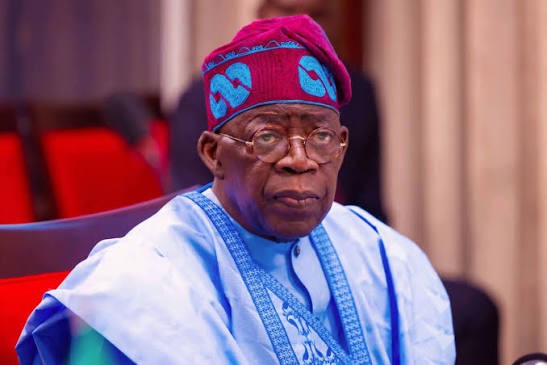

A scathing editorial by Punch Newspaper has urged President Bola Ahmed Tinubu to act swiftly to protect Nigeria’s democracy following a violent attack on the convoy of former presidential candidate Peter Obi in Benin City, Edo State.
The editorial was prompted by reports that suspected political thugs opened fire during a political engagement attended by Obi and former Edo State governor John Odigie-Oyegun, alongside leaders of the African Democratic Congress (ADC). Although no fatalities were recorded and both Obi and Odigie-Oyegun escaped unhurt, vehicles in the convoy were reportedly riddled with bullets, properties damaged, and the ADC secretariat thrown into disarray.
Punch described the incident as deeply troubling, particularly because it occurred outside the context of a general election or party primaries. According to the newspaper, if violence could erupt at a pre-election political meeting, the implications for the 2027 general elections are alarming.
The editorial also referenced a controversial statement allegedly made in July 2025 by Edo State Governor Monday Okpebholo, who had cautioned Obi against visiting the state and reportedly declared that he would “take responsibility” for whatever happened to him. Punch characterised the remark as reckless, unconstitutional, and dangerous in a fragile democracy where political rhetoric can inflame tensions.
Related News

Henry Seriake Dickson Defects from PDP to Newly Formed Nigeria Democratic Congress
Senator Henry Seriake Dickson has formally defected from the Peoples Democratic Party (PDP) to the newly registered Nigeria Democratic Congress…

Hon. Sarah Ivie Adidi Receives “Her Excellence Award” During International Women’s Day Event in Abuja
Reps aspirant Sarah Ivie Adidi has been honoured with the 2026 “Her Excellence Award” during an event marking International Women’s…
Governor Peter Mbah Urges Ndigbo to Return to Strategic Politics
Peter Mbah, Governor of Enugu State, has urged the Igbo political class to return to what he described as “strategic…
Drawing from Nigeria’s turbulent political history, the newspaper recalled the violence of the First Republic, including the infamous “Operation Wetie,” which preceded military intervention. It also cited the unrest that followed the 2011 presidential election involving former President Muhammadu Buhari, during which human rights organisations reported over 800 deaths. The paper argued that Nigeria cannot afford a return to such instability.
Punch stressed that democracy requires constant protection, especially from those wielding executive power. It warned that presidential silence in moments of political crisis could be interpreted as indifference or tacit approval. The editorial called on Tinubu to publicly affirm that every Nigerian—regardless of party affiliation—has the constitutional right to move freely, assemble peacefully, and campaign without fear.
The newspaper also demanded that security agencies provide equal protection to all political actors. Questions were raised about the adequacy of security around Obi during the incident and whether intelligence warnings had been ignored. The police, it said, owe Nigerians a transparent explanation.
Furthermore, Punch insisted that those responsible for the attack must be identified, arrested, and prosecuted. It questioned how the alleged attackers obtained firearms and whether political sponsors were shielding them. According to the editorial, Nigeria’s long-standing culture of impunity—where masterminds evade accountability while foot soldiers disappear—must be decisively broken.
Beyond immediate security measures, the paper advocated broader reforms. It recommended strengthening real-time electronic transmission of election results to enhance transparency and public trust. It also urged the electoral body to sanction politicians who deploy inflammatory rhetoric capable of inciting violence.
The editorial warned against Nigeria drifting toward patterns seen in some African countries where opposition politics is constrained through harassment, arrests, and violent disruptions. As Africa’s largest democracy, it argued, Nigeria must not normalise the intimidation of dissenting voices.
Ultimately, Punch placed responsibility squarely on the presidency. It called on Tinubu to rise above partisan interests and defend Nigeria’s multiparty system from descending into chaos as 2027 approaches.
“The signs are ominous. The rhetoric is rising. The weapons are appearing,” the editorial cautioned, urging immediate action to ensure that electoral competition remains peaceful and democratic rather than violent and destabilising.