El-Rufai Criticises Akpabio Over Electoral Act Amendment, Sparks Political Tensions
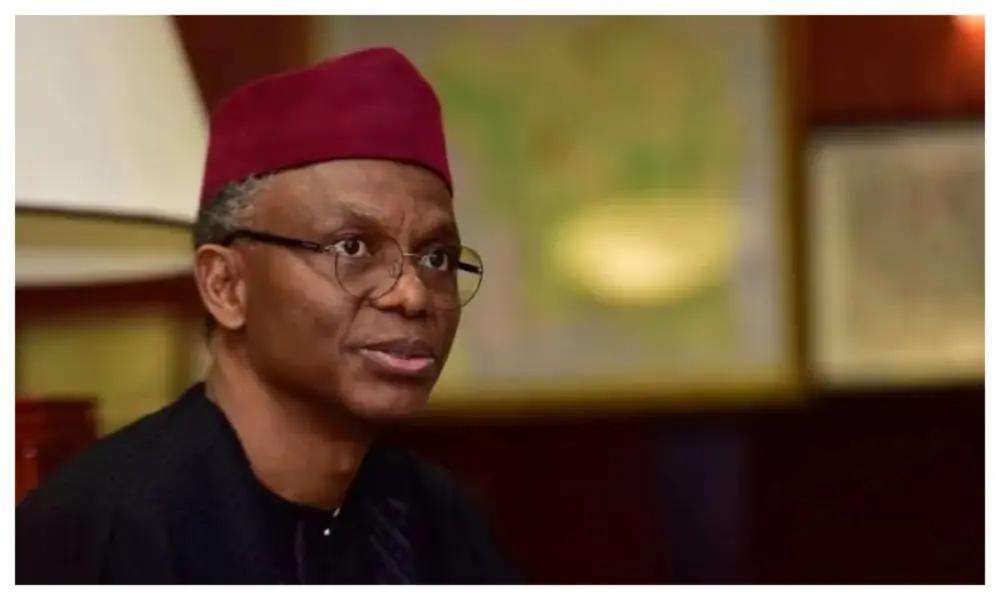

Former Kaduna State governor Nasir El-Rufai has launched a strong criticism of Senate President Godswill Akpabio amid growing political debate over the proposed amendment to Nigeria’s Electoral Act. Speaking during an interview on Trust TV, El-Rufai accused Akpabio of being the central obstacle to electoral reforms, particularly those relating to the electronic transmission of election results.
The controversy surrounding the Electoral Act amendment has intensified in recent weeks, with lawmakers and political stakeholders divided over provisions that would mandate real-time electronic transmission of election results. Supporters of the reform argue that such measures are essential to improving transparency and reducing electoral malpractice, while opponents have raised concerns about infrastructure challenges and national security implications.
In his remarks, El-Rufai rejected suggestions that the Senate as an institution should be blamed for the delay in passing the amendment. Instead, he placed responsibility directly on Akpabio, asserting that the Senate President’s leadership has hindered progress on the legislation.
“It is not the Senate that is the problem here. Akpabio is the problem,” El-Rufai said during the interview, using strong language to express his dissatisfaction with the Senate President’s role in the ongoing dispute.
Related News

Henry Seriake Dickson Defects from PDP to Newly Formed Nigeria Democratic Congress
Senator Henry Seriake Dickson has formally defected from the Peoples Democratic Party (PDP) to the newly registered Nigeria Democratic Congress…

Hon. Sarah Ivie Adidi Receives “Her Excellence Award” During International Women’s Day Event in Abuja
Reps aspirant Sarah Ivie Adidi has been honoured with the 2026 “Her Excellence Award” during an event marking International Women’s…
Governor Peter Mbah Urges Ndigbo to Return to Strategic Politics
Peter Mbah, Governor of Enugu State, has urged the Igbo political class to return to what he described as “strategic…
The former governor further alleged that Akpabio is acting in alignment with influential political interests within the current administration. He claimed that the Senate President’s stance reflects broader efforts to shape the electoral framework ahead of the 2027 general elections. According to El-Rufai, senators who disagree with the proposed direction of the amendment should organise and resist what he described as attempts to undermine credible electoral reforms.
He called on lawmakers opposed to the amendment’s current trajectory to unite and openly challenge it when the National Assembly reconvenes. El-Rufai argued that collective action among senators would be necessary to ensure that any changes to the Electoral Act strengthen, rather than weaken, public confidence in the electoral process.
In addition to his institutional criticisms, El-Rufai made personal remarks about Akpabio, referencing their longstanding relationship and suggesting that his familiarity with the Senate President informs his current views. He stated that his knowledge of Akpabio dates back to the 1990s and that this history shapes his assessment of the Senate President’s leadership style and political conduct.
The comments have generated significant reactions across Nigeria’s political landscape. Supporters of El-Rufai’s position have echoed concerns about the direction of electoral reforms and the potential implications for future elections. Some political observers argue that the debate highlights broader tensions within Nigeria’s political elite, particularly among figures who previously aligned under the same ruling coalition.
However, critics have dismissed El-Rufai’s remarks as politically motivated. Some have suggested that his recent criticisms of the current administration may be influenced by his evolving political position following the 2023 elections and subsequent government appointments. Others argue that disagreements over electoral reforms should be addressed through institutional processes rather than personal attacks.
Analysts note that disputes over the Electoral Act amendment come at a time when preparations for future elections are already shaping political alliances and narratives. The question of electronic transmission of results has become a central issue in discussions about electoral credibility, with civil society groups, opposition figures, and some lawmakers advocating for stronger technological safeguards.
As the National Assembly prepares to reconvene, attention is expected to remain focused on the Electoral Act amendment and the positions of key political actors. Whether consensus can be reached on the contentious provisions remains uncertain, but the ongoing debate underscores the importance of electoral reforms in Nigeria’s evolving democratic landscape.