FG Secures $1.26 Billion Financing for Phase One of Lagos–Calabar Coastal Highway
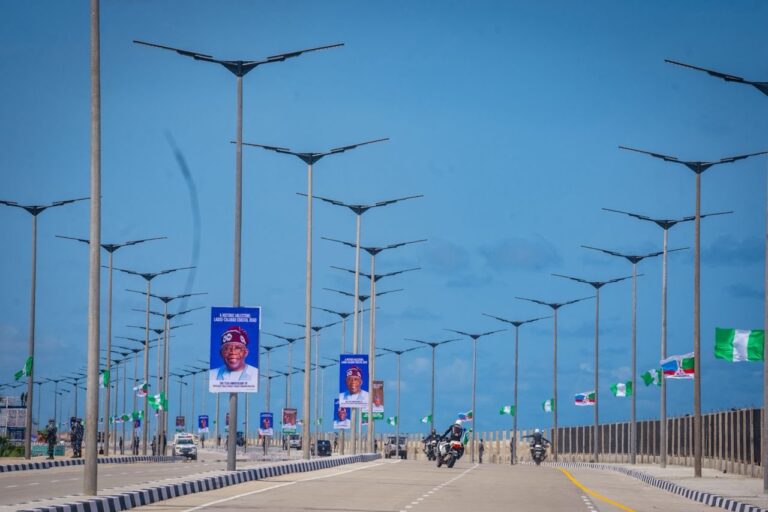

The Federal Government has announced that it has secured $1.26 billion in financing to fund the execution of the second section of Phase One of the Lagos–Calabar Coastal Highway, a flagship infrastructure project of President Bola Ahmed Tinubu’s administration. The announcement was made in a statement issued by the Presidency on Friday, highlighting the administration’s commitment to innovative financing strategies for critical national projects.
According to the statement, President Tinubu commended the Ministry of Finance, the Ministry of Works, and the Debt Management Office (DMO) for their collaboration in concluding the financing arrangement. The President described the successful closure of the transaction as a significant achievement that would ensure uninterrupted progress on the highway project.
“This is a major achievement, and closing this transaction means the Lagos–Calabar Coastal Highway will continue unimpeded,” Tinubu was quoted as saying. He added that his administration would continue to explore a range of funding opportunities to deliver key economic and infrastructure projects across the country.
The Minister of Finance and Coordinating Minister of the Economy, Wale Edun, disclosed that the loan agreement was signed on December 19, 2025. He assured Nigerians that the funds would be deployed responsibly and in line with strict timelines to ensure timely delivery of the project.
Related News
Aerial Footage Shows Progress on Sokoto–Badagry Super Highway Construction
New aerial footage circulating online has revealed ongoing construction work on the proposed Sokoto–Badagry Super Highway, a major infrastructure project…
Kaduna State Government Takes Over Ahmadu Bello Stadium, Begins Major Reconstruction
The Kaduna State Government has officially taken over ownership of the iconic Ahmadu Bello Stadium from the Federal Government, following…
Umahi Inspects Ongoing Rehabilitation of Lagos–Ota–Abeokuta Expressway
Minister of Works David Umahi has inspected the rehabilitation of the Lagos–Ota–Abeokuta Expressway, describing the project as a priority infrastructure…
Edun explained that the $1.26 billion facility is designated for Phase One, Section Two of the highway, following the successful financial close of $747 million for Phase One, Section One in July 2025. According to him, the two transactions together represent a defining moment in Nigeria’s infrastructure development drive.
“The signing on December 19, 2025, of USD 1.26 billion financing for Phase One—Section Two of the Lagos–Calabar Coastal Road marks a defining moment in Nigeria’s infrastructure journey,” Edun said. “Collectively, these landmark transactions firmly establish the Lagos–Calabar Coastal Highway as one of the flagship projects under President Bola Ahmed Tinubu’s Renewed Hope agenda.”
He further noted that the deal represents the first fully underwritten financing transaction of this scale for a Nigerian road infrastructure project. The facility was underwritten by First Abu Dhabi Bank, which provided $262 million, and Afreximbank, which committed $500 million, with partial risk coverage from the Islamic Corporation for the Insurance of Investment and Export Credit (ICIEC). Edun said the transaction is the largest supported by ICIEC since its inception.
Phase One, Section Two of the Lagos–Calabar Coastal Highway spans approximately 55.7 kilometres, linking Eleko in the Lekki axis of Lagos State to Ode-Omi in Ogun State. The coastal road is designed to enhance regional connectivity, boost trade, and open up economic opportunities across Nigeria’s southern corridor.
The statement also outlined the advisory and compliance framework surrounding the transaction. SkyKapital served as the Lead Financial Advisor, coordinating deal structuring, lender engagement, and execution. Environmental and social advisory services were provided by UK-based Earth Active to ensure compliance with International Finance Corporation (IFC) Performance Standards, the Equator Principles, and global environmental, social, and governance (ESG) best practices. Hogan Lovells acted as International Legal Counsel, while Templars served as Nigerian Legal Counsel.
In line with the federal government’s transparency and fiscal discipline commitments, a comprehensive value-for-money assessment was conducted by SkyKapital in collaboration with the Ministry of Works and independently reviewed by GIBB Holdings.
Earlier, the Minister of Works, David Umahi, had stated that the first phase of the project was scheduled for completion by May 29, 2025. On May 31, President Tinubu inaugurated the completed 30-kilometre Section One of Phase One, marking the first visible delivery milestone of the project.
Despite official assurances, the announcement has generated debate among members of the public, with some questioning the rationale for additional borrowing amid claims of savings from fuel subsidy removal. Others have raised concerns about project costs, timelines, and long-term debt sustainability. The federal government, however, maintains that the financing structure is designed to support large-scale infrastructure delivery while safeguarding fiscal responsibility.