Fresh Crisis Rocks Labour Party as Board of Trustees Dissolves Nenadi Usman–Led NWC
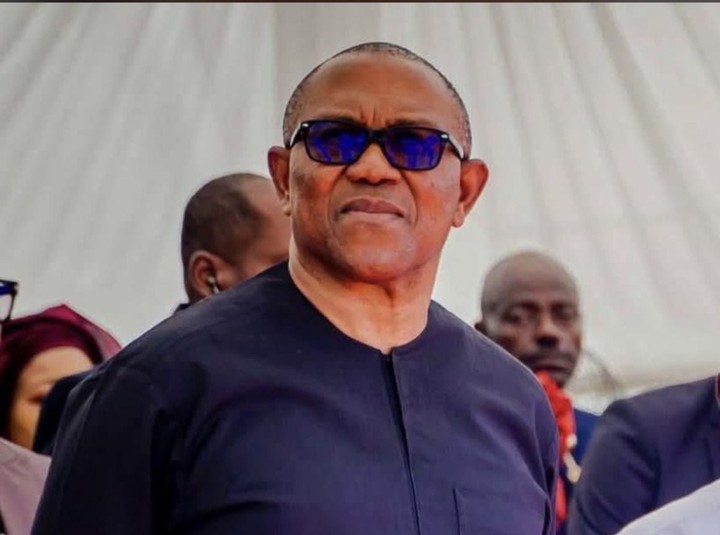

A new wave of crisis has engulfed the Labour Party (LP), further intensifying internal divisions within the faction associated with former presidential candidate Peter Obi and Abia State Governor Alex Otti. The development follows the dissolution of the Senator Nenadi Usman–led interim National Working Committee (iNWC) by the party’s Board of Trustees (BoT) and a quorum of the statutory National Executive Council (NEC), a move that has generated sharp reactions and counterclaims from opposing camps within the party.
The dissolution was disclosed through a leaked statement dated December 2, 2025, and jointly signed by the BoT Chairman, S.O. Ejiofor, and the Secretary, Salisu Mohammed. In the statement, the BoT announced that it had formally sacked the interim leadership, citing alleged incompetence, failure to meet constitutional obligations, and actions capable of pushing the party toward what it described as “irreparable oblivion” ahead of the 2027 general elections.
According to Ejiofor, the decision followed months of dissatisfaction with the performance of the Nenadi Usman–led committee, which was inaugurated on September 4, 2024, in Umuahia, Abia State. The committee was given an initial 90-day mandate to organise ward, local government, and state congresses nationwide, culminating in a national convention, in line with a 2018 consent judgment and an agreement brokered by the Independent National Electoral Commission (INEC.
The BoT stated that the committee failed to meet this deadline and was subsequently granted an additional 90-day extension on July 18, 2025. That extension expired on October 17, 2025, without, according to the statement, the conduct of a single ward congress anywhere in the country. The leadership accused the iNWC of administrative inertia and described its tenure as one marked by “sleepwalking leadership.”
Related News
Henry Seriake Dickson Defects from PDP to Newly Formed Nigeria Democratic Congress
Senator Henry Seriake Dickson has formally defected from the Peoples Democratic Party (PDP) to the newly registered Nigeria Democratic Congress…

Hon. Sarah Ivie Adidi Receives “Her Excellence Award” During International Women’s Day Event in Abuja
Reps aspirant Sarah Ivie Adidi has been honoured with the 2026 “Her Excellence Award” during an event marking International Women’s…
Governor Peter Mbah Urges Ndigbo to Return to Strategic Politics
Peter Mbah, Governor of Enugu State, has urged the Igbo political class to return to what he described as “strategic…
The statement further alleged that during the period under the dissolved committee, the Labour Party was excluded by INEC from participating in local government elections, as well as state and National Assembly by-elections conducted across Nigeria in 2025. The BoT claimed this exclusion led to widespread demoralisation within the party, organisational paralysis, and the defection of several members to rival political platforms.
As part of the leadership reshuffle, the BoT announced the reappointment of Prince Tony Akeni as acting National Publicity Secretary and Nwauwa Nnawuihie as acting National Secretary, pending the constitution of a new interim National Working Committee in accordance with the party’s constitution.
However, the Nenadi Usman faction swiftly rejected the dissolution, describing it as unconstitutional and legally void. Reacting through her media aide, Ken Asogwa, Usman questioned the authority of the BoT to dissolve a constituted National Working Committee, arguing that such powers reside solely with the NEC and the National Convention of the party.
Asogwa also cast doubt on the authenticity and consistency of the letters announcing the dissolution, pointing to what he described as contradictory communications. He maintained that Senator Nenadi Usman remains the authentic national chairman of the Labour Party by virtue of her appointment by the NEC and backing from a Supreme Court judgment that, according to him, resolved the leadership dispute in her favour.
Similarly, the National Publicity Secretary of the Labour Party, Obiora Ifoh, dismissed claims of factionalism within the party, arguing that the BoT cited in the dissolution had not been properly constituted. He alleged that the body behind the action was affiliated with the Nigeria Labour Congress (NLC) rather than the Labour Party itself, and accused external actors of attempting to destabilise the party.
Ifoh insisted that the Labour Party remains united under a single leadership and described the Nenadi Usman–led group and the BoT’s action as distractions aimed at undermining internal democracy. He further rejected allegations that loyalists of Julius Abure had infiltrated rival camps to fuel the crisis.
The latest development has once again exposed the deep-seated leadership and structural challenges facing the Labour Party, with analysts warning that prolonged infighting could weaken the party’s electoral prospects and undermine its ability to present a united front ahead of the 2027 polls. As both sides dig in, the party appears set for another round of legal and political confrontation, leaving its supporters and members uncertain about its future direction.