German FA Official Calls for Discussion on Possible 2026 World Cup Boycott Over U.S. Political Actions
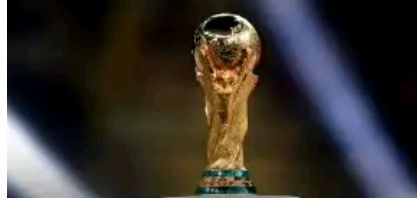

A senior official of the German Football Association (DFB) has sparked fresh debate within international football after suggesting that it may be time to seriously consider a boycott of the 2026 FIFA World Cup, which will be jointly hosted by the United States, Canada, and Mexico. The call follows rising diplomatic tensions between the United States and several European countries linked to recent foreign policy statements and actions attributed to U.S. President Donald Trump.
The 2026 World Cup is scheduled to feature an expanded format of 48 teams and 104 matches, with the United States set to host 78 of those games, making it the tournament’s central host. However, political developments involving the U.S. government have raised concerns among some European football officials about whether participation in the tournament aligns with broader political and ethical considerations.
According to a report by BBC Sport, DFB vice-president Oke Göttlich questioned whether the international football community should continue to treat the tournament as politically neutral in light of recent events. Tensions escalated after President Trump reportedly threatened to pursue control over Greenland, an autonomous territory under Danish sovereignty. The situation further strained relations when Trump warned of imposing tariffs on several European countries, including Germany, after they opposed the proposal. Although the tariff threat was later withdrawn, the episode left lingering diplomatic unease.
Related News

Henry Seriake Dickson Defects from PDP to Newly Formed Nigeria Democratic Congress
Senator Henry Seriake Dickson has formally defected from the Peoples Democratic Party (PDP) to the newly registered Nigeria Democratic Congress…

Hon. Sarah Ivie Adidi Receives “Her Excellence Award” During International Women’s Day Event in Abuja
Reps aspirant Sarah Ivie Adidi has been honoured with the 2026 “Her Excellence Award” during an event marking International Women’s…
Governor Peter Mbah Urges Ndigbo to Return to Strategic Politics
Peter Mbah, Governor of Enugu State, has urged the Igbo political class to return to what he described as “strategic…
Speaking on the issue, Göttlich said the time had come to openly discuss the possibility of a boycott. “I really wonder when the time will be to think and talk about this concretely,” he was quoted as saying. “For me, that time has definitely come.” His comments represent one of the strongest signals yet from a senior European football official questioning participation in the 2026 tournament on political grounds.
Göttlich, who also serves as president of Bundesliga club FC St. Pauli, drew historical parallels to the 1980 Olympic Games boycott, which was led by the United States in response to the Soviet Union’s invasion of Afghanistan. He argued that the current geopolitical climate could justify similar action, stating that the perceived threat today may be even greater than it was during that period. According to him, football authorities and governments must be willing to examine where moral and political boundaries should be drawn.
Not all European football bodies share this position. The French government has indicated that it does not currently support a boycott of the tournament, suggesting a more cautious approach. Meanwhile, the Danish Football Association acknowledged the sensitivity of the situation but stopped short of endorsing any boycott calls. Denmark is currently aiming to qualify for the World Cup through the playoff rounds, adding a competitive dimension to the debate.
Germany’s football authorities are no strangers to political controversy at major tournaments. During the 2022 World Cup in Qatar, Germany was among several nations involved in disputes with FIFA over political expression. FIFA had warned players they could face disciplinary action for wearing the OneLove armband, a symbol intended to promote diversity and inclusion. In response, German players covered their mouths during the official team photograph before their opening match against Japan, a gesture that then-head coach Hansi Flick said symbolised being “silenced” by football authorities.
Reflecting on that episode, Göttlich questioned what he sees as inconsistent standards in how football addresses political issues. He argued that while Qatar was widely criticised for being overly political, there now appears to be a reluctance to acknowledge political concerns surrounding the 2026 World Cup. He warned that this inconsistency risks undermining football’s stated values and credibility.
Göttlich further called for clarity from both political leaders and football’s governing institutions, including the DFB and FIFA, on how political and ethical boundaries should be handled in global sporting events. As discussions around the 2026 World Cup continue, his comments have added momentum to a wider debate about the intersection of politics, values, and international sport.
While no official boycott decision has been made, the remarks signal that political considerations may play a larger role in shaping the narrative around the 2026 World Cup as preparations continue.