Governor Mbah Accelerates Work on 300-Bed Enugu International Hospital Amid Mixed Public Reactions
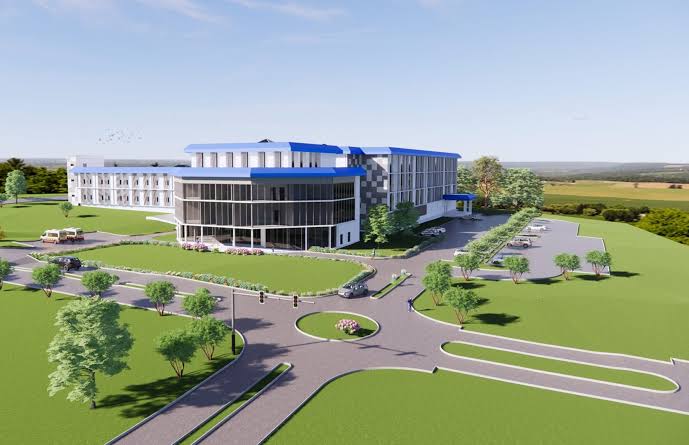

The Enugu State Government has intensified construction and development work on the 300-bed Enugu International Hospital, a flagship healthcare project aimed at transforming medical service delivery in the state and reducing Nigeria’s dependence on overseas medical treatment. Governor Peter Mbah, who recently inspected the facility, reaffirmed his administration’s commitment to completing the hospital within the shortest possible timeframe.
The hospital is being positioned as a world-class, multi-specialty medical centre designed to attract both local and international patients. According to government projections, Nigerians spend an estimated $1 billion annually on medical tourism, particularly in Europe, Asia, and the Middle East. The Enugu International Hospital is expected to capture a significant portion of this expenditure by providing advanced medical services locally.
Officials of the state government revealed that discussions are already ongoing with Enugu indigenes and other Nigerian healthcare professionals in the diaspora who have shown interest in partnering with the state to ensure global standards in service delivery. These engagements are expected to shape the hospital’s staffing structure, equipment procurement, and operational framework.
The project, however, has generated a wave of reactions across social media and public discourse. Supporters of the governor describe the hospital as a bold and visionary step that could reposition Enugu as a major healthcare hub in southeastern Nigeria. Some residents have commended the administration for prioritising healthcare infrastructure, arguing that the facility will not only improve access to quality medical care but also create hundreds of direct and indirect jobs for health professionals and allied workers.
Related News
300-Bed Enugu International Hospital Approaches Completion Amid Public Reactions
Construction of the 300-bed Enugu International Hospital is nearing completion, with officials and residents expressing optimism that the facility will…

Anambra Government Seals Shops in Onitsha Markets Over Monday Closure, Commends Compliant Traders
The Anambra State Government has sealed several shops across markets in Onitsha and nearby communities after traders failed to open…
Governor Otti Commissions Key Infrastructure Projects in Abia, Announces New SSG Appointment
Abia State Governor Alex Otti has commissioned major road and bridge projects in Arochukwu Local Government Area, announcing new leadership…
Others have linked the hospital project to broader security and development initiatives carried out by the administration, including the strengthening of the state’s forest guard and security architecture. To this group, the hospital represents part of a wider strategy to modernise Enugu State and improve the quality of life for its residents.
However, critics have raised concerns about what they describe as excessive government publicity around infrastructure projects without corresponding improvements in service delivery. Some citizens questioned whether the hospital, once completed, would be adequately equipped and staffed, citing past experiences with similar state-owned facilities across the country that appeared impressive on the outside but lacked functional equipment and personnel.
There are also voices expressing concern over the economic burden of taxation on citizens, with claims that residents are being over-taxed to fund capital projects. Others questioned whether healthcare workers have been sufficiently empowered or recruited to match the scale of the hospital being built.
Ethnic and regional undertones also emerged in parts of the public debate, as supporters and critics clashed over whether the governor’s performance should be judged strictly on developmental output or viewed through political and regional lenses. While some hailed Governor Mbah as one of the most proactive governors in the current political cycle, others strongly disagreed, insisting that performance should be measured by tangible outcomes that directly improve daily living conditions.
Another recurring issue in public reactions is whether the hospital will be utilised by political leaders themselves. Some Nigerians expressed skepticism, citing a longstanding trend where public officials seek medical treatment abroad even when similar facilities exist at home. To this group, true confidence in the project would be demonstrated if public office holders and their families rely on the hospital once it becomes operational.
Despite the debates, there is general agreement that the successful completion and proper operation of the Enugu International Hospital could mark a turning point for healthcare delivery in the state. If fully equipped and professionally managed, the facility could serve as a referral centre for complex medical cases from across the Southeast and beyond, reducing patient pressure on teaching hospitals and private facilities.
As construction continues, public attention remains firmly fixed on the project. Many residents are calling for transparency in funding, timelines, staffing plans, and equipment procurement. They argue that beyond political narratives, what ultimately matters is whether the hospital will deliver reliable, affordable, and high-quality healthcare to ordinary citizens.
For now, Governor Mbah’s push to fast-track the project has placed the Enugu International Hospital at the centre of public conversation in the state, symbolising both the promise of improved healthcare and the persistent trust gap between government and the governed.