Gumi Reacts to Peter Obi’s Defection to ADC, Says No Politician Can Hold Nigerians to Ransom Ahead of 2027
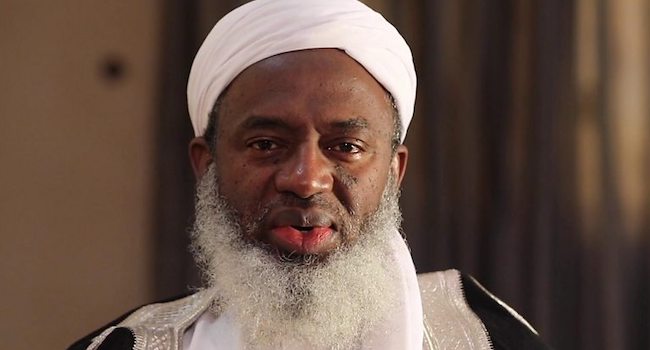

Controversial Islamic cleric, Sheikh Ahmad Gumi, has broken his silence on the recent defection of former Labour Party presidential candidate, Mr Peter Obi, to the African Democratic Congress (ADC), offering a brief but pointed reaction that has since generated widespread debate across political and social circles.
Peter Obi officially announced his defection to the ADC on Wednesday in Enugu, stating that his decision was driven by a desire to “rescue and transform Nigeria” ahead of the 2027 general election. The move marked another significant shift in Obi’s political journey and immediately drew reactions from supporters, critics, and prominent public figures.
Reacting to the development, Sheikh Gumi shared a report on Obi’s defection on his official Facebook page, where he framed the move as a positive signal for Nigeria’s democratic evolution. According to him, political realignments such as Obi’s defection indicate that Nigerian democracy is gradually maturing.
“Nigerian democracy is maturing,” Gumi wrote in his post.
He went further to caution political actors against assuming they can dominate or dictate the political future of the country, stressing that ultimate power rests with the people. Gumi urged politicians to pay closer attention to public sentiment and to act in ways that reflect the collective interest of Nigerians.
Related News

Henry Seriake Dickson Defects from PDP to Newly Formed Nigeria Democratic Congress
Senator Henry Seriake Dickson has formally defected from the Peoples Democratic Party (PDP) to the newly registered Nigeria Democratic Congress…

DSS Tells Court Kaduna Man’s Tweets Could Drag Nigeria into Israel–Iran Conflict
Nigeria’s domestic intelligence agency, the Department of State Services (DSS), has told a court that social media posts allegedly made…

Nigeria Begins Evacuation of Citizens from Iran Amid Escalating Middle East Conflict
The Nigerian government has started evacuating its citizens from Iran as tensions in the Middle East intensify.
“Politicians should listen to the people’s cry and do the right thing. Time is fast approaching; no one can hold Nigerians to ransom,” he added.
Although Gumi’s remarks were brief, they have attracted strong reactions, particularly because of his history of controversial interventions on national security and political issues. His statement neither explicitly endorsed nor criticised Obi’s decision to join the ADC, but his emphasis on democratic maturity and the limits of individual political influence has been interpreted in different ways by various political blocs.
Supporters of Peter Obi have pointed to Gumi’s comment as evidence that Obi’s political relevance extends beyond regional or party boundaries, while critics argue that the cleric’s views should not be given significant weight in mainstream political discourse. Others have focused on the broader implication of Gumi’s message, which underscores growing voter awareness and increasing resistance to political monopolies ahead of 2027.
The defection itself has reshaped political conversations nationwide, with analysts noting that Obi’s move to the ADC may signal efforts to consolidate opposition forces outside the traditional political parties. Obi, who came third in the 2023 presidential election, has maintained a strong following, particularly among youths and urban voters, and his political future remains a subject of intense speculation.
Gumi’s reference to politicians “holding Nigerians to ransom” appears to reflect broader public frustration with elite-driven politics, internal party crises, and prolonged power struggles that often sideline governance and policy delivery. His comments come at a time when many Nigerians are grappling with economic hardship, insecurity, and declining trust in political institutions.
Political observers note that statements like Gumi’s, regardless of the controversies surrounding him, reflect a growing narrative that 2027 may be shaped less by traditional power brokers and more by voter sentiment, alliances, and public accountability. The increasing frequency of defections, mergers, and strategic repositioning among politicians is widely seen as preparation for what could be a highly competitive election cycle.
As debates continue over Obi’s defection and its implications, Gumi’s intervention adds another layer to the evolving political discourse. Whether interpreted as a neutral observation or a subtle political signal, his message reinforces the idea that Nigerian politics is entering a phase where adaptability, responsiveness to public demands, and democratic competition may play a more decisive role.
With nearly two years to the 2027 general election, reactions such as this highlight how early positioning, public perception, and cross-cutting commentary are already shaping the national conversation on leadership and the future direction of the country.