Gunmen Abduct Kwara Monarch and Son in Fresh Palace Attack, Heightening Security Fears
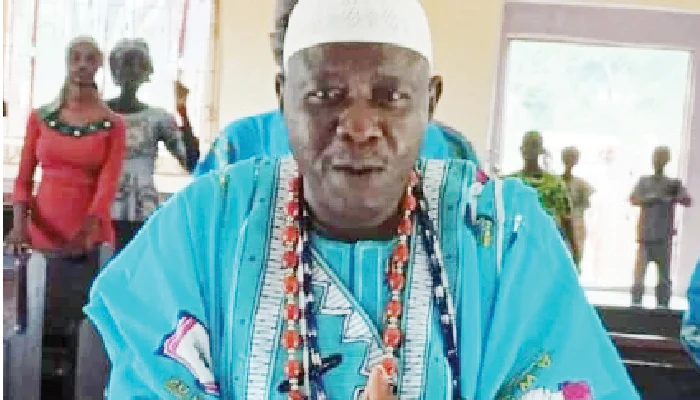

Suspected gunmen have kidnapped the Aniwo 1 of the Aafin community in the Ile-Ire District of Ifelodun Local Government Area of Kwara State, Oba Simeon Olaonipekun, along with one of his sons, Olaolu, in a brazen attack on the monarch’s palace. The incident, which took place on New Year’s Eve, has intensified public anxiety over the deteriorating security situation in parts of the state, particularly rural communities.
According to accounts gathered from residents and palace insiders, the attack occurred at about 8 p.m. when a group of armed men, estimated to be around eight, stormed the palace and began shooting sporadically. The sudden gunfire threw the palace and surrounding community into panic, forcing occupants to scramble for safety as the assailants demanded to see the monarch and his wife.
An eyewitness who was inside the palace during the incident, and who spoke on condition of anonymity due to the sensitivity of the matter, described moments of fear and confusion as the attackers advanced. The source said unusual movements were first noticed outside the palace, prompting those inside to lock doors and switch off internal lights in an attempt to avoid detection. However, the attackers reportedly realised what was happening and responded by opening fire.
The gunmen eventually forced their way into the palace, reportedly breaking down doors with their weapons. Once inside, they demanded to see Oba Olaonipekun, who later came out. The attackers were also said to have been searching for the monarch’s wife, popularly referred to as the Olori. During the invasion, she was reportedly struck in the arm by a bullet while the assailants were trying to gain entry into the palace.
Related News

Edo State Raises Alarm Over Growing Number of Widows and Orphans Linked to Cult Violence
The Edo State Government has expressed concern over the rising number of widows and fatherless children resulting from cult-related killings…

ADC Blames Tinubu Over Kwara Killings as Political Tensions Rise Nationwide
The African Democratic Congress (ADC) has blamed President Bola Tinubu’s administration for the recent mass killings in Kwara State, describing…

Tinubu Meets Kwara Governor AbdulRazaq Over Deadly Terrorist Attack in Kaiama Communities
President Bola Tinubu held an emergency meeting with Kwara State Governor AbdulRahman AbdulRazaq following a deadly terrorist attack that reportedly…
In addition to abducting the traditional ruler, the gunmen also seized one of his sons, Olaolu, who is currently serving under the National Youth Service Corps. The eyewitness explained that the son emerged from hiding alongside the Olori in an attempt to prevent further casualties, as the attackers continued shooting and smashing doors within the palace.
At the time of the attack, about ten people were reportedly present in the palace, having gathered to spend the holiday period with the monarch. Most of them hid in different parts of the building as the gunmen advanced. The eyewitness further revealed that the leader of the attackers spoke fluent English and appeared to have a clear target, focusing specifically on the monarch and his wife rather than engaging in indiscriminate abduction.
Following the departure of the gunmen, the injured Olori was rushed to a hospital for urgent medical attention. As of the time of reporting, there had been no communication from the kidnappers regarding ransom demands or the condition of the abducted monarch and his son.
The source also disclosed that the local vigilante group was unable to repel the attackers due to limited manpower. Only two vigilante members were reportedly on duty at the time, leaving them outgunned and unable to confront the heavily armed assailants. The incident was subsequently reported to nearby police divisions, including those in Owu-Isin and Ijara-Isin, as well as other local security networks and traditional authorities in the area.
Confirming the development, the Kwara State Police Public Relations Officer, SP Adetoun Ejire-Adeyemi, said the police command was aware of the incident but noted that details were still being collated. She assured that further information would be made available once investigations progressed.
The abduction of Oba Olaonipekun comes less than two months after another traditional ruler, the Ojibara of Bayagan-Ile, Alhaji Kamilu Salami, was abducted from his farm in the same Ifelodun Local Government Area. That incident sparked widespread outrage and fear across the state, with the monarch eventually regaining freedom after weeks in captivity, reportedly following negotiations and the payment of a ransom.
Security analysts have warned that the repeated targeting of traditional rulers, worshippers, and rural communities signals a growing escalation of banditry and organised criminal activity in Kwara State. Areas bordering Niger and Kogi states, as well as local government areas such as Ifelodun, Patigi, Edu, Ekiti, and Isin, have increasingly become hotspots for kidnappings and violent attacks.
As residents call for stronger security measures and a more coordinated response from authorities, the latest abduction has once again raised urgent questions about the safety of traditional institutions and rural populations in Kwara State.