Jonathan Says Guinea-Bissau Incident Was “Not a Coup”, Describes It as a “Ceremonial Takeover”
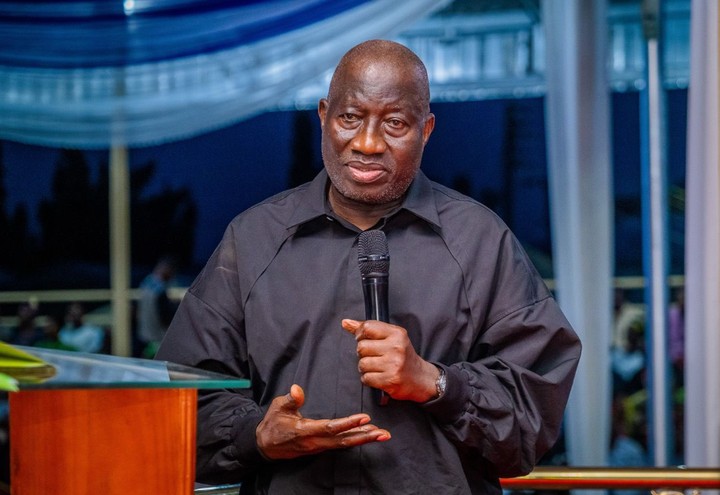

Former Nigerian President Goodluck Jonathan has offered a detailed account of the recent political upheaval in Guinea-Bissau, insisting that the events widely described as a military coup did not fit the traditional definition of a forceful takeover. Speaking in an interview released on Friday, Jonathan characterised the incident as “maybe a ceremonial coup,” arguing that key elements typically associated with a military overthrow were absent.
Gunfire was reported near major government institutions in Bissau on Wednesday, triggering confusion and uncertainty as soldiers declared that they had assumed control of the country. President Umaro Sissoco Embaló later announced that he had been detained inside the presidential palace. Following this, the military imposed a nationwide curfew, suspended the ongoing electoral process, shut down the country’s borders, and detained several senior officials, including high-ranking military figures and the interior minister.
Nigeria’s Federal Government condemned the development, labelling it a “serious threat to democracy and regional stability.” At the time of the disturbance, Jonathan was in Guinea-Bissau leading the West African Elders Forum Election Observation Mission. He and his delegation were evacuated from the country by a special flight arranged for their safety.
Related News
UK Prime Minister Keir Starmer Defends Decision Not to Join US-Israel Strikes on Iran
UK Prime Minister Keir Starmer has defended his government’s decision not to participate in initial US-Israel strikes on Iran, insisting…
FIFA and UEFA Presidents Named in ICC Complaint Alleging Complicity in Settlement Activities
Presidents Gianni Infantino and Aleksander Ceferin have been accused of aiding war crimes in a complaint submitted to the International…
Trump Accuses South Africa of Human Rights Abuses and Announces Exclusion from 2026 G20 Summit
U.S. President Donald Trump has accused South Africa of committing severe human rights abuses against white citizens, announcing that the…
Jonathan explained that although he typically avoids media appearances, he felt compelled to address Nigerians directly to express gratitude for their concern and to clear misconceptions about the situation. According to him, the unusual sequence of events raised questions about whether the takeover was genuine or orchestrated.
He noted that President Embaló announced his own arrest before the military issued any formal statement, calling this highly irregular for any coup situation. Jonathan expressed surprise that a supposedly detained sitting president was able to use his mobile phone to brief international media outlets in real time.
Drawing comparisons to other West African coups, he said the events did not follow established patterns. Referencing his experience mediating in Mali during its recent military takeover, Jonathan said that presidents removed by force are never allowed to make public statements or communicate freely during the process. In his words, “The military doesn’t take over governments and allow the deposed president to hold press conferences. Why does this happen? Who is fooling whom?”
He urged ECOWAS and the African Union to ensure that the delayed election results in Guinea-Bissau are announced promptly, stressing that the military should not interfere with democratic outcomes. Jonathan insisted that the ballots had already been collated and observed by both AU and ECOWAS officials, meaning the results were known and unverifiable alterations would be impossible.
According to him, transparency is essential to prevent political manipulation and restore stability. He argued that the responsibility now lies with regional bodies to publish the results and inform citizens and the international community of the legitimate winner.
Jonathan also drew parallels to his experience chairing ECOWAS during Côte d’Ivoire’s 2010 presidential crisis. He recalled how former President Laurent Gbagbo refused to concede after losing the second round to Alassane Ouattara, despite unanimous observer reports confirming Ouattara’s victory. Jonathan said that ECOWAS’ insistence on upholding the electoral outcome was vital for preserving democratic order in the region. He emphasised that African leaders must respect established processes and avoid plunging their nations into turmoil through unconstitutional actions.
Public reactions have been mixed, with many questioning the motives behind Embaló’s announcement and suggesting political calculations influenced the military’s actions. Others criticised Jonathan’s description of the incident, arguing that any military intervention—regardless of form—constitutes an assault on democratic governance.