Kwankwaso’s Son Steps Down as Kano Commissioner for Youth and Sports
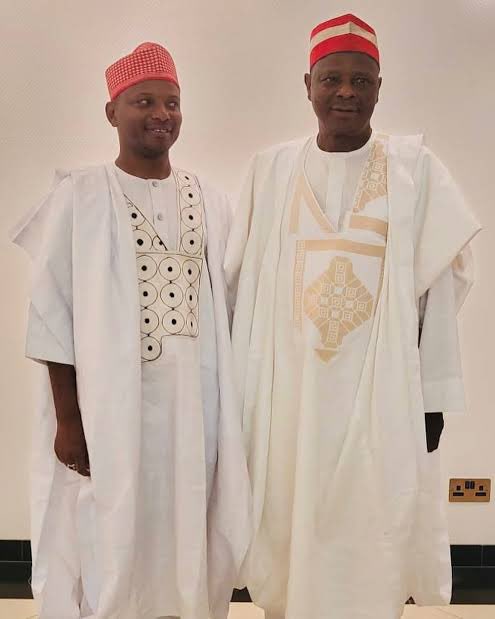

Mustapha Rabiu Kwankwaso, son of former Kano State Governor and national leader of the New Nigeria Peoples Party (NNPP), Senator Rabiu Musa Kwankwaso, has resigned from his position as Kano State Commissioner for Youth and Sports Development.
His resignation also brings to an end his role as a member of the Kano State Executive Council under Governor Abba Kabir Yusuf. The announcement was made public through a formal statement released on Friday, in which Mustapha Kwankwaso expressed appreciation to the state government and the people of Kano for the opportunity to serve.
In his resignation message, he stated that stepping down from office was a difficult decision, describing his departure as one made with a “heavy heart.” He extended gratitude to Governor Yusuf for entrusting him with the responsibility of leading the Ministry of Youth and Sports Development, noting that his time in office provided valuable experiences and lessons.
“It is with a heavy heart that I announce my resignation as Honourable Commissioner, Ministry of Youth and Sports Development and Member of the Kano State Executive Council,” the statement read.
He further expressed appreciation for the confidence reposed in him during his tenure and highlighted the importance of continued investment in youth development and sports initiatives across Kano State. According to him, the progress made in the sector should be sustained and expanded to ensure that young people in the state continue to receive the necessary support and opportunities.
Related News
Henry Seriake Dickson Defects from PDP to Newly Formed Nigeria Democratic Congress
Senator Henry Seriake Dickson has formally defected from the Peoples Democratic Party (PDP) to the newly registered Nigeria Democratic Congress…

Hon. Sarah Ivie Adidi Receives “Her Excellence Award” During International Women’s Day Event in Abuja
Reps aspirant Sarah Ivie Adidi has been honoured with the 2026 “Her Excellence Award” during an event marking International Women’s…
Governor Peter Mbah Urges Ndigbo to Return to Strategic Politics
Peter Mbah, Governor of Enugu State, has urged the Igbo political class to return to what he described as “strategic…
“I want to express my deepest gratitude to Governor Abba Kabir Yusuf for the opportunity to serve the great people of Kano State. I have cherished the experiences and lessons gained while serving, and I appreciate the trust placed in me,” he stated.
Mustapha Kwankwaso also offered prayers for the continued growth and stability of Kano State, expressing optimism that youth-focused policies and sports development programmes would flourish even after his departure. He wished the administration success and called for ongoing commitment to initiatives aimed at empowering young people.
“As I resign, I pray that the youth of Kano State will continue to receive the attention and support they deserve. I hope for the best for our sports development programmes and initiatives, and I am confident that they will flourish in the years to come,” he added.
The resignation has drawn attention within political circles, given Mustapha Kwankwaso’s familial connection to Senator Rabiu Musa Kwankwaso, a prominent political figure in Kano and across northern Nigeria. His appointment as commissioner had previously generated public discussion about political family influence and generational involvement in governance.
While no specific reason for his resignation was officially stated in the announcement, political observers have noted that the development comes amid ongoing realignments and shifting alliances within Kano State’s political landscape. The NNPP has remained a significant force in the state, with its leadership and internal dynamics continuing to shape local governance and broader national political calculations.
Mustapha Kwankwaso’s tenure as commissioner focused on youth empowerment and sports development programmes, sectors considered crucial for social engagement and economic opportunities for young people in Kano State. During his time in office, the ministry pursued initiatives aimed at improving sports infrastructure, supporting grassroots sports, and enhancing youth participation in development programmes.
As of the time of reporting, the Kano State Government has yet to announce a replacement for the position of Commissioner for Youth and Sports Development. Further updates are expected as the administration evaluates the next steps and potential cabinet adjustments following the resignation.
The development adds another layer to Kano’s evolving political environment, where leadership decisions and alignments continue to attract national attention ahead of future electoral cycles.