Obi Faults House of Representatives for Rejecting Proposal to Criminalise Vote-Buying at Party Primaries
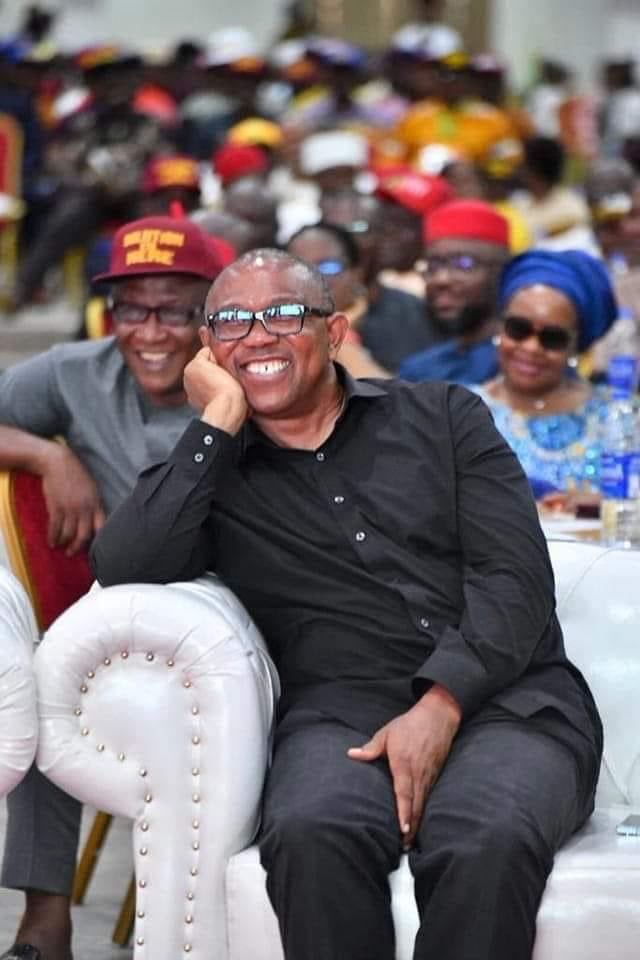

Former presidential candidate of the Labour Party (LP), Peter Obi, has strongly condemned the decision of Nigeria’s House of Representatives to reject a proposal aimed at criminalising vote-buying during party primaries. The development followed a clause-by-clause consideration of amendments to the Electoral Act 2022, during which lawmakers voted against provisions that would have prohibited the inducement of voters at the primary election stage.
The decision has sparked widespread debate across the country, with critics arguing that it represents a missed opportunity to address one of the most persistent challenges undermining Nigeria’s electoral credibility. In a statement shared on his official social media account, Obi described vote-buying as a “cancer” that has long eroded public confidence in the democratic process and weakened the moral foundation of elections.
According to Obi, many Nigerians had hoped the lower legislative chamber would seize the moment to demonstrate genuine commitment to electoral reform by tackling vote-buying where it often begins — within political parties themselves. He argued that by rejecting the proposal, lawmakers effectively shielded a dysfunctional system rather than acting in the long-term interest of the nation.
“By refusing to criminalise vote-buying at the foundational stage of party primaries, the House has chosen to protect a broken system rather than safeguard the nation’s future,” Obi stated. He stressed that credible elections cannot be built on corrupt foundations and warned that national development would remain elusive if inducement and bribery continue to be tolerated within democratic processes.
Related News

Henry Seriake Dickson Defects from PDP to Newly Formed Nigeria Democratic Congress
Senator Henry Seriake Dickson has formally defected from the Peoples Democratic Party (PDP) to the newly registered Nigeria Democratic Congress…

Hon. Sarah Ivie Adidi Receives “Her Excellence Award” During International Women’s Day Event in Abuja
Reps aspirant Sarah Ivie Adidi has been honoured with the 2026 “Her Excellence Award” during an event marking International Women’s…
Governor Peter Mbah Urges Ndigbo to Return to Strategic Politics
Peter Mbah, Governor of Enugu State, has urged the Igbo political class to return to what he described as “strategic…
The former Anambra State governor further noted that efforts to curb vote-buying during general elections would remain ineffective if the practice is allowed to thrive unchecked at the primary level. He maintained that party primaries are the gateway through which candidates emerge, and any failure to regulate them properly undermines the integrity of the entire electoral cycle.
“Any effort to stop vote-buying must begin at the primaries,” Obi said. “Without addressing the problem at its roots, any measures taken later will lack the strength to endure.” He described a system where votes are bought and sold as a “criminal marketplace,” arguing that such a system falls short of the ideals of true democracy.
Beyond formal political contests, Obi warned that the culture of inducement has spread into other areas of Nigerian society. He observed that practices once associated mainly with high-level politics are now evident in town unions, village associations, professional groups, and even student union elections. According to him, this trend reflects how deeply electoral malpractice has become embedded in the country’s social fabric.
“How long will we allow our society to be corrupted when the solution lies in addressing the roots of the problem?” he asked, calling for urgent and comprehensive reforms. Obi insisted that Nigeria’s democratic future must not be compromised for short-term political advantage and urged leaders to prioritise integrity over convenience.
The House of Representatives’ decision has drawn mixed reactions from the public. While some Nigerians agree with Obi’s position and see the rejection as evidence that many politicians benefit from the current system, others have questioned his moral authority, citing allegations of vote-buying across political parties, including those within the opposition. Nonetheless, several commentators have argued that the validity of the issue raised transcends individual personalities.
Political analysts note that vote-buying has become increasingly institutionalised in Nigeria’s electoral process, driven by poverty, weak enforcement of existing laws, and intense competition within parties. They argue that criminalising inducement at the primary level could significantly alter political behaviour by raising the cost of malpractice and encouraging issue-based competition.
As discussions around electoral reform continue, Obi’s remarks have once again placed the spotlight on the role of lawmakers in shaping the democratic process. Whether the criticism will translate into renewed legislative action remains uncertain. However, the controversy underscores a broader question confronting Nigeria’s democracy: can meaningful reform occur when those empowered to enact it are also beneficiaries of the status quo?