Ogun 2027: Will Political History Repeat Itself for a Third Time?
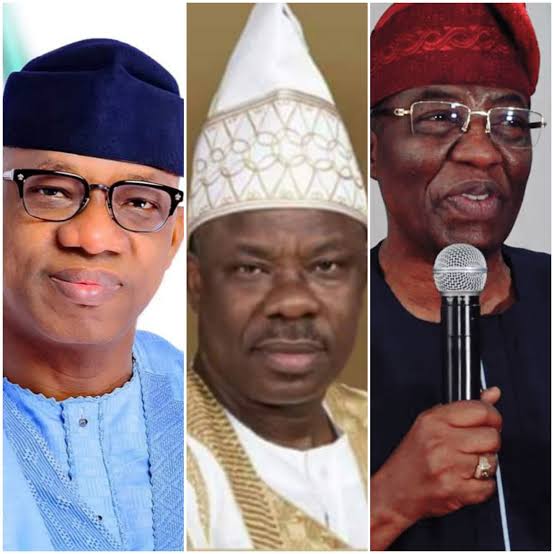

As the year 2025 gradually winds down and 2026 approaches, the political temperature across Nigeria is steadily rising. History has shown that the year preceding a general election is often the most decisive, as party primaries, power struggles, defections, and strategic miscalculations typically set the tone for the final outcome. Nowhere does this reality appear more evident than in Ogun State, where unfolding political maneuvers suggest a possible repeat of past electoral dramas.
Ogun State has, over the last two election cycles, developed a reputation for dramatic political turnarounds driven largely by internal party conflicts and succession battles. To understand what may happen in 2027, it is necessary to revisit the past and examine the political patterns that have shaped the state’s recent history.
At the tail end of Otunba Gbenga Daniel’s tenure as governor, cracks began to appear within the then-ruling Peoples Democratic Party (PDP). Daniel reportedly grew dissatisfied with what he and his supporters perceived as the overwhelming influence of former President Olusegun Obasanjo within the party’s structure. Believing he could challenge this dominance, Daniel threw his weight behind Gbenga Nasir Isiaka as the preferred PDP governorship candidate, in opposition to Obasanjo’s ally, Tunji Olurin.
Related News

Henry Seriake Dickson Defects from PDP to Newly Formed Nigeria Democratic Congress
Senator Henry Seriake Dickson has formally defected from the Peoples Democratic Party (PDP) to the newly registered Nigeria Democratic Congress…

Hon. Sarah Ivie Adidi Receives “Her Excellence Award” During International Women’s Day Event in Abuja
Reps aspirant Sarah Ivie Adidi has been honoured with the 2026 “Her Excellence Award” during an event marking International Women’s…
Governor Peter Mbah Urges Ndigbo to Return to Strategic Politics
Peter Mbah, Governor of Enugu State, has urged the Igbo political class to return to what he described as “strategic…
The power struggle ended badly for Daniel. Obasanjo’s faction prevailed, forcing Daniel and several loyalists to backtrack and eventually defect to the Peoples Party of Nigeria (PPN). The resulting division within the PDP proved costly. In the 2011 election, both the PDP and PPN lost to Ibikunle Amosun of the Action Congress of Nigeria (ACN), who emerged victorious with over 51 percent of the votes. Many analysts attributed the defeat of the PDP to internal infighting and poor succession management. For Ogun politics, it was the first major “lightning strike.”
Fast forward eight years later to the buildup toward the 2019 elections, and history appeared to repeat itself. Senator Ibikunle Amosun, nearing the end of his second term as governor, attempted to install a successor. Leveraging the long-standing sentiment that Ogun West had never produced a governor, Amosun backed Adekunle Abdulkabir Akinlade and positioned him for the APC ticket. However, much like Daniel before him, Amosun underestimated the complexity of internal party power dynamics.
Dapo Abiodun, from Ogun East, unexpectedly emerged as the APC candidate after intense internal contestation. Akinlade, pushed out of the APC, defected to the Allied Peoples Movement (APM) with Amosun’s support. Once again, a divided house weakened the ruling party’s cohesion. In the general election, Abiodun narrowly defeated Akinlade, securing just over 35 percent of the vote. It was Ogun’s second political lightning strike, caused largely by internal fractures rather than opposition strength.
Now, as the 2027 elections draw closer, familiar signs are reappearing. Senator Solomon Olamilekan Adeola, popularly known as Yayi, has openly declared his interest in becoming governor. Representing Ogun West, the only senatorial district yet to produce a governor, Yayi enjoys widespread grassroots support that cuts across zones. Many observers consider him the most popular political figure in the state at the moment, even eclipsing the sitting governor in visibility and structure.
However, signs suggest that Governor Dapo Abiodun may not fully support Yayi’s ambition, raising fears of another internal showdown. If the governor attempts to impose an alternative candidate, it could trigger the same cycle of resistance, defections, and divided loyalty that defined 2011 and 2019. The critical difference this time is that Abiodun may not wield the same level of political influence once enjoyed by Daniel or Amosun.
One striking similarity across these political cycles is the personal relationship between the major players. Daniel, Amosun, and Abiodun were once close allies, yet each faced comparable challenges when attempting to manage succession. This recurring pattern raises deeper questions about leadership style, political loyalty, and the limits of personal influence in Ogun politics.
As 2026 approaches, all eyes will be on how the ruling party manages its primaries and whether lessons from the past will be applied. Whether lightning strikes a third time remains uncertain, but history suggests that Ogun politics has little patience for internal discord. The decisions made in the coming months may ultimately determine whether the state witnesses another dramatic political upset in 2027.