Osita Okechukwu Urges Opposition Not to Demonize Nigeria’s Democracy Over Electoral Act Debate
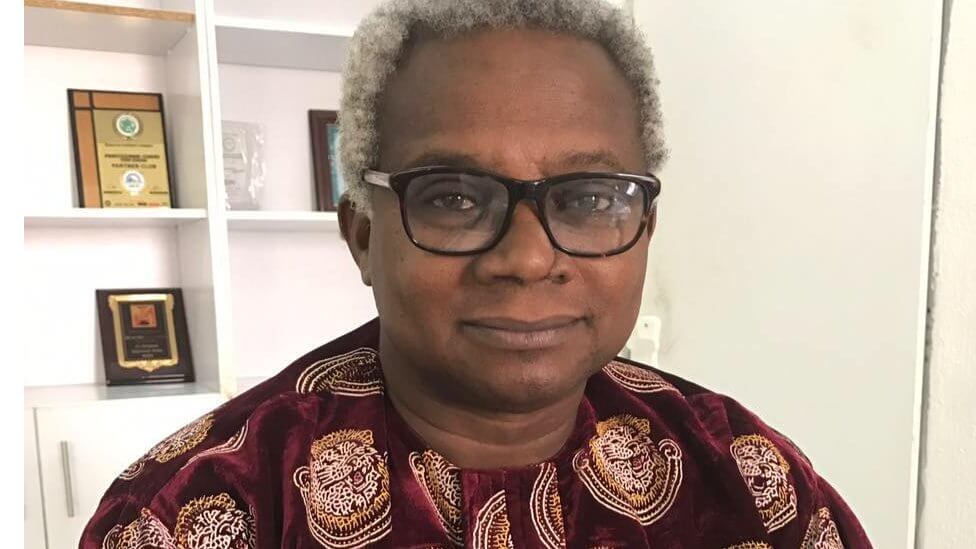

A chieftain and founding member of the All Progressives Congress (APC), Osita Okechukwu, has cautioned opposition parties against what he termed the demonization and undermining of Nigeria’s democracy through alarmist rhetoric surrounding the proposed Electoral Act 2026.
Speaking to journalists in Enugu over the weekend, Okechukwu expressed concern that persistent negative narratives about the electoral framework could discourage voter participation and weaken confidence in democratic institutions. He warned that democracy itself becomes the ultimate casualty when political actors deploy scaremongering tactics that create distrust in the electoral process.
According to him, rather than resorting to blame games, opposition leaders should focus on strengthening their internal structures and mobilising supporters more effectively. He pointed to President Bola Ahmed Tinubu as an example of strategic political organisation, noting that Tinubu invested time and resources in nationwide mobilisation efforts over the years.
Okechukwu also referenced the late former President Muhammadu Buhari, stating that Tinubu demonstrated party loyalty and adherence to zoning principles by stepping aside during earlier internal party arrangements. He argued that such respect for internal democracy and rotation conventions strengthened the APC’s cohesion and credibility.
Related News

Henry Seriake Dickson Defects from PDP to Newly Formed Nigeria Democratic Congress
Senator Henry Seriake Dickson has formally defected from the Peoples Democratic Party (PDP) to the newly registered Nigeria Democratic Congress…

Hon. Sarah Ivie Adidi Receives “Her Excellence Award” During International Women’s Day Event in Abuja
Reps aspirant Sarah Ivie Adidi has been honoured with the 2026 “Her Excellence Award” during an event marking International Women’s…
Governor Peter Mbah Urges Ndigbo to Return to Strategic Politics
Peter Mbah, Governor of Enugu State, has urged the Igbo political class to return to what he described as “strategic…
While acknowledging that the proposed Electoral Act 2026 may have shortcomings, Okechukwu maintained that it represents progress rather than regression. He cautioned against discarding democratic gains because of imperfections in legislation.
“Democracy is evolutionary, not revolutionary,” he said, stressing that reforms should be viewed as part of a gradual process of institutional strengthening.
Okechukwu outlined what he described as a key distinction between the repealed Electoral Act 2022 and the proposed 2026 legislation. According to him, the 2022 law required presiding officers to transfer results “in a manner prescribed by INEC” but did not explicitly mandate electronic transmission.
In contrast, he said the Electoral Act 2026 mandates electronic transmission of polling unit results to the INEC Results Viewing Portal (IReV) after Form EC8A is signed. He added that the new law also provides a fallback mechanism: where electronic transmission fails due to communication challenges, the hand-signed Form EC8A becomes the primary legal source of results.
For Okechukwu, this framework strikes a balance between technological advancement and practical realities in areas with limited network coverage. He argued that portraying the legislation as an attempt to subvert democracy is both inaccurate and harmful.
Responding to claims that the APC is plotting to establish a one-party state, Okechukwu dismissed the allegations as unfounded. He instead attributed political instability and internal fractures within opposition ranks to breaches of zoning and rotation conventions in previous party primaries.
He emphasised that democracy requires more than laws on paper. “Democracy takes patriotism, patience, commitment, integrity, and incremental institutional strengthening,” he said, urging political leaders to prioritise national interest over partisan rhetoric.
As debates over electoral reforms continue, Okechukwu’s remarks reflect the broader contestation shaping Nigeria’s political environment ahead of future elections. With trust in electoral processes remaining a central issue, the tone and substance of political discourse may play a significant role in determining public confidence and voter turnout in the years ahead.