PDP Sets Up 13-Member National Caretaker Committee as NWC Tenure Expires
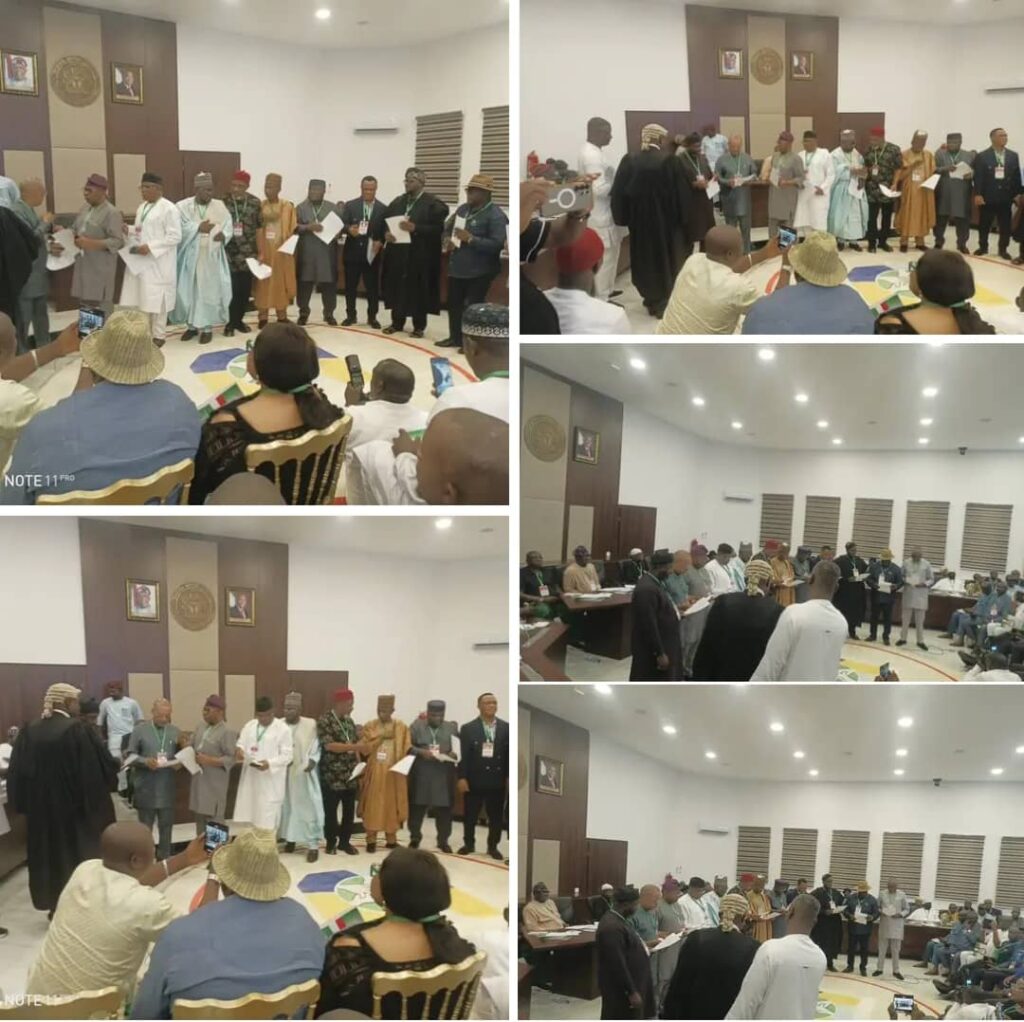

The Peoples Democratic Party (PDP) has announced the constitution of a 13-member National Caretaker Committee to take over the administration of the party following the expiration of the tenure of its National Working Committee (NWC), which officially ends on Tuesday, December 9, 2025. The decision was taken at the party’s 104th National Executive Committee (NEC) meeting held in Abuja on Sunday, December 7, 2025.
According to information released after the meeting, the caretaker committee will manage the affairs of the party for an initial period of 60 days, during which all outstanding congresses are expected to be conducted and preparations made for the holding of a national convention. The convention is expected to produce a new substantive leadership for the party.
Honourable Abdulrahman Mohammed was named as Chairman of the Caretaker Committee, while Senator Samuel Anyanwu was appointed as Secretary. Other members of the committee include the National Legal Adviser, Kamaldeen Ajibade, SAN; National Organising Secretary, Hon. Umar M. Bature; Dr. Kyari Grema; Hon. Janguda Haruna Mohammed; Barrister Okechukwu Osuana; Senator Nwogu Olaka; Senator Sandy Onor; Professor Adenike Ogunse; Hon. Bisi Kolawole; Engineer Deji Doherty; and Dr. Ibrahim Bala Aboki.
Party sources stated that the caretaker committee’s primary responsibility is to stabilise the party’s internal structures, resolve lingering disputes from previous congresses, and oversee the process leading to a credible national convention. The move is seen as an attempt to address prolonged leadership and factional crises that have affected the party in recent years.
Related News

Henry Seriake Dickson Defects from PDP to Newly Formed Nigeria Democratic Congress
Senator Henry Seriake Dickson has formally defected from the Peoples Democratic Party (PDP) to the newly registered Nigeria Democratic Congress…

Hon. Sarah Ivie Adidi Receives “Her Excellence Award” During International Women’s Day Event in Abuja
Reps aspirant Sarah Ivie Adidi has been honoured with the 2026 “Her Excellence Award” during an event marking International Women’s…
Governor Peter Mbah Urges Ndigbo to Return to Strategic Politics
Peter Mbah, Governor of Enugu State, has urged the Igbo political class to return to what he described as “strategic…
However, the announcement immediately triggered intense controversy within political circles and among party supporters. Several critics questioned the legality of the caretaker committee, arguing that the PDP constitution does not expressly provide for such a structure at the national level. Some party loyalists described the move as unconstitutional and warned that it could expose the party to fresh legal battles.
Public reactions have also reflected deep divisions within the opposition party. While a few voices congratulated members of the new caretaker committee and expressed hope that the arrangement would bring stability, many others accused party powerbrokers of hijacking the PDP for personal interests. Some commentators alleged that the ongoing turmoil is being driven by the ambitions and influence of powerful political figures within and outside the party’s formal structures.
There were also strong concerns about the implications of the leadership crisis for the PDP’s chances in the 2027 general elections. Political observers warned that prolonged internal conflicts, multiple court cases, and overlapping claims to leadership could severely weaken the party’s ability to present a united front against the ruling party. Some supporters openly suggested that the continued instability may push more politicians to defect to other parties ahead of the elections.
In addition to internal party concerns, the role of national institutions such as the Independent National Electoral Commission (INEC) has been widely discussed. Analysts believe that INEC’s eventual recognition of one leadership faction over another could significantly shape the trajectory of the crisis. Others, however, cautioned that any such recognition would likely be challenged in court, potentially prolonging uncertainty.
The controversy has also reignited debates about the broader state of opposition politics in Nigeria. Some political commentators argue that the PDP’s struggles reflect a wider failure of opposition parties to maintain internal democracy, enforce discipline, and manage leadership transitions effectively. Others believe the situation represents an opportunity for the party to reform itself if the caretaker committee succeeds in conducting transparent congresses and a credible convention.
Despite the heavy criticism, supporters of the NEC decision insist that the caretaker committee is a necessary emergency measure to prevent a vacuum in leadership and to rescue the party from further fragmentation. They argue that without a temporary structure in place, the PDP risks descending into total organisational paralysis.
As the 60-day mandate of the caretaker committee begins, all eyes remain on how it will navigate legal challenges, internal resistance, and the task of rebuilding consensus within one of Nigeria’s major opposition parties. Whether the move will stabilise the PDP or deepen its existing fractures remains uncertain, but what is clear is that the party is entering another critical phase in its long-running leadership crisis.