Shettima and the Crisis of Confidence: APC’s Troubled Politics on the Plateau
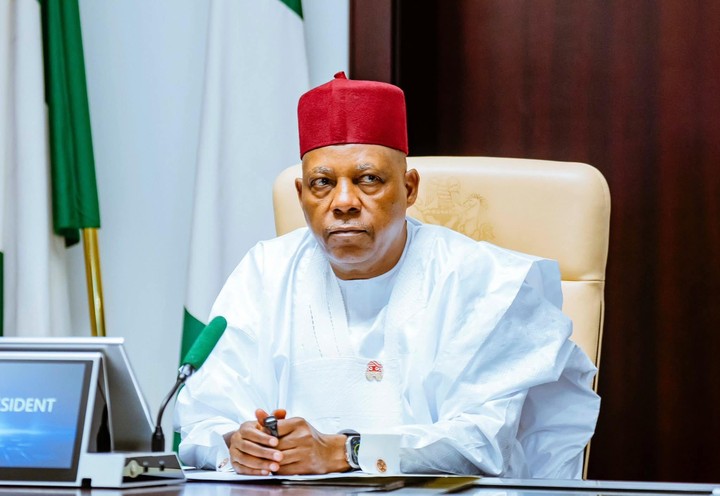

The All Progressives Congress (APC) in Plateau State was once positioned for an easy victory ahead of the 2023 elections. Riding on a record of relative stability, infrastructure development, and interfaith acceptance, the party had successfully built a cross-sectional coalition across ethnic and religious lines. However, the tide shifted dramatically following the nomination of Senator Kashim Shettima as the running mate to Bola Ahmed Tinubu.
Shettima’s selection, though politically strategic at the national level, stirred religious sensitivities in Plateau—a predominantly Christian state. Opposition groups capitalized on the Muslim–Muslim ticket narrative, framing it as a threat to religious balance. Despite attempts by party leaders, including the President’s wife, to calm tensions through dialogue with Christian leaders, distrust deepened. The APC eventually lost both the presidential and governorship elections in Plateau by narrow margins, signaling how religious polarization can override party structures.
After taking office, the new Plateau State Governor embarked on what APC supporters described as a “political purge.” Local government councils—mostly APC-controlled—were dissolved, and hundreds of officials were dismissed. Although a court later ruled the action illegal, the damage to the party’s grassroots network was significant. Vice President Kashim Shettima, seen as the party’s most senior northern figure, reportedly stayed silent throughout these developments.
Related News

Henry Seriake Dickson Defects from PDP to Newly Formed Nigeria Democratic Congress
Senator Henry Seriake Dickson has formally defected from the Peoples Democratic Party (PDP) to the newly registered Nigeria Democratic Congress…
Hon. Sarah Ivie Adidi Receives “Her Excellence Award” During International Women’s Day Event in Abuja
Reps aspirant Sarah Ivie Adidi has been honoured with the 2026 “Her Excellence Award” during an event marking International Women’s…
Governor Peter Mbah Urges Ndigbo to Return to Strategic Politics
Peter Mbah, Governor of Enugu State, has urged the Igbo political class to return to what he described as “strategic…
Critics argue that Shettima’s muted stance has emboldened anti-APC sentiments in Plateau. They point to his lack of intervention when APC legislators, who won their seats through court verdicts, were allegedly coerced into signing resignation letters before being sworn in. This perceived indifference has caused frustration among party loyalists who expected stronger advocacy from the Vice President.
Observers note that Shettima’s position carries both political and moral weight. As the highest-ranking APC figure from Northern Nigeria, his role extends beyond Abuja. His leadership is expected to unify, protect, and strengthen the party’s regional base. Yet, his perceived closeness with the Plateau Governor—a known political rival of the APC—has raised concerns over his loyalty to party structures in the state.
Interestingly, despite Plateau’s Christian majority, the Tinubu–Shettima ticket received more votes there than in Shettima’s home state of Borno, a sign of political maturity among the electorate. However, that goodwill appears to have waned amid continued political marginalization of APC members in the state.
The emergence of Professor Nentawe Yilwatda Goshwe as APC National Chairman has, however, revived optimism. Under his leadership, prominent politicians have defected to the party, and internal unity is being restored. Plateau APC is gradually regaining momentum—something many attribute to Goshwe’s inclusive leadership style and strategic vision.
The debate now centers on whether the Vice President will align with this new momentum or allow personal friendships to influence political judgment. As one APC insider put it, “The Plateau issue is a test of Shettima’s political maturity.”
For now, the Plateau APC stands at a crossroads—reborn yet fragile. Its survival may depend on whether national leaders like Shettima choose principle over politics, party unity over personal ties, and leadership over silence.