Trump Claims Iron Dome Is U.S. Technology, Says Israel Should Stop Taking Full Credit
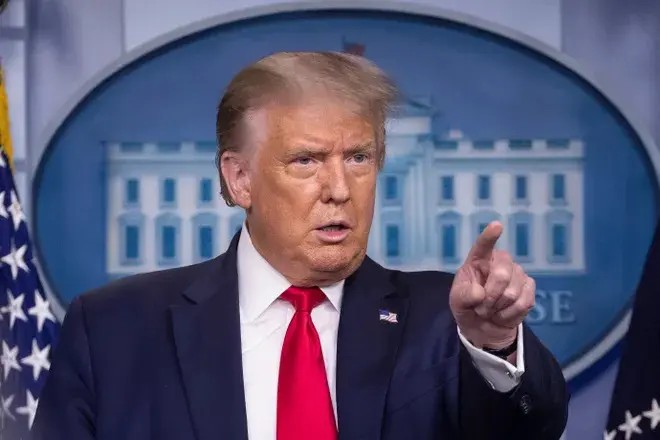

Former United States President Donald Trump has stated that Israel’s widely praised Iron Dome missile defense system is primarily the product of American technology, arguing that Israel should stop taking full credit for its success. Trump made the remarks while recalling conversations with Israeli Prime Minister Benjamin Netanyahu, claiming that the United States played a decisive role in the creation and effectiveness of the system.
According to Trump, the Iron Dome would not exist in its current form without extensive U.S. involvement. “I told Netanyahu to stop taking credit for the Iron Dome, because that’s our technology — we did it for Israel,” Trump was quoted as saying. His comments suggest that while Israel operates and deploys the system, the foundational technology, funding, and technical support came largely from the United States.
The Iron Dome is a short-range missile defense system designed to intercept rockets, artillery shells, and mortars. Since its deployment, it has become a central pillar of Israel’s national defense strategy and a symbol of its military innovation. However, the system has also been heavily funded by the United States over the years, with Washington providing billions of dollars in assistance for its development, expansion, and replenishment of interceptor missiles.
Related News

Six US Troops Killed in Iranian Strike on Kuwait Port, Says CENTCOM
The United States Central Command has confirmed that six American service members were killed following an Iranian strike on a…

Trump-Linked Financier Signs Preliminary Gas Deal With Russia’s Novatek for Alaska Project
An American financier with ties to former U.S. President Donald Trump has reportedly signed an early-stage agreement with Russian energy…
US Commends NAF Ahead of AH-1Z Helicopter Delivery
The United States Government has praised the Nigerian Air Force for its preparedness ahead of the delivery of AH-1Z attack…
Trump’s remarks have reopened long-standing discussions about the nature of U.S.–Israeli defense cooperation. While Israel’s defense industry has often emphasized its own engineering and battlefield adaptation, American officials and analysts have repeatedly highlighted the role of U.S. financing, joint research, and technology transfers in making the Iron Dome possible.
The statement quickly triggered heated reactions on social media platforms and online forums. Some commentators agreed with Trump’s position, arguing that U.S. taxpayers have funded a significant portion of Israel’s missile defense capabilities and therefore deserve recognition. Others pushed back, noting that Israeli engineers and defense firms were responsible for adapting the technology to real-world combat conditions and continuously upgrading the system in response to evolving threats.
Beyond the technical debate, Trump’s comments also sparked broader political arguments unrelated to the Iron Dome itself. In several online discussions, the topic drifted into domestic politics in Nigeria, U.S. global power, and debates over military strength, national sovereignty, and historical narratives. While these reactions highlighted the polarizing nature of Trump’s statements, they also underscored how international defense issues often become entangled with local political frustrations and ideological divides.
Experts note that the Iron Dome is best understood as a joint product rather than the exclusive achievement of one country. The United States has provided substantial funding, access to advanced defense technologies, and diplomatic backing, while Israel has handled system integration, operational testing, and rapid deployment under active combat conditions. This partnership has been cited by defense analysts as a model of military collaboration between allied nations.
Trump, known for his blunt and provocative style, has frequently emphasized America’s role in supporting allies during his political career. His latest comments align with his broader narrative that the United States often does more for its partners than it receives in return, a theme that resonated strongly with his political base during his presidency.
As debates continue, the controversy highlights a larger question about how credit is assigned in international military cooperation. While Israel continues to showcase the Iron Dome as a symbol of its security resilience, Trump’s remarks serve as a reminder of the deep and complex involvement of the United States in the system’s development and sustainability.