US ‘Boots on the Ground’ in Nigeria Will Depend on Defence Ministry’s Advice — Tuggar
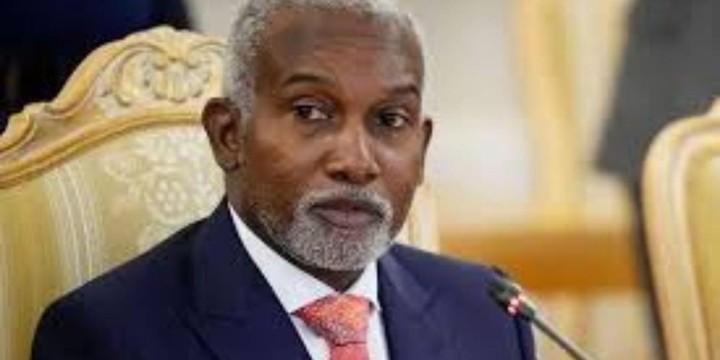

Nigeria’s Minister of Foreign Affairs, Yusuf Tuggar, has stated that the possibility of United States troops being deployed on Nigerian soil will depend entirely on the advice and recommendations of the country’s defence and security authorities. Tuggar made this clarification during an interview with CNN on Friday, which was monitored by SaharaReporters, in the aftermath of U.S. military airstrikes carried out in northwest Nigeria on Christmas Day.
Responding to questions on whether Nigeria would permit U.S. “boots on the ground” as part of efforts to combat terrorism, Tuggar explained that such operational decisions fall outside the direct authority of the Ministry of Foreign Affairs. According to him, the matter would be assessed by the Nigerian military and other relevant security agencies, particularly the Ministry of Defence.
“These are operational issues that would have to be considered by our military,” Tuggar said. “I am heading foreign policy, I’m heading the Ministry of Foreign Affairs and diplomacy, and it’s something that the Minister of Defence and some of our security agencies would be in a better position to respond to.”
While distancing himself from direct decision-making on troop deployment, the foreign minister confirmed that Nigeria actively collaborated with the United States in the airstrikes conducted on December 25. He stressed that the operation was approved at the highest level of government and carried out with the consent of President Bola Tinubu.
“For now, we have collaborated on this attack,” Tuggar said. “It was a collaborative effort between Nigeria and the U.S., and President Tinubu gave the go-ahead before it took place. We don’t see it as violating our sovereignty or territorial integrity, which is very important.”
Tuggar also pushed back against claims that the joint military action was motivated by religious considerations. According to him, the operation was driven strictly by security imperatives and the need to protect lives and property across Nigeria and the wider region.
“It is not about religion,” he said. “It’s about the protection of lives and property of Nigerians and our neighbours as well.”
Related News
Tinubu Approves Salary Increase for Nigerian Armed Forces Personnel
President Bola Ahmed Tinubu has approved a salary increase and improved allowances for members of the Nigerian Armed Forces as…
“Stop Politics, Nigerians Are Dying” – Peter Obi Warns Leaders Amid Rising Insecurity
Former Labour Party presidential candidate Peter Obi has urged political leaders to shift their focus from 2027 election strategies to…
Tinubu Expresses Confidence in Ribadu, Vows Nigeria Will Defeat Terrorism and Banditry
President Bola Tinubu has reaffirmed his administration’s commitment to tackling insecurity across Nigeria, expressing strong confidence in National Security Adviser…
Addressing criticism from sections of the public and political commentators, Tuggar said the federal government was prioritising practical outcomes over ideological debates. He framed Nigeria’s approach within the context of achieving results in the fight against terrorism rather than engaging in theoretical arguments.
“It’s a matter of what I can only describe as perhaps the choice between deontology and consequentialism,” he said, adding that the government’s focus was on tangible results that would stop terrorist groups from killing civilians.
According to the minister, Nigeria’s counterterrorism efforts cannot be viewed in isolation, as insecurity in the country is deeply connected to instability across West and Central Africa. He cited the Sahel region and the Lake Chad Basin as major hotspots where extremist violence has intensified in recent years.
“It is happening in West Africa. It’s happening in the Sahel region. It’s happening in the Lake Chad Basin region,” Tuggar said.
He noted that Nigeria remains open to working with any international partner willing to support efforts to combat terrorism, emphasising that cooperation is essential given the regional nature of the threat.
“For us, whoever is prepared to work with us to fight terrorism, we’re ready, willing, and able,” he added.
Tuggar also argued that the recent airstrikes demonstrated Nigeria’s determination to confront terrorism despite long-standing challenges. He pointed to institutional and logistical constraints, including restrictions previously imposed by the United States under the Leahy Law, which limited the sale of military equipment to Nigeria.
“We may have institutional challenges, partly due to the Leahy Law that stopped the sale of military equipment, both kinetic and non-kinetic, to countries like Nigeria,” he said.
He recalled that during Donald Trump’s first term as U.S. president, Nigeria was able to acquire A-29 Super Tucano aircraft despite those restrictions, and said the aircraft have since been deployed in active operations.
Tuggar further described Nigeria as a frontline state in the global fight against terrorism, noting that the Sahel region has recorded more terrorism-related deaths than any other part of the world. He rejected attempts to frame the crisis as a religious conflict, stressing that extremist violence has affected communities across religious lines.
As public debate continues over foreign military involvement and national sovereignty, Tuggar’s remarks underscore the federal government’s position that security decisions will be guided by strategic assessments and outcomes rather than political rhetoric.