US Treasury Chief Says Washington Engineered Dollar Shortage to Pressure Iran’s Economy
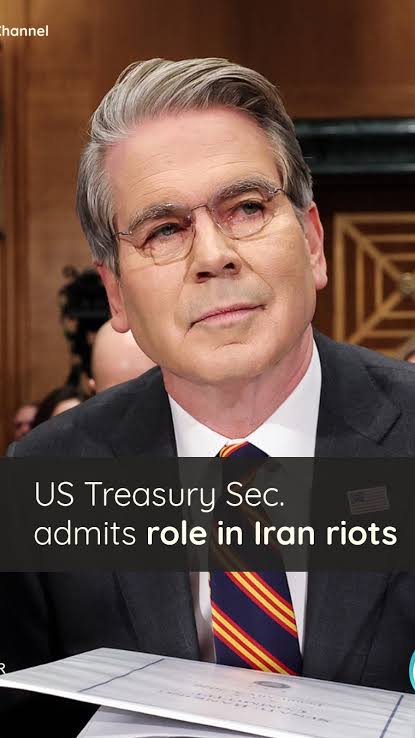

The United States Treasury Secretary Scott Bessent has disclosed that Washington intentionally created a shortage of US dollars in Iran as part of a strategy designed to weaken the country’s economy and increase pressure on its leadership.
According to remarks made during a recent congressional hearing and in previous public appearances, Bessent said the US government pursued policies that restricted Iran’s access to dollars in global markets, contributing to a sharp decline in the value of the Iranian rial and worsening inflation across the country. The statements offer rare public insight into the mechanics of Washington’s sanctions strategy and its intended economic and political consequences.
Iran has been facing one of its most severe economic crises in recent years, with widespread protests breaking out between December and January following a dramatic collapse in the national currency. Demonstrations reportedly began with shopkeepers in Tehran closing their businesses and protesting soaring prices after the rial plunged to record lows against the US dollar. The unrest later spread to other regions.
Authorities under Supreme Leader Ali Khamenei responded with force, and reports suggest thousands of protesters were detained during the crackdown. The economic turmoil has intensified public dissatisfaction, driven largely by inflation and declining purchasing power.
Related News

Six US Troops Killed in Iranian Strike on Kuwait Port, Says CENTCOM
The United States Central Command has confirmed that six American service members were killed following an Iranian strike on a…

Trump-Linked Financier Signs Preliminary Gas Deal With Russia’s Novatek for Alaska Project
An American financier with ties to former U.S. President Donald Trump has reportedly signed an early-stage agreement with Russian energy…

US Commends NAF Ahead of AH-1Z Helicopter Delivery
The United States Government has praised the Nigerian Air Force for its preparedness ahead of the delivery of AH-1Z attack…
A “dollar shortage” occurs when a country lacks sufficient access to US dollars, the dominant currency in global trade. Because many essential imports—including oil-related equipment, machinery, and food—are priced in dollars, limited access to the currency can severely restrict a country’s ability to purchase goods abroad. When fewer dollars are available, local currencies typically weaken, import costs rise, and inflation accelerates.
Economists say Iran’s shortage was exacerbated by US sanctions targeting its oil exports and financial system. These measures blocked two primary sources of foreign exchange: revenue from oil sales and access to international banking networks. Secondary sanctions also threatened foreign firms with penalties if they conducted dollar-based transactions with Iran, further isolating Tehran from global markets.
Bessent explained that the strategy reached a “culmination” in December when a major Iranian bank collapsed, sending the rial into freefall and triggering a surge in inflation. He credited the broader policy framework to the “maximum pressure” campaign directed by US President Donald Trump, which aims to compel Iran to renegotiate its nuclear and regional policies.
The United States has long used economic sanctions as a foreign policy tool against Iran, particularly since Washington withdrew from the 2015 nuclear agreement in 2018. Since returning to office, Trump has expanded sanctions and threatened additional measures, including tariffs on countries that maintain trade ties with Tehran.
The impact on Iran’s economy has been significant. By early January, the rial was reportedly trading at about 1.5 million to the US dollar—more than double its value a year earlier. Food prices have surged sharply, with some estimates placing average increases at over 70 percent compared with the previous year. Analysts say the shortage of foreign currency has also forced Iran to reduce imports of industrial machinery and intermediate goods, further constraining domestic production.
While US officials argue that economic pressure is necessary to influence Iran’s policies, critics warn that sanctions can have severe humanitarian consequences. Restrictions on financial channels often make it difficult even for companies dealing in essential goods such as medicine to operate in the Iranian market, as banks and suppliers avoid potential penalties.
Observers remain divided over whether economic pressure alone can achieve Washington’s long-term objectives. Some analysts argue that sustained sanctions could push Iran toward negotiations, while others believe they are unlikely to trigger political change without additional diplomatic or military measures.
Despite the uncertainty, Bessent’s remarks signal a continued reliance on economic tools as a central pillar of US strategy toward Iran, underscoring the growing role of financial systems and currency access in modern geopolitical competition.