Vice President Shettima Calls for Fair Global Mineral Trade in Address to G20 Leaders
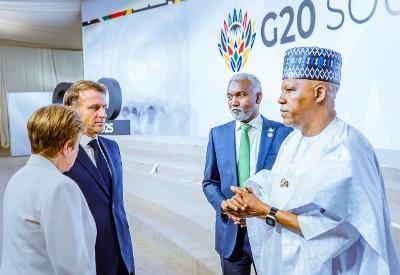

Nigeria’s Vice President Kashim Shettima addressed world leaders at a G20 engagement, calling for a more equitable global mineral trade and a restructured international financial system. His remarks, delivered in a calm but emphatic tone, focused on the need for fairness, inclusiveness, and improved governance within global institutions—particularly as developing nations continue to face financial strain, debt vulnerability, and unequal access to capital.
In his statement, Shettima emphasized that international trade can only be considered truly inclusive when the global financial architecture is reformed to reflect the realities of both developed and developing economies. According to him, existing financial structures disproportionately favor wealthier nations, leaving emerging economies at a disadvantage in global markets—especially in sectors tied to natural resources and mineral extraction. He stressed that a fair mineral trade system is essential for sustainable growth and global economic stability.
Shettima argued that reforms must focus on ensuring transparency in resource pricing, creating equal opportunities for developing countries to negotiate value, and addressing the recurring cycle of debt that continues to limit economic expansion across Africa and other low-income regions. “Only a more equitable and effective system can fairly manage global financial flows, address recurring debt crises, and respond to the needs of all nations,” he said.
Related News
Nigeria, Germany Move to Deepen Cooperation on Security, Power and Infrastructure
Nigeria and Germany have reaffirmed plans to strengthen bilateral relations following a high-level telephone conversation between President Bola Tinubu and…
King Charles III to Host Nigerian President Tinubu in First UK State Visit in 37 Years
Buckingham Palace has confirmed that King Charles III will host Nigerian President Bola Ahmed Tinubu and First Lady Oluremi Tinubu…

Macron Says “China Is Welcome” in Europe as Trade Tensions With U.S. Reshape Global Alliances
French President Emmanuel Macron has declared that “China is welcome” in Europe, a statement that has intensified debate about Europe’s…
He also called for policies that promote financial inclusion, reduce economic inequality, and address emerging global risks such as climate vulnerability, geopolitical instability, and fluctuating commodity prices. For Nigeria, a country rich in minerals but challenged by security issues and illicit mining, Shettima’s message centered on the idea that developing nations must not be locked into disadvantageous trade relationships that prevent them from maximizing the value of their natural resources.
The Vice President’s remarks quickly drew reactions online, where Nigerians expressed a wide range of opinions about his participation at the G20 meeting and the message he delivered. Critics argued that Nigeria must first address domestic challenges—especially insecurity, illegal mining, and governance issues—before seeking fairness at the global level. Several commenters emphasized that ongoing terrorist activity and banditry in mineral-rich regions undermine Nigeria’s credibility in conversations about resource equity.
Others took issue with what they described as political contradictions. Some users questioned whether Nigerian leaders should demand fairness internationally when citizens at home still struggle with uneven governance, corruption, and lack of basic security. A portion of the commentary expressed skepticism about whether Nigerian authorities truly seek “equity” or are more interested in gaining greater control over mineral revenue.
A few respondents also referenced Shettima’s previous public statements, arguing that his messaging before international audiences differs from his tone in domestic political discussions. As expected in Nigeria’s vibrant online political space, some reactions included accusations, criticisms, and satirical comments targeting the Vice President’s political history and perceived alliances.
Despite the harsher criticisms, some Nigerians acknowledged the importance of Shettima’s call for global reform, noting that international financial rules do contribute to systemic disadvantages faced by developing economies. They agreed that the global mineral trade—dominated by multinational corporations and powerful governments—requires restructuring if resource-rich nations in Africa are to benefit fully from their natural endowments.
In raising the issue before G20 leaders, Shettima positioned Nigeria within a broader global debate on resource governance, economic justice, and fair trade. Whether his appeal will influence future international policies remains to be seen, but the message underscores a growing push from African nations for more equitable participation in global economic systems.