‘I’m Still Searching My Past for Any Offence’ — Wole Soyinka Reacts to U.S. Visa Revocation
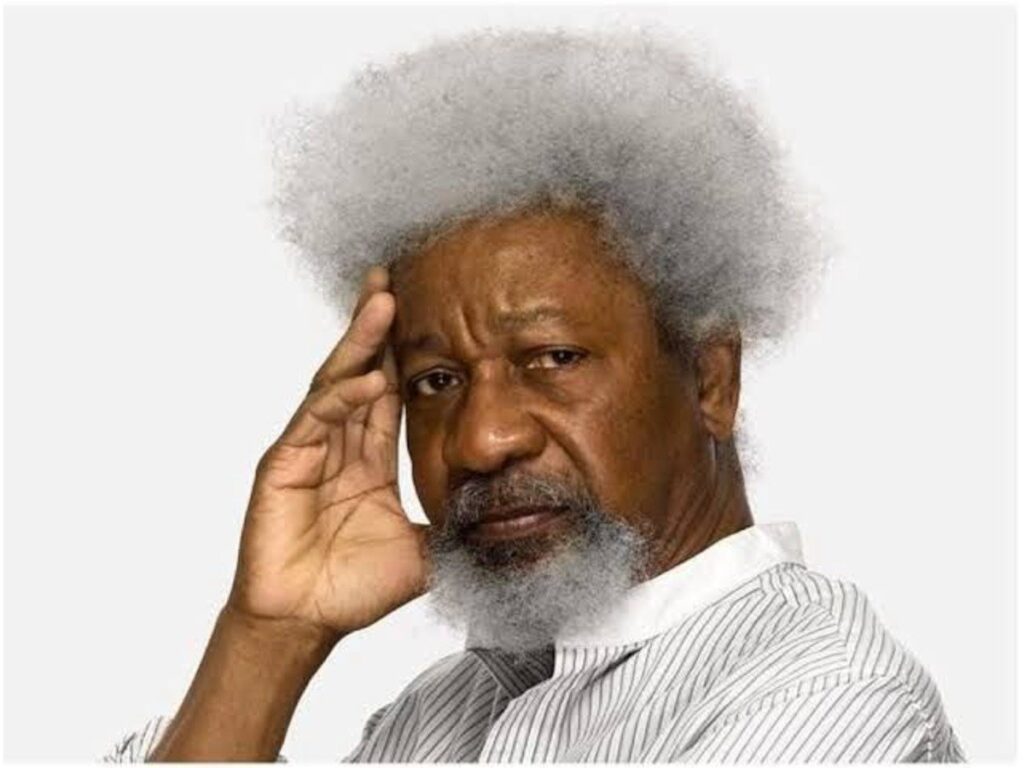

Nobel Laureate and globally renowned playwright, Professor Wole Soyinka, has expressed deep surprise and confusion following the recent revocation of his United States visa. The revered writer disclosed the development during a press briefing held on Tuesday at Kongi’s Harvest Gallery, Freedom Park, Lagos Island.
According to Soyinka, the decision by the U.S. government to revoke his visa came unexpectedly, as he has not been informed of any wrongdoing that might have warranted such an action. “It is necessary for me to hold this conference so that people in the United States who are expecting me for one event or another will not waste their time,” Soyinka explained. “I have no visa; I am banned, obviously, from the United States. And if you want to see me, you know where to find me,” he added with a touch of irony.
The U.S. Consulate in Lagos reportedly communicated the revocation in a letter dated October 23, 2025, issued by the Non-Immigrant Visa (NIV) Section. The letter stated, “This letter serves as official notification by the United States Consulate General in Lagos that the nonimmigrant visa listed below has been revoked pursuant to the authority contained in U.S. Department of State regulations.”
Despite the official tone of the notice, Soyinka maintained that the action remains a mystery to him. He emphasized that throughout his decades-long relationship with the United States—as a visiting scholar, writer, and public intellectual—he has never violated any law, nor been involved in conduct that could justify such a measure.
“I’m still looking into my past history,” he said. “I don’t have any criminal record or even a misdemeanor that would qualify for a visa revocation. I’ve started looking back — have I ever misbehaved toward the United States? Have I been convicted? Have I gone against the law anywhere?”
Related News
Henry Seriake Dickson Defects from PDP to Newly Formed Nigeria Democratic Congress
Senator Henry Seriake Dickson has formally defected from the Peoples Democratic Party (PDP) to the newly registered Nigeria Democratic Congress…

Hon. Sarah Ivie Adidi Receives “Her Excellence Award” During International Women’s Day Event in Abuja
Reps aspirant Sarah Ivie Adidi has been honoured with the 2026 “Her Excellence Award” during an event marking International Women’s…
Governor Peter Mbah Urges Ndigbo to Return to Strategic Politics
Peter Mbah, Governor of Enugu State, has urged the Igbo political class to return to what he described as “strategic…
The development has sparked widespread discussion both in Nigeria and abroad. Many recall that in 2017, Soyinka famously tore his U.S. Green Card in protest following the election of then-President Donald Trump, describing the act as a symbolic gesture against what he considered divisive and xenophobic politics. Critics now speculate that the revocation may be connected to that symbolic protest, which gained international attention at the time.
While Soyinka has not directly linked the two events, public opinion remains divided. Some commentators have argued that his decision to destroy a U.S. immigration document could be perceived as a political affront to the American establishment. Others, however, view the revocation as a troubling indicator of shrinking tolerance for dissenting voices, even among respected intellectuals.
Supporters of the Nobel Laureate have expressed disappointment, calling the move an affront to academic freedom and intellectual diplomacy. They emphasize that Soyinka has been a consistent voice for justice and democracy—both within and outside Nigeria—and that his literary and human rights legacy transcends borders.
However, not all reactions have been sympathetic. Some critics on social media recalled Soyinka’s history of sharp political commentary, accusing him of hypocrisy and selective activism. Others pointed to his past support for controversial Nigerian governments as a reason for their indifference.
Still, many have called for restraint, urging the U.S. authorities to clarify the reasons behind the decision. Diplomatic analysts note that visa revocations can occur for various administrative or security reasons, not all of which are made public.
At 91, Soyinka remains one of Africa’s most decorated and outspoken intellectuals. The Nobel Prize winner for Literature in 1986—the first African to receive the honor—has spent decades advocating for democracy, human rights, and artistic freedom. Despite the setback, Soyinka stated that he harbors no bitterness toward the United States but insists on understanding what prompted the revocation.
As he put it, “I’m still searching my past for any offence.”
For now, Soyinka’s focus appears to be on continuing his literary work and public engagements within Nigeria, as he awaits further clarification from the U.S. government on a matter that has once again placed him at the center of a global conversation about power, dissent, and freedom.